
Catalogue Search | MBRL


Are you sure you want to remove the book from the shelf?

{{itemTitle}}
122
result(s) for
"Bible. O.T. -- Language, style"
Sort by:

Milk and Honey
From the Foreword -
In a very short stretch of years, the Judaic Studies Program at
the University of California, San Diego, has developed into one of
the most important centers for teaching and research in biblical
studies, in ancient Near Eastern and biblical archaeology, and more
generally in Judaic studies. The program now rivals far older
centers of study in these fields in eastern research universities.
I have been an admirer of the program for some years, proud of
former students of mine whose energy and foresight have contributed
to the developments in La Jolla, including the establishment of
endowed chairs that guarantee the future of this center and its
program.
This collection of essays honoring the Judaic Studies Program
and its faculty is a testimony to the fecundity of the program in
producing scholars, whose essays dominate the collection. Several
essays come from other scholars whose home base is in the West and
who have engaged in colloquia and common pursuits with the San
Diego faculty. . . . There are sections on Genesis, poetry and
prophecy, narrative and history, lexicon, archaeology, and (not
least) paleography.
-Frank Moore Cross
Harvard University
eBook
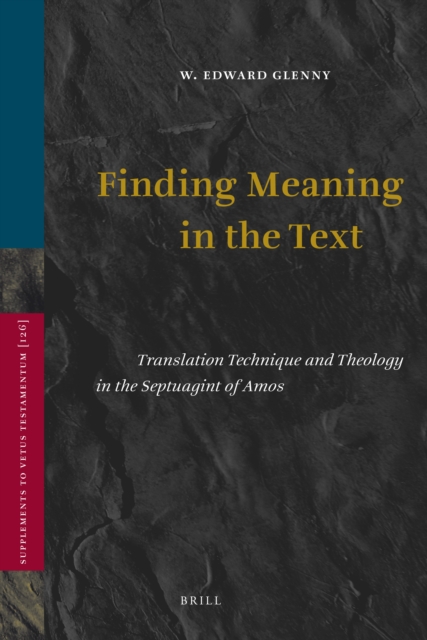
Finding Meaning in the Text
This book offers a thorough analysis of the translation technique and theology of LXX-Amos, which will be valuable for those studying LXX-Amos and for those doing textual criticism in the Hebrew text of Amos. It analyzes the literalness of the translation, the rendering of difficult and unknown words, and the rendering of visually ambiguous phenomena, like homonyms, homographs, and word divisions. The evidence suggests the translator worked from a text very similar to the MT. He reveals his biases as he struggles with the difficult and obscure sections of his source text. He exhibits an anti-Syrian and anti-Samaritan bias as well as interest in Gentiles, eschatology, and messianism.
eBook

Radical Frame Semantics and Biblical Hebrew
Drawing on various modern linguistic models, including cognitive linguistics, frame semantics, and construction grammar, this book presents a new, integrated approach to lexical semantic analysis of biblical Hebrew, applying it in a detailed study of words related to \"exploring.\".
eBook

Early Biblical Hebrew, late Biblical Hebrew, and linguistic variability : a sociolinguistic evaluation of the linguistic dating of Biblical texts
In Early Biblical Hebrew, Late Biblical Hebrew, and Linguistic Variability, Dong-Hyuk Kim offers a sociolinguistic evaluation of the issue of the linguistic dating of biblical texts.
eBook

Time and the biblical Hebrew verb : the expression of tense, aspect, and modality in biblical Hebrew
No detailed description available for \"Time and the Biblical Hebrew Verb\".
eBook
Parenthesis in Biblical Hebrew
In its examination of parenthesis in Biblical Hebrew, this book presents a linguistic description of Biblical Hebrew parenthetical units through integration of several research disciplines and scholarly approaches: linguistics, discourse studies, text linguistics, textual philology, comparative Semitics, Bible translations, and literature.
eBook
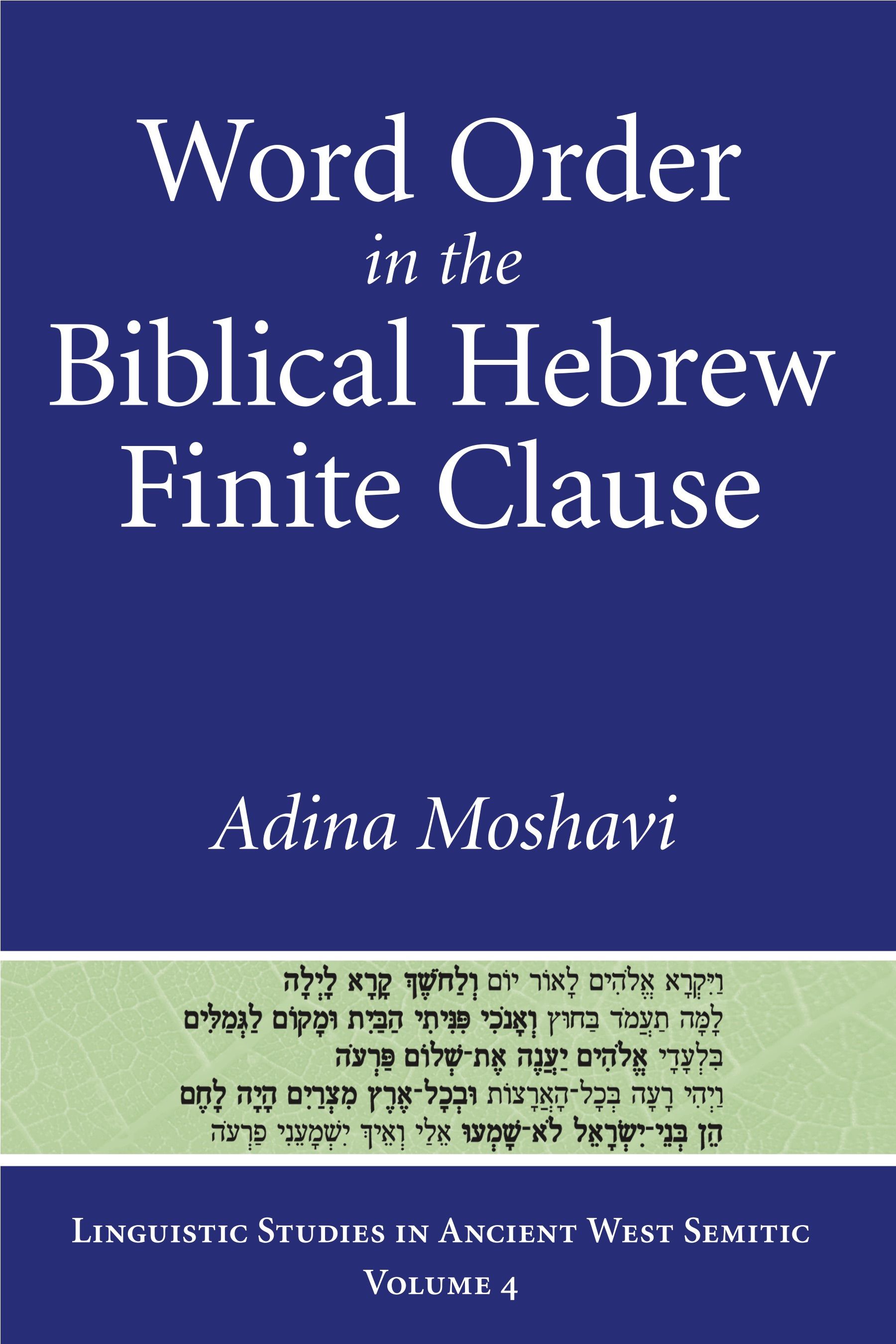
Word Order in the Biblical Hebrew Finite Clause
Over the last 40 years, the study of word-order variation has become a prominent and fruitful field of research. Researchers of linguistic typology have found that every language permits a variety of word-order constructions, with subject, verb, and objects occupying varying positions relative to each other. It is frequently possible to classify one of the word orders as the basic or unmarked order and the others as marked.
Moshavi's study investigates word order in the finite nonsubordinate clause in classical Biblical Hebrew. A common marked construction in this type of clause is the preposing construction, in which a subject, object, or adverbial is placed before the verb. In this work, Moshavi formally distinguishes preposing from other marked and unmarked constructions and explores the distribution of these constructions in Biblical Hebrew. She carries out a contextual analysis of a sample (the book of Genesis) of preposed clauses in order to determine the pragmatic functions that preposing may express. Moshavi's thesis is that the majority of preposed clauses can be classified as one of two syntactic-pragmatic constructions: focusing or topicalization.
This meticulous yet approachable study will be useful both to students of Biblical Hebrew and to persons doing general study of syntax, especially those interested in the connection between linguistic form and pragmatic meaning.
eBook
Formula criticism and the poetry of the Old Testament
No detailed description available for \"Formula Criticism and the Poetry of the Old Testament\".
eBook
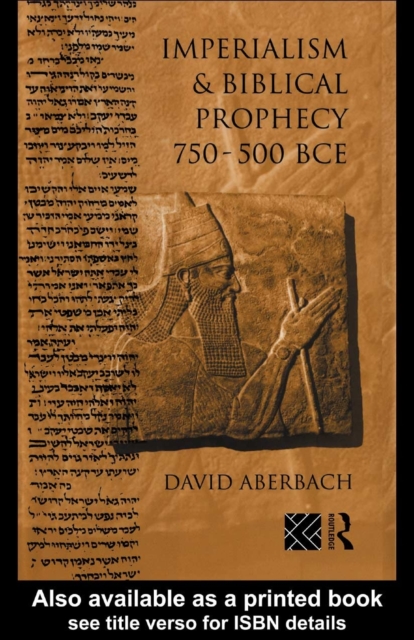
Imperialism and Biblical Prophecy 750-500 BCE
Imperialism and Biblical Prophecy is a radically new interpretation of prophetic poetry. Using more than thirty new translations from the Hebrew Bible, it shows that this poetry is inseparable from imperialism, that each of the three major waves of biblical prophecy which have survived in the Old Testament occurred in response to simultaneous waves of imperialist conquest.
eBook

The Art of Biblical Narrative
From celebrated translator of the Hebrew Bible Robert Alter, the \"groundbreaking\" ( Los Angeles Times ) book that explores the Bible as literature, a winner of the National Jewish Book Award.
eBook