
Catalogue Search | MBRL


Are you sure you want to remove the book from the shelf?

{{itemTitle}}
151
result(s) for
"Bijbel."
Sort by:

The Bible in Arab Christianity
\"The contributions to this volume, which come from the Fifth Mingana Symposium, survey the use of the Bible and attitudes towards it in the early and classical Islamic periods\"--Page 4 of cover.
BOOK

Birkat Shalom : studies in the Bible, ancient Near Eastern literature, and postbiblical Judaism presented to Shalom M. Paul on the occasion of his seventieth birthday
No detailed description available for \"Birkat Shalom\".
eBook
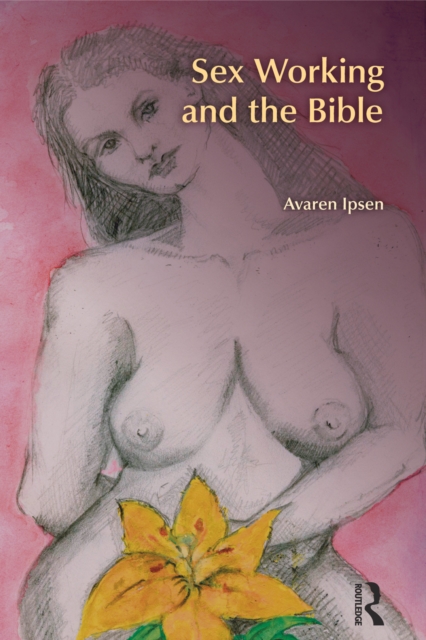
Sex Working and the Bible
The Bible contains many stories of prostitution. Feminist and liberation readings of these biblical narratives have often made sex workers invisible. 'Sex Working and the Bible' examines stories of biblical prostitution through the experiences and understanding of sex workers today. The Bible narratives - ranging across Rahab in the Book of Joshua, the story of Solomon and the two prostitutes, the anointing women traditions, and the apocalyptic vision of the whore of Babylon in Revelation - are set within both a practical and theoretical framework. This radical book offers a new, more inclusive way of approaching issues of gender, sexuality and prostitution in the Bible.
eBook

Not by Paul alone : the formation of the Catholic epistle collection and the Christian canon
Not by Paul Alone explores the historical reasons for the creation of the book of James and the implications for the creation of the Christian canon. Nienhuis makes a compelling case that James was written in the mid-second century and is, like 2 Peter, an attempt to provide a distinctive shape to the emerging New Testament. This book bolsters the claim that the Catholic Epistles not only have a distinct witness individually, but that collectively they are also a considered theological agenda within the Christian church.
eBook
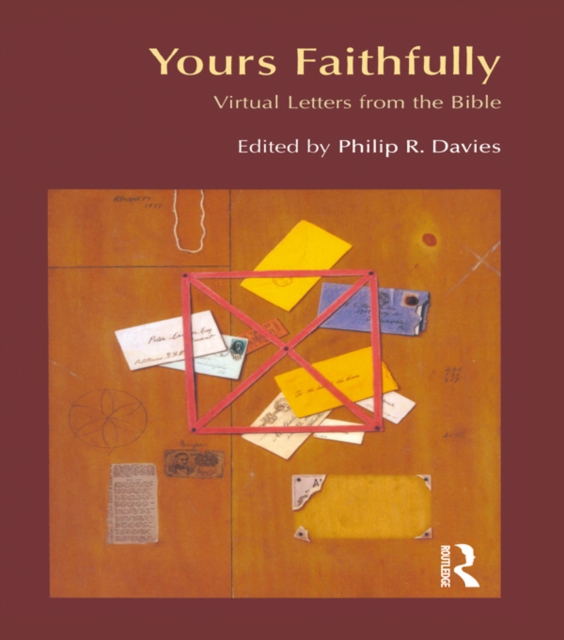
Yours Faithfully
'Yours Faithfully' presents an anthology of virtual letters from the Bible, in which leading scholars imagine correspondence between biblical characters. Each letter conveys the insights that a given character might have and, together, the letters provide a rich sense of the concerns which propel and characters who inhabit the Bible. The letters are written in a range of styles - from the strictly historical to the very contemporary - and embrace the serious and the playful. The aim is to offer a commentary on familiar texts and events and to continue a long tradition of retelling stories from the Bible.
eBook

The curse of ham
How old is prejudice against black people? Were the racist attitudes that fueled the Atlantic slave trade firmly in place 700 years before the European discovery of sub-Saharan Africa? In this groundbreaking book, David Goldenberg seeks to discover how dark-skinned peoples, especially black Africans, were portrayed in the Bible and by those who interpreted the Bible--Jews, Christians, and Muslims. Unprecedented in rigor and breadth, his investigation covers a 1,500-year period, from ancient Israel (around 800 B.C.E.) to the eighth century C.E., after the birth of Islam. By tracing the development of anti-Black sentiment during this time, Goldenberg uncovers views about race, color, and slavery that took shape over the centuries--most centrally, the belief that the biblical Ham and his descendants, the black Africans, had been cursed by God with eternal slavery.Goldenberg begins by examining a host of references to black Africans in biblical and postbiblical Jewish literature. From there he moves the inquiry from Black as an ethnic group to black as color, and early Jewish attitudes toward dark skin color. He goes on to ask when the black African first became identified as slave in the Near East, and, in a powerful culmination, discusses the resounding influence of this identification on Jewish, Christian, and Islamic thinking, noting each tradition's exegetical treatment of pertinent biblical passages.Authoritative, fluidly written, and situated at a richly illuminating nexus of images, attitudes, and history, The Curse of Ham is sure to have a profound and lasting impact on the perennial debate over the roots of racism and slavery, and on the study of early Judaism, Christianity, and Islam.
eBook

From Gods to God : how the Bible debunked, suppressed, or changed ancient myths & legends
The ancient Israelites believed things that the writers of the Bible wanted them to forget: myths and legends from a pre-biblical world that the new monotheist order needed to bury, hide, or reinterpret.
Ancient Israel was rich in such literary traditions before the Bible reached the final form that we have today. These traditions were not lost but continued, passed down through the ages. Many managed to reach us in post-biblical sources: rabbinic literature, Jewish Hellenistic writings, the writings of the Dead Sea sect, the Aramaic, Greek, Latin, and other ancient translations of the Bible, and even outside the ancient Jewish world in Christian and Islamic texts. The Bible itself sometimes alludes to these traditions, often in surprising contexts.
Written in clear and accessible language, this volume presents thirty such traditions. It voyages behind the veil of the written Bible to reconstruct what was told and retold among the ancient Israelites, even if it is \"not what the Bible tells us.\"
eBook

Biblical Narrative and the Death of the Rhapsode
Informed by literary theory and Homeric scholarship as well as biblical
studies, Biblical Narrative and the Death of the Rhapsode sheds new light on the
Hebrew Bible and, more generally, on the possibilities of narrative form. Robert S.
Kawashima compares the narratives of the Hebrew Bible with Homeric and Ugaritic epic
in order to account for the novelty of biblical prose narrative. Long
before Herodotus or Homer, Israelite writers practiced an innovative narrative art,
which anticipated the modern novelist's craft. Though their work is undeniably
linked to the linguistic tradition of the Ugaritic narrative poems, there are
substantive differences between the bodies of work. Kawashima views biblical
narrative as the result of a specifically written verbal art that we should
counterpose to the oral-traditional art of epic. Beyond this strictly historical
thesis, the study has theoretical implications for the study of narrative,
literature, and oral tradition. Indiana Studies in Biblical
Literature -- Herbert Marks, General Editor
eBook
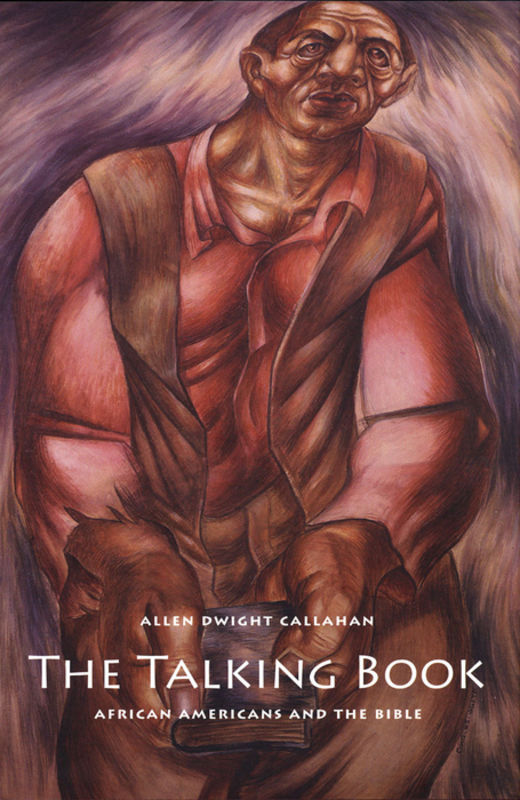
The Talking Book
The Talking Bookcasts the Bible as the central character in a vivid portrait of black America, tracing the origins of African-American culture from slavery's secluded forest prayer meetings to the bright lights and bold style of today's hip-hop artists.The Bible has profoundly influenced African Americans throughout history. From a variety of perspectives this wide-ranging book is the first to explore the Bible's role in the triumph of the black experience. Using the Bible as a foundation, African Americans shared religious beliefs, created their own music, and shaped the ultimate key to their freedom-literacy. Allen Callahan highlights the intersection of biblical images with African-American music, politics, religion, art, and literature.The author tells a moving story of a biblically informed African-American culture, identifying four major biblical images-Exile, Exodus, Ethiopia, and Emmanuel. He brings these themes to life in a unique African-American history that grows from the harsh experience of slavery into a rich culture that endures as one of the most important forces of twenty-first-century America.
eBook

An Introduction to the Bible
A casual reader enters a bookshop looking for a Bible. However, not all the Bibles on display have the same contents! Some have more books than others, some are study editions, some use gender-free language. How did this come about? This Introduction works back through the processes by which the Bible was written, transmitted, copied and declared to be authoritative by various churches. The following topics are dealt with: What is the Bible?; How Biblical Writers Wrote; The Making of the Old Testament; The Making of the Apocrypha; The Making of the New Testament; The Canon of the Bible; The Study of the Bible; The Use of the Bible in Social, Moral and Political Questions. This updated edition takes account of developments in scholarship since the book was first published in 1999 by Penguin. The original edition has been translated into Spanish and Portuguese.
eBook