
Catalogue Search | MBRL


Are you sure you want to remove the book from the shelf?

{{itemTitle}}
29,521
result(s) for
"Bill of credit"
Sort by:
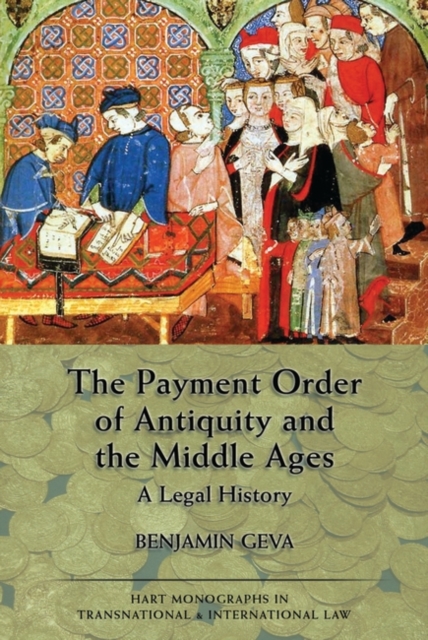
The Payment Order of Antiquity and the Middle Ages
Examining the legal history of the order to pay money initiating a funds transfer, the author tracks basic principles of modern law to those that governed the payment order of Antiquity and the Middle Ages.
eBook
Cross-border Transfer and Collateralisation of Receivables
Legal systems around the world vary widely in terms of how they deal with the transfer of and security interests in receivables. The aim of this book is to help international financiers and lawyers in relevant markets in their practice of international receivables financing. Substantively, this book analyses three types of receivables financing transactions, ie outright transfer, security transfer and security interests. This book covers comprehensive comparison and analysis of the laws on the transfer of and security interests in receivables of fifteen major jurisdictions, encompassing common law jurisdictions, Roman–Germanic jurisdictions and French–Napoleonic jurisdictions, as well as relevant EU Directives. To be more specific, this book compares and analyses the relevant legal systems of the US, Canada, New Zealand, Australia, Korea, Japan, France, Belgium, England, Hong Kong, Singapore, China, Germany, Austria and the Netherlands. Furthermore, in order to analyse those legal systems from the international perspective, this book compares relevant international conventions; it also proposes to establish an international registration system for the transfer of and security interests in receivables.
eBook

Charles Beard and the Constitution
\"One could almost use the word momentous, or the word epoch-making though epoch-ending might be more to the point ... I don't see how anyone henceforth can repeat the old cliches which Beard put into circulation forty years ago.\"—Frederick B. Tolles, Swarthmore College.
\"American historians, particularly those who have given lectures or written books based on the Beard thesis, ignore Brown's book at their peril.\"—American Historical Review.
Originally published in 1956.
The Princeton Legacy Library uses the latest print-on-demand technology to again make available previously out-of-print books from the distinguished backlist of Princeton University Press. These editions preserve the original texts of these important books while presenting them in durable paperback and hardcover editions. The goal of the Princeton Legacy Library is to vastly increase access to the rich scholarly heritage found in the thousands of books published by Princeton University Press since its founding in 1905.
eBook


Colonial Virginia's paper money, 1755–1774: value decomposition and performance
Colonial Virginia's legislature introduced an inside paper money into its domestic economy that was, at that time, primarily a barter economy without any government or bank-issued inside paper monies in circulation. I decompose Virginia's paper money into its expected real-asset present value, risk discount and transaction premium. The value of Virginia's paper money was determined primarily by its real-asset present value. The transaction premium was small. Positive risk discounts occurred in years when monetary troubles were suspected, namely worries that the government would not redeem the paper money as promised. Counterfeiting, however, was not one of these worries. The legislature had the tools and used them effectively to mitigate the effects of counterfeiting on the value of its paper money. Colonial Virginia's paper money was not a fiat currency, but a barter asset, with just enough transaction premium to make it the preferred medium of exchange for local transactions. It functioned like a zero-coupon bond and traded below face value due to time-discounting, not depreciation.
Journal Article
A re-examination of the empirical evidence concerning colonial Virginia's paper money, 1755-1774: a comment on Grubb
Farley Grubb's recent article in the Financial History Review contains econometric results designed to support his theoretical propositions concerning the paper money of the American colonies. This comment demonstrates that some of his results are spurious and the rest are based on using incorrect testing procedures and incorrect critical values of test statistics.
Journal Article
Redemption theories and the value of American colonial paper money
Before the Revolution American colonies issued paper money known as ‘bills of credit’. The bills issued in the Middle colonies held their value surprisingly well despite large wartime fluctuations in the quantity issued, but those issued in New England depreciated as the quantity in circulation increased. The bills' stable purchasing power in the Middle colonies has often been attributed to the redemption provisions enacted when the bills were issued. Similar provisions in New England supposedly failed because New England failed to enforce them. This article explores the comparative enforcement of redemption provisions in the two regions, and in New York in particular, and concludes that differential enforcement does not explain the disparity between the New England experience and that in the Middle colonies.
Journal Article
Colonial New Jersey's provincial fiscal structure, 1704–1775: spending obligations, revenue sources, and tax burdens during peace and war
I reconstitute the spending obligations and revenue sources of colonial New Jersey's provincial government for the years 1704 through 1775 from primary sources using forensic accounting techniques. I identify and analyze the methods for raising revenue to meet normal peacetime and emergency wartime expenses. I calculate the provincial tax burdens imposed on New Jersey's citizens. I identify how Britain interfered with New Jersey's fiscal structure. I estimate what the revenues and tax burdens would have been without this interference. New Jersey paid for war expenses by issuing bills of credit, spreading the tax burden of redeeming these bills into the future. New Jersey paid its yearly administrative costs with current property taxes and with current interest earnings from loaning paper money. In the absence of British interference and wars, New Jersey could have driven tax burdens to zero by using interest earnings to pay for all its provincial administrative costs.
Journal Article

Heavenly Merchandize
Heavenly Merchandize offers a critical reexamination of religion's role in the creation of a market economy in early America. Focusing on the economic culture of New England, it views commerce through the eyes of four generations of Boston merchants, drawing upon their personal letters, diaries, business records, and sermon notes to reveal how merchants built a modern form of exchange out of profound transitions in the puritan understanding of discipline, providence, and the meaning of New England.
Mark Valeri traces the careers of men like Robert Keayne, a London immigrant punished by his church for aggressive business practices; John Hull, a silversmith-turned-trader who helped to establish commercial networks in the West Indies; and Hugh Hall, one of New England's first slave traders. He explores how Boston ministers reconstituted their moral languages over the course of a century, from a scriptural discourse against many market practices to a providential worldview that justified England's commercial hegemony and legitimated the market as a divine construct. Valeri moves beyond simplistic readings that reduce commercial activity to secular mind-sets, and refutes the popular notion of an inherent affinity between puritanism and capitalism. He shows how changing ideas about what it meant to be pious and puritan informed the business practices of Boston's merchants, who filled their private notebooks with meditations on scripture and the natural order, founded and led churches, and inscribed spiritual reflections in their letters and diaries.
Unprecedented in scope and rich with insights, Heavenly Merchandize illuminates the history behind the continuing American dilemma over morality and the marketplace.
eBook

Is Paper Money Just Paper Money? Experimentation and Variation in the Paper Monies Issued by the American Colonies from 1690 to 1775
Abstract
The British North American colonies were the first western economies to rely on legislature-issued paper monies as an important internal media of exchange. This system arose piecemeal. In the absence of banks and treasuries that exchanged paper monies at face value for specie monies on demand, colonial governments experimented with other ways to anchor their paper monies to real values in the economy. These mechanisms included tax-redemption, land-backed loans, sinking funds, interest-bearing notes, and legal tender laws. I assess and explain the structure and performance of these mechanisms. This was monetary experimentation on a grand scale.
Book Chapter