
Catalogue Search | MBRL


Are you sure you want to remove the book from the shelf?

{{itemTitle}}
170
result(s) for
"Biochemists Biography."
Sort by:

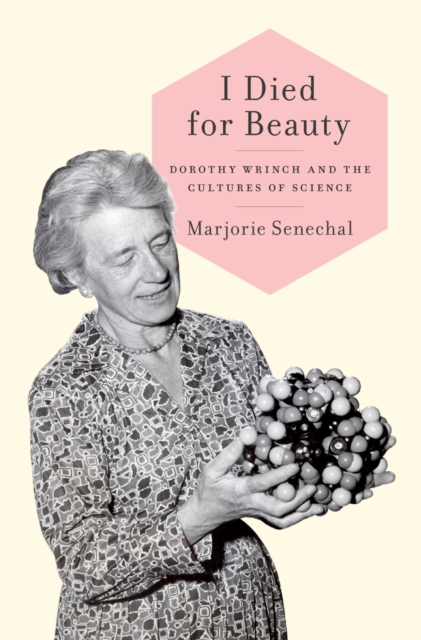
I Died for Beauty
Dorothy Wrinch, a complicated and ultimately tragic figure, is remembered today for her much publicized feud with Linus Pauling over the shape of proteins, known as \"the cyclol controversy.\" Pauling emerged victorious and is now seen as one of the 20th century's greatest scientists. History has proven less kind to Wrinch. Although some of Wrinch's theories did not pass the test of time, her contributions to the fields of Darwinism, probability and statistics, quantum mechanics, x-ray diffraction, and computer science were anything but inconsequential. Wrinch's story is also the story of the science of crystals and the ever-changing notion of symmetry fundamental to that science. Drawing on her own personal relationship with Wrinch as well as the papers archived at Smith College and elsewhere, Marjorie Senechal explores the life of this brilliant and controversial figure in I Died for Beauty. This biography provides a coherent biographical narration, a detailed account of the cyclol controversy, and a personal memoir of the author's relationship with Wrinch. Senechal presents a sympathetic portrait of the life and science of a luminous but tragically flawed character.
eBook


Anthony Cerami
Since the turn of the new millennium, ‘translational research’, the scientific process of bringing disease-targeted knowledge from the laboratory to treat patients in the clinic, has gone mainstream and is now practiced by large universities and institutes across the globe. Into this dynamic of the rapidly changing world of translational medical research this book sets the life of one of the discipline’s most influential practitioners, Anthony Cerami. His work spans more than five decades and culminated in the discovery, invention and development of diagnostics and therapeutics used daily by millions of people. Students in molecular medicine and investigators pursuing basic science in the hope of improving human health will find inspiration in examining the sacrifices and achievements of Cerami’s career in translational medicine. During his three decades at Rockefeller University his cross-disciplinary and laboratory-without-wall approach established ‘rational drug design’ as the most effective means of advancing the fields of parasitology, hematology, immunology, metabolism, therapeutics and molecular medicine. Cerami’s story and that of the evolution of translation are intimately entwined: the contours of Cerami’s career shaped by developments in translation, and in exchange, the field itself molded by Cerami’s work. To understand one is to understand the other. By examining the life of this often overlooked biochemist it is possible to intimately focus on the ideas and thought processes of a scientist who has helped to define the great acceleration in translational research over the past half century – research that, knowingly or otherwise, has most likely affected the life of almost everyone on the planet. We also gain a better understanding of the febrile creative atmosphere that percolated through the laboratories leading the way in translational medicine, and gain insight into the art, science, successes, failures and providence that underlie major scientific breakthroughs. Anybody interested in the questions of where modern medicines come from, how health outcomes around the globe are affected by research and imagination, and where the future of drug discovery is leading, will be rewarded by exploring Cerami’s life in translation. This book is not restricted to those with a professional interest in science, because anyone dedicated to living a life of creativity and discovery will be rewarded by reading this book. In many respects, Cerami’s life reflects the modern metaphor of the ‘American dream’ with his journey from humble beginnings on a chicken farm in rural New Jersey, to occupying a place in the highest echelons of the US scientific establishment. His journey in translational medicine was propelled forward by two obsessions; the idea that he could help people who were sick, and the excitement of discovery. In following his two great passions, he trained a generation of specialists in translational medicine that continue to transform our understanding of, and treatments for, human disease. Anthony Cerami’s work has shown how science has become an important force for social change by laying the foundations of modern translational medicine.
eBook

Breaking through : my life in science
\"A story of perseverance and the power of convictions from the groundbreaking immigrant scientist whose decades-long research led to the COVID-19 vaccines. Katalin Karikó had an unlikely journey. The daughter of a butcher in postwar communist Hungary, Karikó grew up in a one-room home that lacked running water, and her family grew their own vegetables. She saw the wonders of nature all around her and was determined to become a scientist. That determination eventually brought her to the United States, where she arrived as a postdoctoral fellow in 1985 with $1,200 sewn into her toddler's teddy bear and a dream to remake medicine. Karikó worked in obscurity, battled cockroaches in a windowless lab, and faced outright derision and even deportation threats from her bosses and colleagues. She balked as prestigious research institutions increasingly conflated science and money. Despite setbacks, she never wavered in her belief that an ephemeral and underappreciated molecule called messenger RNA could change the world. Karikó believed that someday mRNA would transform ordinary cells into tiny factories capable of producing their own medicines on demand. She sacrificed nearly everything for this dream, but the obstacles she faced only motivated her, and eventually she succeeded. Karikó's three-decades-long investigation into mRNA would lead to a staggering achievement: vaccines that protected millions of people from the most dire consequences of COVID-19. These vaccines are just the beginning of mRNA's potential. Today, the medical community eagerly awaits more mRNA vaccines-for the flu, HIV, and other emerging infectious diseases. Breaking Through isn't just the story of an extraordinary woman-it's an indictment of closed-minded thinking and a testament to one woman's commitment to laboring intensely in obscurity-knowing she might never be recognized in a culture that is more driven by prestige, power, and privilege-because she believed her work would save lives\"-- Provided by publisher.
Book

Hans Krebs
This is the first volume of the definitive biography of Hans Krebs, one of the world’s foremost biochemists. It begins with the early work of Krebs in Germany, where, working with Otto Warburg, he discovered the urea cycle in 1932. This early achievement, coupled with the discovery of the citric acid cycle, are viewed as the foundations upon which the modern structure of intermediary metabolism is built. During the writing of this fascinating history, the author not only had access to a complete set of Krebs’ key laboratory notebooks, but to the man himself through five years of insightful interviews. Holmes captures Krebs’ activities at a level of intimacy that reveals scientific creativity at work. The story weaves together the investigative pathway with the professional and personal life of the investigator. The Krebs biography is certain to fascinate biochemists and historians of science alike.
eBook

Never give up : Dr. Kati Karikó and the race for the future of vaccines
\"This picture book biography introduces Hungarian American biochemist Katalin Karikó, who played a critical role in developing the mRNA vaccine for COVID-19. Follow the journey of Katalin (Kati) Karikó from her childhood in rural Hungary\"-- Provided by publisher.
Book
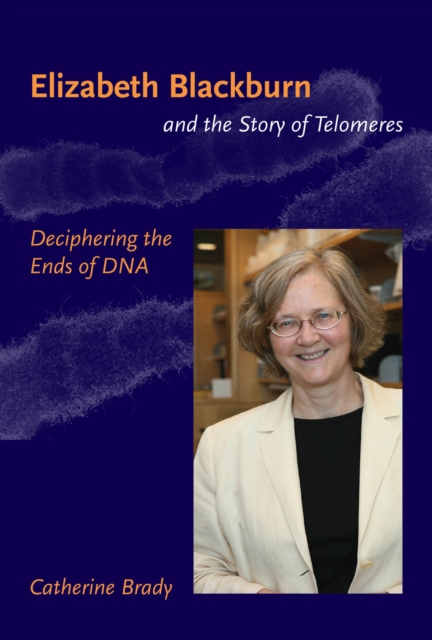
Elizabeth Blackburn and the Story of Telomeres
The story of molecular biologist Elizabeth Blackburn and her groundbreaking research on telomeres and what it reveals about the resourceful opportunism that characterizes the best scientific thinking.
eBook

Breakthrough : Katalin Karikó and the mRNA vaccine
\"Breakthrough chronicles the life, hard work, and accomplishments of Katalin Karikó, one of the pioneering mRNA researchers whose work led to COVID-19 vaccines, depicting her as an inspirational figure for readers interested in science\"-- Provided by publisher.
Book
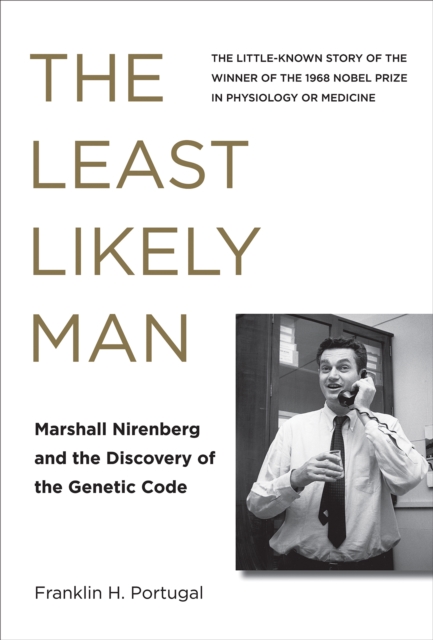
The Least Likely Man
The genetic code is the Rosetta Stone by which we interpret the 3.3 billion letters of human DNA, the alphabet of life, and the discovery of the code has had an immeasurable impact on science and society. In 1968, Marshall Nirenberg, an unassuming government scientist working at the National Institutes of Health, shared the Nobel Prize for cracking the genetic code. He was the least likely man to make such an earth-shaking discovery, and yet he had gotten there before such members of the scientific elite as James Watson and Francis Crick. How did Nirenberg do it, and why is he so little known? InThe Least Likely Man, Franklin Portugal tells the fascinating life story of a famous scientist that most of us have never heard of.Nirenberg did not have a particularly brilliant undergraduate or graduate career. After being hired as a researcher at the NIH, he quietly explored how cells make proteins. Meanwhile, Watson, Crick, and eighteen other leading scientists had formed the \"RNA Tie Club\" (named after the distinctive ties they wore, each decorated with one of twenty amino acid designs), intending to claim credit for the discovery of the genetic code before they had even worked out the details. They were surprised, and displeased, when Nirenberg announced his preliminary findings of a genetic code at an international meeting in Moscow in 1961. Drawing on Nirenberg's \"lab diaries,\" Portugal offers an engaging and accessible account of Nirenberg's experimental approach, describes counterclaims by Crick, Watson, and Sidney Brenner, and traces Nirenberg's later switch to an entirely new, even more challenging field. Having won the Nobel for his work on the genetic code, Nirenberg moved on to the next frontier of biological research: how the brain works.
eBook