
Catalogue Search | MBRL


Are you sure you want to remove the book from the shelf?

{{itemTitle}}
10
result(s) for
"Bioengineering Popular works."
Sort by:


Medicine by design : the practice and promise of biomedical engineering
A heart that once beat erratically has regained its natural rhythm. A woman paralyzed by an automobile accident is now able to resume her favorite hobby. Physicians using a robotic surgeon named da Vinci perform lifesaving operations. These are some of the feats of biomedical engineering, one of the fastest-moving areas in medicine. In this exhilarating book, award-winning writer Fen Montaigne journeys through this little-known world, sharing the stories of ordinary people who have been transformed by technology. From the almost commonplace pacemaker to the latest generation of artificial hearts, Montaigne tells the stories of pioneering patients, engineers, and surgeons. Taking the reader behind the scenes of a dozen of America's leading centers of biomedical engineering, Montaigne recounts the field's history while describing cutting-edge work in medical imaging, orthopedics, cardiovascular care, neurological therapies, and genetics. Through the stories of patients whose lives have been saved and improved by biomedical devices, Montaigne reveals the marriage of medicine and engineering to be one of society's greatest advances.
eBook
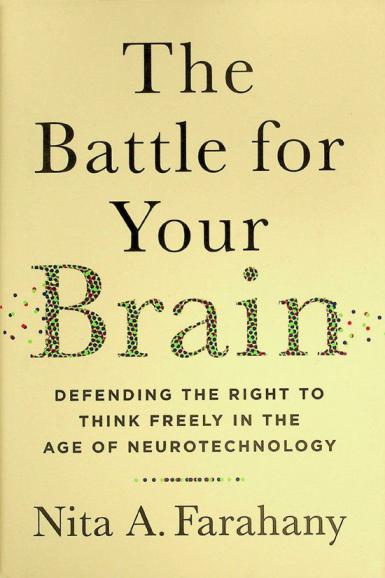
The battle for your brain : defending the right to think freely in the age of neurotechnology
\"A rock star academic explores the final frontier of personal privacy : your mind. Imagine a world where your brain can be interrogated to learn your political beliefs, thought crimes are punishable by law, and your own feelings can be used against you. Where perfumers create customized fragrances to perfectly suit your emotions, and social media titans bypass your conscious mind to hook you to their products. A world where people who suffer from epilepsy receive alerts moments before a seizure, and the average person can peer into their own mind to eliminate painful memories or cure addictions. Neuroscience has already made all of the above possible today, and neurotechnology will soon become the \"universal controller\" for all of our interactions with technology. This can benefit humanity immensely, but without safeguards, it can severely threaten our fundamental human rights to privacy, freedom of thought, and self-determination. Companies, governments, and militaries are all in : from contemplative neuroscience to consumer-based EEG technology, there have never been more ways to hack and track our brains. But access is just the beginning. Our brains can be changed with performance-boosting drugs, electrical stimulation, and even surgical interventions. Soon neuro-cinema, neuro-monitoring, and even cognitive warfare will be commonplace-the brain is the next battleground for humanity. The Battle for Your Brain by Nita A. Farahany dives deeply into the promises and perils of the coming dawn of brain access and alteration. Written by one of the world's foremost experts on neuroscience as it intersects with law and ethics, this highly original book offers a pathway forward to navigate the complex ethical dilemmas that neurotechnology presents, which will fundamentally impact our freedom to understand, shape, and define ourselves\" -- Provided by publisher.
Book
Inflammatory Bowel Disease, 2nd Edition
Inflammatory Bowel Disease, 2nd edition presents updated information about inflammatory bowel disease in health-care workers. The theoretical content is based on controlled and randomized clinical studies in the meta-analyzes, conducted appropriately and especially in global consensus and led by international experts. As such, the reader has access the important topics required to understand the ulcerative colitis and Crohn's disease. The editors and chapter authors, all established names within gastroenterology and coloproctology, and having extensive experience in assisting patients with inflammatory bowel disease, provide a concise book with quick and objective reference texts that complement the knowledge of students, doctors, nurses, nutritionists and psychologists of daily clinical practice.
eBook

The battle for your brain : defending the right to think freely in the age of neurotechnology
\"A rock star academic explores the final frontier of personal privacy: your mind. Imagine a world where your brain can be interrogated to learn your political beliefs, thought crimes are punishable by law, and your own feelings can be used against you. Where perfumers create customized fragrances to perfectly suit your emotions, and social media titans bypass your conscious mind to hook you to their products. A world where people who suffer from epilepsy receive alerts moments before a seizure, and the average person can peer into their own mind to eliminate painful memories or cure addictions. Neuroscience has already made all of the above possible today, and neurotechnology will soon become the \"universal controller\" for all of our interactions with technology. This can benefit humanity immensely, but without safeguards, it can severely threaten our fundamental human rights to privacy, freedom of thought, and self-determination. Companies, governments, and militaries are all in: from contemplative neuroscience to consumer-based EEG technology, there have never been more ways to hack and track our brains. But access is just the beginning. Our brains can be changed with performance-boosting drugs, electrical stimulation, and even surgical interventions. Soon neuro-cinema, neuro-monitoring, and even cognitive warfare will be commonplace -- the brain is the next battleground for humanity. The Battle for Your Brain by Nita A. Farahany dives deeply into the promises and perils of the coming dawn of brain access and alteration. Written by one of the world's foremost experts on neuroscience as it intersects with law and ethics, this highly original book offers a pathway forward to navigate the complex ethical dilemmas that neurotechnology presents, which will fundamentally impact our freedom to understand, shape, and define ourselves\"-- Provided by publisher.
Book


Controversies in science and technology
Written for general readers, teachers, journalists, and policymakers, this volume explores four controversial topics in science and technology, with commentaries from experts in such fields as sociology, religion, law, ethics, and politics: * Antibiotics and Resistance: the science, the policy debates, and perspectives from a microbiologist, a veterinarian, and an M.D. * Genetically Modified Maize and Gene Flow: the science of genetic modification, protecting genetic diversity, agricultural biotech vesus the environment, corporate patents versus farmers' rights * Hormone Replacement Theory and Menopause: overview of the Women's Health Initiative, history of hormone replacement therapy, the medicalization of menopause, hormone replacement therapy and clinical trials * Smallpox: historical and medical overview of smallpox, government policies for public health, the Emergency Health Powers Act, public resistance vs. cooperation.
eBook
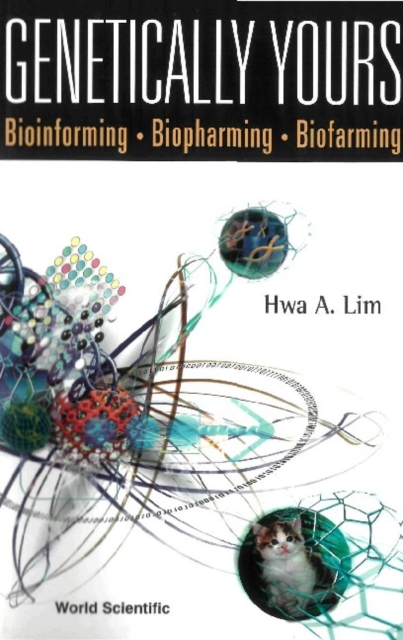
Genetically yours
Written by a pioneer and authority, this invaluable book covers all the key aspects and current affairs in the field of biotechnology, with topics ranging from genome projects, through animal and human cloning, to biowarfare.As an academic-turned-entrepreneur, the author is at ease in providing vivid firsthand accounts from both the scientific and the business perspective.This book is addressed primarily to experts and professionals who are very busy but who wish to gain insights through a different and comprehensive perspective of this important field. It is also aimed at laypeople who are interested in learning more about bioinformatics, and the biotechnology, pharmaceutical, and healthcare industries.The book is also ideal as an easy-to-read supplementary reference in classrooms. Each chapter is self-contained and footnotes provide further references for interested readers.
eBook

The Great Brain Debate
Whether our personality, intelligence, and behavior are more likely to be shaped by our environment or our genetic coding is not simply an idle question for today's researchers. There are tremendous consequences to understanding the crucial role that environment and genes each play. How we raise and educate our children, how we treat various mental diseases or conditions, how we care for our elderly--these are just some of the issues that can be informed by a better understanding of brain development. In The Great Brain Debate, the eminent neuroscience researcher John Dowling looks at these and other important issues. The work that is being done on the connection between the brain and vision, as well as the ways in which our brains help us learn new languages, are particularly revealing. From this groundbreaking new research, Dowling explains startling new insights into how the brain functions and how it can (or cannot) be molded and changed. By studying the brain across the spectrum of our lives, from infancy through adulthood and into old age, Dowling shows the ways in which both nature and nurture play key roles over the course of a human lifetime.
eBook

How Does It Not Know What It Is?
Much of the criticism engaging with “race” inBlade Runner(1982), directed by Ridley Scott, examines the film’s racial politics within the black and white binary that is the axis of U.S. race relations. The character of Rachael, a replicant, has been read as a mulatto, a passing figure and as symbolically “black” (Nishime, “The Mulatto Cyborg”; Silverman; B. Carr; Locke). Larissa Lai, a U.S.-born Canadian writer, has been one of the very few to imagine Rachael as Asian (Reid; Park). In her short story “Rachel,” Lai makes an explicit critique of the logic of race and production undergirding the
Book Chapter