
Catalogue Search | MBRL


Are you sure you want to remove the book from the shelf?

{{itemTitle}}
12,885
result(s) for
"Bioethics Philosophy."
Sort by:


Potentiality : metaphysical and bioethical dimensions
Classic articles and newly commissioned chapters analyze the nature of potentiality in bioethics.
What is the moral status of humans lacking the potential for consciousness? The concept of potentiality often tips the scales in life-and-death medical decisions. Some argue that all human embryos have the potential to develop characteristics—such as consciousness, intellect, and will—that we normally associate with personhood. Individuals with total brain failure or in a persistent vegetative state are thought to lack the potential for consciousness or any other mental function. Or do they?
In Potentiality John Lizza gathers classic articles alongside newly commissioned chapters from leading thinkers who analyze the nature of potentiality in bioethics, a concept central to a number of important debates. The contributors illustrate how considerations of potentiality and potential persons complicate the analysis of the moral consideration of persons at the beginning and end of life. A number of works explicitly uncover the Aristotelian background of the concept, while others explore philosophical issues about persons, dispositions, and possibility. The common assumption that potentiality is intrinsic to whatever has the potentiality is challenged by a relational view of persons, an extrinsic account of dispositions, and attention to how extrinsic factors affect realistic possibilities.
Although potentiality has figured prominently in bioethical literature, it has not received a great deal of logical, semantic, and metaphysical analysis in contemporary philosophical literature. This collection will bring these thorny philosophical issues to the fore.
Incorporating cutting-edge research on the topic of potentiality, this thought-provoking collection will interest bioethicists, philosophers, health care professionals, attorneys engaged in medical and health issues, and hospital and governmental committees who advise on policy and law concerning issues at the beginning and end of life.
eBook


Thieves of Virtue
Bioethics emerged in the 1960s from a conviction that physicians and researchers needed the guidance of philosophers in handling the issues raised by technological advances in medicine. It blossomed as a response to the perceived doctor-knows-best paternalism of the traditional medical ethic and today plays a critical role in health policies and treatment decisions. Bioethics claimed to offer a set of generally applicable, universally accepted guidelines that would simplify complex situations. In Thieves of Virtue, Tom Koch argues that bioethics has failed to deliver on its promises. Instead, he argues, bioethics has promoted a view of medicine as a commodity whose delivery is predicated not on care but on economic efficiency. Koch questions the \"founding myths\" of bioethics by which moral philosophers became practical ethicists who served as adjudicators of medical practice and planning. High philosophy, he argues, does not provide a guide to the practical dilemmas that arise at the bedside of sick patients. Nobody, he writes, carries Kant to a clinical consult. At the heart of bioethics, Koch writes, is a \"lifeboat ethic\" that assumes \"scarcity\" of medical resources is a natural condition rather than the result of prior economic, political, and social choices. The idea of natural scarcity requiring ethical triage signaled a shift in ethical emphasis from patient care and the physician's responsibility for it to neoliberal accountancies and the promotion of research as the preeminent good. The solution to the failure of bioethics is not a new set of simplistic principles. Koch points the way to a transformed medical ethics that is humanist, responsible, and defensible.
eBook


Bodies of information : reading the variable body from Roman Britain to hip hop
\"Bodies of Information initiates the Routledge Advances in the History of Bioethics series by encompassing interdisciplinary Bioethical discussions on a wide range of descriptions of bodies in relation to their contexts from varying perspectives: including literary analysis, sociology, criminology, anthropology, osteology and cultural studies, to read a variety of types of artefacts, from the Romano-British period to Hip Hop. Van Renslaer Potter coined the phrase Global Bioethics to define human relationships with their contexts. This and subsequent volumes return to Potter's founding vision from historical perspectives, and asks, how did we get here from then?\"-- Provided by publisher.
Book
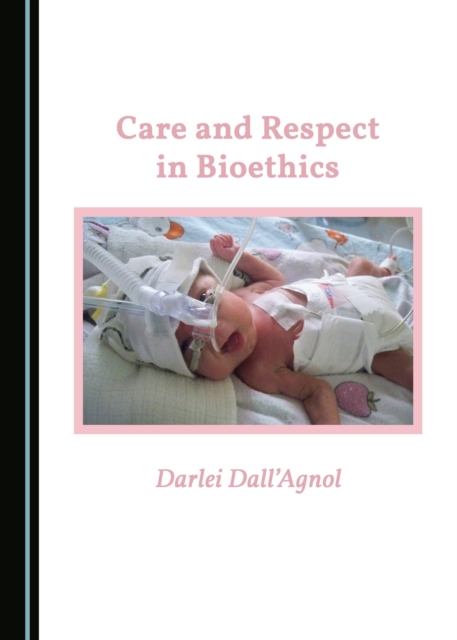
Care and respect in bioethics
This book discusses the philosophical foundations of bioethics, with a particular focus on the tensions and potential dilemmas generated by the intuitionist meta-ethical commitments of the predominant normative theory, namely \"the four principles approach.\" This view is based on the prima facie norms of respect for autonomy (one ought to respect the autonomous choices of subjects of scientific research/patients), non-maleficence (one ought to refrain from inflicting harm), beneficence (one ought to do good and prevent, or remove, harm) and justice (one ought to treat people fairly). The tensions in applying these basic principles may lead to inaction in scientific experiments involving human subjects or to arbitrary applications of the norms in the art of caring. The problem can be made explicit in these terms: on the one hand, caring without respecting seems blind, degenerating into forms of paternalism when, for instance, the carer imposes her conception of the good life or a particular procedure on the cared-for; on the other hand, respecting without caring amounts to indifference or individualism when, for example, a person does not look after a vulnerable being properly. The initial hypothesis of this book, then, is that the concept of respectful care can be built up, working from an ethico-philosophical perspective, to be a leading notion capable of guiding our daily actions and bioethical practices.
eBook

Better humans? : understanding the enhancement project
Michael Hauskeller poses some challenging questions about human enhancement, interrogating the logic behind its processes and examining the justifications behind its criteria. The book provides a rigorous approach to the topic which systematically and consistently explores assumptions about human enhancement and its effects.
Book
New perspectives in Japanese bioethics
Post-war Japan has seen profound and rapid social change and transformation. One of the most visible areas of change in Japan has been medicine, and particularly the ethical practices and policies that guide medical decision-making. The formal discipline of bioethics, Seimei Rinri in Japanese, has grown by leaps and bounds since the late 1970s, when it began to appear in the curriculum and professional activities of Japanese medical schools and philosophy departments. The introduction of bioe.
eBook