
Catalogue Search | MBRL


Are you sure you want to remove the book from the shelf?

{{itemTitle}}
22
result(s) for
"Bioethics Religious aspects Islam."
Sort by:


Islamic biomedical ethics : principles and application
This book undertakes to correlate practical ethical decisions in modern medical practice to principles and rules derived from Islamic juridical praxis and theological doctrines. This study links these rulings to the moral principles extracted from the normative religious texts and historically documented precedents. Western scholars of Islamic law have pointed out the importance of the historical approach in determining the rules and the juristic practices that were applied to the cases under consideration before the judicial opinions were issued within a specific social, economic, and political context. These decisions reflected aspects of intellectual as well as social history of the Muslim community engaged in making everyday life conform to the religious values. Ethical decisions are an important part of interpersonal relations in Islamic law. Practical guidance affecting all facets of individual and collective human life, have been provided under the general rules of “Public good” and “No harm, no harassment.” However, no judicial decision that claims to further public good is regarded authoritative without supporting documentation from the foundational sources, like the Qur‘an and the Sunna (the exemplary tradition of the Prophet). Hence, Muslim jurists, in order to infer fresh rulings about matters that were not covered by the existing precedents in the Qur‘an and the Sunna, undertook to develop rational stratagems to enable them to solve problems faced by the community. This intellectual activity led to the systematic formulation of the principles of Islamic jurisprudence, which has assumed unprecedented importance in connection with the distinct field of medical ethics in the Islamic world that shares the modern medical technology with the West. The book argues that there are distinct Islamic principles that can serve as sources for Muslim biomedical ethics that can engage in dialogue with both secular and other religiously oriented bioethics in the context of universal medical practice and research.
eBook

Islam and Assisted Reproductive Technologies
How and to what extent have Islamic legal scholars and Middle Eastern lawmakers, as well as Middle Eastern Muslim physicians and patients, grappled with the complex bioethical, legal, and social issues that are raised in the process of attempting to conceive life in the face of infertility? This path-breaking volume explores the influence of Islamic attitudes on Assisted Reproductive Technologies (ARTs) and reveals the variations in both the Islamic jurisprudence and the cultural responses to ARTs.
eBook

Perioperative medication therapy for Muslim patients in Germany undergoing oncological surgery: a retrospective study
Purpose
Engagement of healthcare professionals with patients from diverse cultural and religious backgrounds is crucial in our multicultural society, where miscommunication and errors in medical history taking can lead to incorrect treatment. In particular, Muslim patients may present unique considerations due to their specific cultural and religious beliefs, which can significantly impact treatment outcomes. This study focuses on perioperative medication therapy for patients undergoing upper and lower gastrointestinal tract and pancreatic tumor surgery, specifically examining whether Islamic beliefs were duly considered in medication selection compared to a matching patient cohort.
Materials and methods
Data from January 2004 to July 2023 were analyzed. Muslim patients were identified using the onomastic method and matched with non-Muslim patients at a 1:3 ratio based on age, gender, and procedure. Analysis included examination of subcutaneous, oral, and intravenous medications, with attention to ingredients and compatibility with Islamic principles.
Results
Among 5272 patients, only 5 met the study’s inclusion criteria as Muslim patients, undergoing procedures such as anterior rectum resection, gastrectomy, and pancreatic head resection. Their religious affiliations were not documented in the admission records. According to the matched-pair analysis, consistent treatment was performed regardless of religious beliefs. All patients received subcutaneous medication, primarily enoxaparin, instead of fondaparinux, an Islam-compliant alternative. Intravenous heparin was used once for short period. Contrary to Islamic dietary restrictions and the availability of alternatives, capsules containing animal-derived gelatin and other non-compliant medications were administered orally.
Conclusion
This study underscores the importance of acknowledging Muslim patients’ cultural and religious backgrounds in the perioperative setting, as failure to do so may lead healthcare professionals to overlook their potential alternative medication needs, which are essential for providing tailored medical care in modern societies. Integration of diversity-related topics into medical curricula is essential for better preparing physicians for clinical practice and ensuring patient-centered care.
Journal Article

Exploring attitudes toward euthanasia in Iranian healthcare providers: a systematic review of influencing factors
Background
Euthanasia is a polarizing topic in healthcare, particularly in Iran, where Islamic principles emphasizing the sanctity of life shape ethical perspectives. Understanding the attitudes of Iranian healthcare providers toward euthanasia and the factors influencing these views is critical, given the cultural and religious context. The primary objective of this study was to systematically identify and synthesize the key factors influencing healthcare providers’ attitudes toward euthanasia in Iran.
Methods
Following PRISMA guidelines, a systematic search was conducted across PubMed, Scopus, Web of Science, Magiran, and SID databases up to March 10, 2025. Inclusion criteria encompassed observational studies reporting quantitative data on euthanasia attitudes among Iranian healthcare providers. Two reviewers independently screened studies, extracted data, and assessed risk of bias using the Joanna Briggs Institute tools. Due to heterogeneity in study designs and measurement tools, a narrative synthesis was performed.
Results
Of 595 identified records, 36 studies involving 7,790 participants met inclusion criteria. Attitudes toward euthanasia were predominantly cautious or negative, with stronger opposition among older providers, females, and those with deep religious beliefs. Younger age, male gender, clinical experience, and exposure to terminal patients correlated with more positive attitudes. Religious and cultural factors, particularly Islamic teachings, were significant barriers to acceptance, while urban settings and higher education were linked to neutral or mixed views.
Conclusion
Iranian healthcare providers’ attitudes toward euthanasia reflect a complex interplay of religious, cultural, and professional influences. These findings underscore the need for enhanced palliative care and ethical training in Iran’s healthcare system to address end-of-life dilemmas while respecting cultural boundaries.
Clinical trial number
Not applicable.
Journal Article

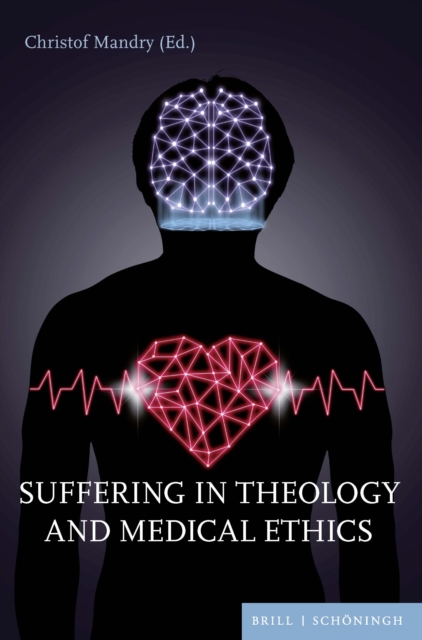
Suffering in Theology and Medical Ethics
Medicine, ethics, and theology embrace various ideas and concepts regarding human suffering – ranging from pain, suffering from loneliness, a lack of meaning or finitude, to a religious understanding of suffering, grounded in a suffering and compassionate God. In the practices of clinical medical ethics and health care chaplaincy, these diverse concepts overlap. What kind of conflicts arise from different concepts in patient care and counseling, and how should they be dealt with in a reflective way? Fostering international interdisciplinary scientific conversations, the book aims to deepen the discussion in medical ethics concerning the understanding of suffering, and the caring and counseling of patients.
eBook

Islam and Biomedical Research Ethics
This book is a contribution to the nascent discourse on global health and biomedical research ethics involving Muslim populations and Islamic contexts. It presents a rich sociological account about the ways in which debates and questions involving Islam within the biomedical research context are negotiated - a perspective which is currently lacking within the broader bioethics literature. The book tackles some key understudied areas, including: the role of faith in moral deliberations within biomedical research ethics; the moral anxiety and frustration experienced by researchers when having to negotiate multiple moral sources and how the marginalisation of women or the prejudice and abuse faced by groups, such as sex workers and those from the LGBT community, are encountered and negotiated in such contexts. The volume provides a valuable resource for researchers and scholars in this area by providing a systematic review of ethical guidelines and a rich case-based account of the ethical issues emerging in biomedical research in contexts where Islam and the religious moral commitments of Muslims are pertinent.
The book will be essential for those conducting research in low- and middle-income countries that have significant Muslim populations and for those in Muslim-minority settings. It will also appeal to researchers and scholars in religious studies, social sciences, philosophy, anthropology and theology, as well as the fields of biomedical ethics, Islamic ethics and global health.
eBook
An explanation and analysis of how world religions formulate their ethical decisions on withdrawing treatment and determining death
Introduction
This paper explores definitions of death from the perspectives of several world and indigenous religions, with practical application for health care providers in relation to end of life decisions and organ and tissue donation after death. It provides background material on several traditions and explains how different religions derive their conclusions for end of life decisions from the ethical guidelines they proffer.
Methods
Research took several forms beginning with a review of books and articles written by ethicists and observers of Bön, Buddhism, Christianity, Hinduism, Indigenous Traditions, Islam, Judaism, Shinto and Taoism. It then examined sources to which these authors referred in footnotes and bibliographies. In addition, material was gathered through searches of data bases in religious studies, general humanities, social sciences and medicine along with web-based key word searches for current policies in various traditions.
Results
Religious traditions provide their adherents with explanations for the meaning and purpose of life and include ethical analysis for the situations in which their followers find themselves. This paper aims to increase cultural competency in practitioners by demonstrating the reasoning process religions use to determine what they believe to be the correct decision in the face of death.
Conclusion
Patterns emerge in the comparative study of religious perspectives on death. Western traditions show their rootedness in Judaism in their understanding of the human individual as a finite, singular creation. Although the many branches of Western religions do not agree on precisely how to determine death, they are all able to locate a moment of death in the body. In Eastern traditions personhood is not defined in physical terms. From prescribing the location of death, to resisting medical intervention and definitions of death, Eastern religions, in their many forms, incorporate the beliefs and practices that preceded them. Adding to the complexity for these traditions is the idea that death is a process that continues after the body has met most empirical criteria for determining death. For Hinduism and Buddhism, the cessation of heart, brain and lung function is the beginning of the process of dying—not the end.
Journal Article

The Breathwork of Ar-Rahman: An Islamic Ethic of Reproductive Care
I offer an intersectional and Islamic ethic of reproductive care that makes visible the unmet care needs of and attends to the epistemic, moral and ontological injuries experienced by Muslim pregnant, birthing and postpartum people in a global pandemic. My feminist-theorizing is enveloped within Islamic stories of maternity. I offer a moral vocabulary of care which advocates for the Islamic right of Muslims to supported caregiving and labours against the violence of maternal separation. A central theme is kin-making, a type of caring labour, by which we house one another in our relations and accept responsibility for one another's care and access needs. In an Islamic sense, kin-making is a kind of access-work, of sensing how our bodies fit and move together in the spaces we hold together. It is a way of making space in our gatherings, of homing, of housing within our relations those who have been dislocated by settler-colonial, heteropatriarchal and ableist violence. I argue that what paves safe passage for Muslims birthing in a pandemic are constellations of care that go beyond the scope of health-care settings and medicalized care. Such webs of care include Allah as doula, radical birthworkers, (grand)mothers, lands and waters, aunties and friends and the ancestors that watch over us in Creator's name as we bear life. Such home-making is a way of mobilizing Islamic knowledge to protect the ontological security of Muslims and their right to possess their Muslimness, to think, critique and judge their experiences of reproductive care islamically.
Journal Article