
Catalogue Search | MBRL


Are you sure you want to remove the book from the shelf?

{{itemTitle}}
675
result(s) for
"Biografier."
Sort by:

Young Orson : the years of luck and genius on the path to Citizen Kane
\"In the history of American popular culture, there is no more dramatic story--no swifter or loftier ascent to the pinnacle of success and no more tragic downfall--than that of Orson Welles. In this magisterial biography, Patrick McGilligan brings young Orson into focus as never before. He chronicles Welles's early life growing up in Wisconsin and Illinois as the son of an alcoholic industrialist and a radical suffragist and classical musician, and the magical early years of his career, including his marriage and affairs, his influential friendships, and his artistic collaborations\"-- Publisher's description.
Book

Control over Stories of Illness and Life
This article discusses the relationship between nonprofessional media participation and the professional handling of participants. It expands on the case of “Karen”, who related her life-threatening illness and patient experience in a broad range of media before transitioning into professional communications work for a health organization that required her to recruit other patient-participants. The article contributes to research on media participation by focusing on the blurred boundaries between professionals and nonprofessionals. It describes how relationships between the two can be characterized by tensions and dilemmas that are closely tied to issues of status and control. Karen’s case is instructive in the particular light it sheds on such matters and on how control over the mediated telling of a life story is exercised.
Journal Article
The Mediatized Zlatan, Made by Sweden
The present article analyses the mediatization of the brand and celebrity Zlatan Ibrahimović using the reception and marketing of the footballer’s life story and autobiography as its main case. It is shown that the construction of a myth such as Ibrahimović transcends the materiality of the book as well as geographical, vernacular and media boundaries, as it is constituted as content in a digital network that produces signification. This ‘Zlatan content’ is framed by national Swedish values and a traditional Western myth of individual masculine excellence. It is also marked by emotions, class and race, telling a tale about the marginalized emotive immigrant becoming both a national icon and part of an imaginary Western ghetto experience and global literary canon formation. It is argued that the performance of excitable speech acts is crucial in the mediatization and branding of mass market literature and celebrities such as Ibrahimović.
Journal Article
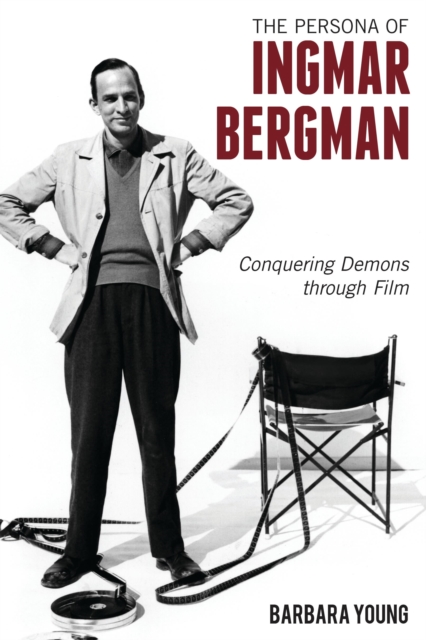
The persona of Ingmar Bergman
Born to a mother who did not want him and a father who humiliated him during his upbringing, Ingmar Bergman somehow endured his dysfunctional family to become one of the great artists of the twentieth century.However, the scars left from his early agony affected him both physically and emotionally.
eBook

The Many Lives of Cy Endfield
Cy Endfield (1914–1995) was a filmmaker who was also fascinated by the worlds of close-up magic, science, and invention. After directing several distinctive low-budget films in Hollywood, he was blacklisted in 1951 and fled to Britain rather than “name names” before HUAC, the U.S. House of Representatives’ Un-American Activities Committee. The Pennsylvania-born Endfield made films that exhibit an outsider’s eye for his adopted country, including the working-class “trucking” drama
Hell Drivers and the cult film
Zulu —a war epic as politically nuanced as it is spectacular. Along the way he encountered Orson Welles, collaborated with pioneering animator Ray Harryhausen, published a book of his card magic, and co-invented an early word processor that anticipated today’s technology.
The Many Lives of Cy Endfield is the first book on this fascinating figure. The fruit of years of archival research and personal interviews by Brian Neve, it documents Endfield’s many identities: among them second-generation immigrant, Jew, Communist, and exile. Neve paints detailed scenes not only of the political and personal dramas of the blacklist era, but also of the attempts by Hollywood directors in the postwar 1940s and early 1950s to address social and political controversies of the day. Out of these efforts came two crime melodramas (what would become known as film noir) on inequalities of class and race:
The Underworld Story and
The Sound of Fury (also known as
Try and Get Me! ). Neve reveals the complex production and reception histories of Endfield’s films, which the critic Jonathan Rosenbaum saw as reflective of “an uncommon intelligence so radically critical of the world we live in that it’s dangerous.”
The Many Lives of Cy Endfield is at once a revealing biography of an independent, protean figure, an insight into film industry struggles, and a sensitive and informed study of an underappreciated body of work. Best Five Books of the Year list, Iranian 24 Monthly, London UK “Make[s] a case for [Endfield’s] distinctive voice while tracing the way struggle, opposition, and thwarted ambition both defined his life and became the powerful themes of his best work.”—
Cineaste
eBook

The final victim of the blacklist
Before he attained notoriety as Dean of the Hollywood Ten—the blacklisted screenwriters and directors persecuted because of their varying ties to the Communist Party—John Howard Lawson had become one of the most brilliant, successful, and intellectual screenwriters on the Hollywood scene in the 1930s and 1940s, with several hits to his credit including Blockade, Sahara, and Action in the North Atlantic. After his infamous, almost violent, 1947 hearing before the House Un-American Activities Committee, Lawson spent time in prison and his lucrative career was effectively over. Studded with anecdotes and based on previously untapped archives, this first biography of Lawson brings alive his era and features many of his prominent friends and associates, including John Dos Passos, Theodore Dreiser, F. Scott Fitzgerald, Charles Chaplin, Gene Kelly, Edmund Wilson, Ernest Hemingway, Humphrey Bogart, Dalton Trumbo, Ring Lardner, Jr., and many others. Lawson's life becomes a prism through which we gain a clearer perspective on the evolution and machinations of McCarthyism and anti-Semitism in the United States, on the influence of the left on Hollywood, and on a fascinating man whose radicalism served as a foil for launching the political careers of two Presidents: Richard Nixon and Ronald Reagan. In vivid, marvelously detailed prose, Final Victim of the Blacklist restores this major figure to his rightful place in history as it recounts one of the most captivating episodes in twentieth century cinema and politics.
eBook

Sidney J. Furie
Known for his visual style as well as for his experimentation in virtually every genre of narrative cinema, award-winning director Sidney J. Furie also has the distinction of having made Canada's first ever feature-length fictional film in English,A Dangerous Age(1957). With a body of work that includesThe Ipcress File(1965),Lady Sings the Blues(1972), andThe Entity(1982), he has collaborated with major stars such as Marlon Brando, Frank Sinatra, Robert Redford, and Michael Caine, and his films have inspired some of Hollywood's most celebrated directors, including Stanley Kubrick and Quentin Tarantino.
In this first biography of the prolific filmmaker, author Daniel Kremer offers a comprehensive look at the director's unique career. Furie pioneered techniques such as improvisation in large-scale film productions, and sometimes shot his films in sequence to develop the characters from the ground up and improve the performers' in-the-moment spontaneity. Not only has Stanley Kubrick acknowledged that Furie'sThe Boys in Company C(1978) informed and influencedFull Metal Jacket(1987), but Martin Scorsese has said that he considersThe Entityto be one of the scariest horror films of all time. However, Furie was often later criticized for accepting lowbrow work, and as a result, little serious study has been devoted to the director.
Meticulously researched and enhanced by Kremer's close relationship with the filmmaker, this definitive biography captures the highs and lows of an exceptional but underexamined career, taking readers behind the scenes with a director who was often ahead of his time.
eBook

The Lives of Robert Ryan
The Lives of Robert Ryan provides an inside look at the gifted, complex, intensely private man whom Martin Scorsese called “one of the greatest actors in the history of American film.” The son of a Chicago construction executive with strong ties to the Democratic machine, Ryan became a star after World War II on the strength of his menacing performance as an anti-Semitic murderer in the film noir Crossfire. Over the next quarter century he created a gallery of brooding, neurotic, and violent characters in such movies as Bad Day at Black Rock, Billy Budd, The Dirty Dozen, and The Wild Bunch. His riveting performances expose the darkest impulses of the American psyche during the Cold War.
At the same time, Ryan’s marriage to a liberal Quaker and his own sense of conscience launched him into a tireless career of peace and civil rights activism that stood in direct contrast to his screen persona. Drawing on unpublished writings and revealing interviews, film critic J.R. Jones deftly explores the many contradictory facets of Robert Ryan’s public and private lives, and how these lives intertwined in one of the most compelling actors of a generation.
eBook


Tough as Nails
Called “God’s angry man” for his unyielding demands in pursuit of personal and artistic freedom, Oscar-winning filmmaker Richard Brooks brought us some of the mid-twentieth century’s most iconic films, including
Blackboard Jungle ,
Cat on a Hot Tin Roof ,
Elmer Gantry ,
In Cold Blood , and
Looking for Mr. Goodbar . “The important thing,” he once remarked, “is to write your story, to make it believable, to make it live.” His own life story has never been fully chronicled, until now.
Tough as Nails: The Life and Films of Richard Brooks restores to importance the career of a prickly iconoclast who sought realism and truth in his films. Douglass K. Daniel explores how the writer-director made it from the slums of Philadelphia to the heights of the Hollywood elite, working with the top stars of the day, among them Humphrey Bogart, Cary Grant, Elizabeth Taylor, Jean Simmons, Sidney Poitier, Sean Connery, Gene Hackman, and Diane Keaton. Brooks dramatized social issues and depicted characters in conflict with their own values, winning an Academy Award for his
Elmer Gantry screenplay and earning nominations for another seven Oscars for directing and screenwriting.
Tough as Nails offers illuminating insights into Brooks’s life, drawing on unpublished studio memos and documents and interviews from stars and colleagues, including Poitier, director Paul Mazursky, and Simmons, who was married to Brooks for twenty years. Daniel takes readers behind the scenes of Brooks’s major films and sheds light on their making, their compromises, and their common threads.
Tough as Nails celebrates Brooks’s vision while adding to the critical understanding of his works, their flaws as well as their merits, and depicting the tumults and trends in the life of a man who always kept his own compass. Best Books for General Audiences, selected by the American Association of School Librarians Outstanding Book, selected by the Public Library Reviewers
eBook