
Catalogue Search | MBRL


Are you sure you want to remove the book from the shelf?

{{itemTitle}}
12
result(s) for
"Biological Evolution Popular Works."
Sort by:

Bully for brontosaurus : reflections in natural history
A collection of thirty-five essays--representing the best of the column \"This View of Life\" from \"Natural History\" magazine--focuses on the themes of evolution and of the innumerable oddities of nature.
Book

Evolution's rainbow : diversity, gender, and sexuality in nature and people
In this innovative celebration of diversity and affirmation of individuality in animals and humans, Joan Roughgarden challenges accepted wisdom about gender identity and sexual orientation. A distinguished evolutionary biologist, Roughgarden takes on the medical establishment, the Bible, social science—and even Darwin himself. She leads the reader through a fascinating discussion of diversity in gender and sexuality among fish, reptiles, amphibians, birds, and mammals, including primates. Evolution's Rainbow explains how this diversity develops from the action of genes and hormones and how people come to differ from each other in all aspects of body and behavior. Roughgarden reconstructs primary science in light of feminist, gay, and transgender criticism and redefines our understanding of sex, gender, and sexuality. Witty, playful, and daring, this book will revolutionize our understanding of sexuality. Roughgarden argues that principal elements of Darwinian sexual selection theory are false and suggests a new theory that emphasizes social inclusion and control of access to resources and mating opportunity. She disputes a range of scientific and medical concepts, including Wilson's genetic determinism of behavior, evolutionary psychology, the existence of a gay gene, the role of parenting in determining gender identity, and Dawkins's \"selfish gene\" as the driver of natural selection. She dares social science to respect the agency and rationality of diverse people; shows that many cultures across the world and throughout history accommodate people we label today as lesbian, gay, and transgendered; and calls on the Christian religion to acknowledge the Bible's many passages endorsing diversity in gender and sexuality. Evolution's Rainbow concludes with bold recommendations for improving education in biology, psychology, and medicine; for democratizing genetic engineering and medical practice; and for building a public monument to affirm diversity as one of our nation's defining principles.
eBook

Not a chimp : the hunt to find the genes that make us human
Humans are primates, and our closest relatives are the other African apes - chimpanzees closest of all. With the mapping of the human genome, and that of the chimp, a direct comparison of the differences between the two, letter by letter along the billions of As, Gs, Cs, and Ts of the DNA code, has led to the widely vaunted claim that we differ from chimps by a mere 1.6% of our genetic code. A mere hair's breadth genetically! To a rather older tradition of anthropomorphizing chimps, trying to get them to speak, dressing them up for 'tea parties', was added the stamp of genetic confirmation. It also began an international race to find that handful of genes that make up the difference - the genes that make us uniquely human. But what does that 1.6% really mean? And should it really lead us to consider extending limited human rights to chimps, as some have suggested? Are we, after all, just chimps with a few genetic tweaks? Is our language and our technology just an extension of the grunts and ant-collecting sticks of chimps? In this book, Jeremy Taylor sketches the picture that is emerging from cutting edge research in genetics, animal behaviour, and other fields. The indications are that the so-called 1.6% is much larger and leads to profound differences between the two species. We shared a common ancestor with chimps some 6-7 million years ago, but we humans have been racing away ever since. One in ten of our genes, says Taylor, has undergone evolution in the past 40,000 years! Some of the changes that happened since we split from chimpanzees are to genes that control the way whole orchestras of other genes are switched on and off, and where. Taylor shows, using studies of certain genes now associated with speech and with brain development and activity, that the story looks to be much more complicated than we first thought. This rapidly changing and exciting field has recently discovered a host of genetic mechanisms that make us different from other apes. As Taylor points out, for too long we have let our sentimentality for chimps get in the way of our understanding. Chimps use tools, but so do crows. Certainly chimps are our closest genetic relatives. But relatively small differences in genetic code can lead to profound differences in cognition and behaviour. Our abilities give us the responsibility to protect and preserve the natural world, including endangered primates. But for the purposes of human society and human concepts such as rights, let's not pretend that chimps are humans uneducated and undressed. We've changed a lot in those 12 million years.
eBook

The selfish gene
The million copy international bestseller, critically acclaimed and translated into over 25 languages. As influential today as when it was first published, 'The Selfish Gene' has become a classic exposition of evolutionary thought. Professor Dawkins articulates a gene's eye view of evolution - a view giving centre stage to these persistent units of information, and in which organisms can be seen as vehicles for their replication.
eBook

Origins
\"Fossils are the fragments from which, piece by laborious piece, the great mosaic of the history of life has been constructed. Here and there, we can supplement these meager scraps by the use of biochemical markers or geochemical signatures that add useful information, but, even with such additional help, our reconstructions and our models of descent are often tentative. For the fossil record is, as we have seen, as biased as it is incomplete. But fragmentary, selective, and biased though it is, the fossil record, with all its imperfections, is still a treasure. Though whole chapters are missing, many pages lost, and the earliest pages so damaged as to be, as yet, virtually unreadable, this-the greatest biography of all-is one in whose closing pages we find ourselves.\"-fromOrigins
InOrigins, Frank H. T. Rhodes explores the origin and evolution of living things, the changing environments in which they have developed, and the challenges we now face on an increasingly crowded and polluted planet. Rhodes argues that the future well-being of our burgeoning population depends in no small part on our understanding of life's past, its long and slow development, and its intricate interdependencies.
Rhodes's accessible and extensively illustrated treatment of the origins narrative describes the nature of the search for prehistoric life, the significance of geologic time, the origin of life, the emergence and spread of flora and fauna, the evolution of primates, and the emergence of modern humans.
eBook


Freaks of Nature
From two-legged goats and double-headed snakes, to 'Cyclops' infants with a single eye in the middle of their forehead, Mark S. Blumberg looks at 'freak' bodily anomalies in both humans and other animals to reveal how such deformities provide valuable windows on the intimate connections between genetics, evolution, development, and the environment. - ;Two-legged goats, conjoined twins, 'Cyclops' infants with a single eye in the middle of their forehead, double-headed snakes, and Laloo, a man with a partially formed twin attached to his chest... In Freaks of Nature, Mark S. Blumberg turns a scientist's eye on these unusual examples of humans and other animals, showing how a subject once relegated to the sideshow can help explain some of the deepest complexities of biology. These examples of extreme bodily anomalies are in fact the natural products of development, and it is through such developmental mechanisms that evolution works. And Blumberg shows how 'freak' deformities can provide valuable windows on the intimate connections between genetics, development, the environment, and evolution. In taking seriously a subject that has often been shunned as discomfiting and embarrassing, Freaks of Nature takes the perspective of evolutionary developmental. biology to shed new light on how individuals--and entire species--develop, survive, and evolve. - ;Blumberg imparts lessons that, although familiar to biologists, will be valuable to non-specialists. - Jerry A. Coyne, Nature;Blumberg illustrates his points with clear and intriguing examples. - Jerry A. Coyne, Nature;Compelling enough not to suffocate the interest of non-scientific readers. A stimulating read. - Rob Hasting, Financial Times.
eBook
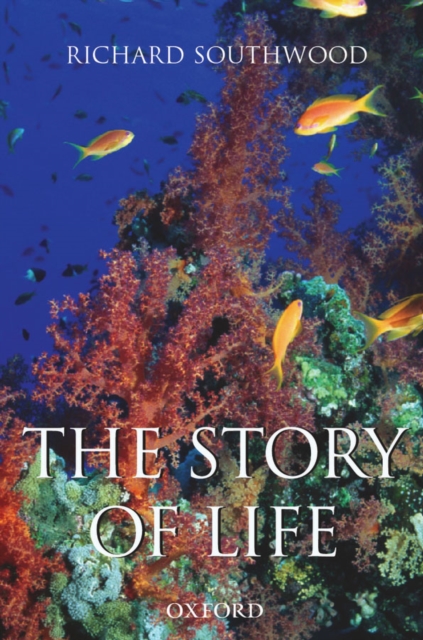
The story of life
A comprehensive and well-illustrated guide to the story of life from the origin of the earth to the present day written from a scientific naturalist's viewpoint and set against a background of the world's changing climate and geology. Many existing books describe short periods in the history of life - the emergence of life, dinosaurs, etc but this.
eBook
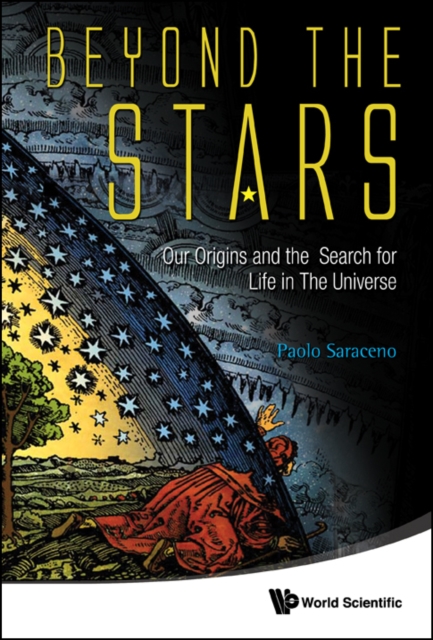
Beyond the stars
What is the origin of the universe? Are we alone in the Universe? Using clear and plain language, the author explores these two interesting scientific-philosophical themes with a broad range of studies, including astronomy, cosmology, chemistry, biology, geology and planet science.
eBook

The genetic gods : evolution and belief in human affairs
Distinguished evolutionary geneticist John Avise reviews recent discoveries in molecular biology, evolutionary genetics, and human genetic engineering, and explains how they relate to our development--not just our metabolism and physiology, but also our emotional disposition, personality, ethical leanings, and, indeed, religiosity.
eBook