
Catalogue Search | MBRL


Are you sure you want to remove the book from the shelf?

{{itemTitle}}
29,052
result(s) for
"Biology Methodology"
Sort by:

Stepping in the same river twice : replication in biological research
An international team of biologists, philosophers, and historians of science explores the critically important process of replication in biological and biomedical research. Without replication, the trustworthiness of scientific research remains in doubt. Although replication is increasingly recognized as a central problem in many scientific disciplines, repeating the same scientific observations of experiments or reproducing the same set of analyses from existing data is remarkably difficult. In this important volume, an international team of biologists, philosophers, and historians of science addresses challenges and solutions for valid replication of research in medicine, ecology, natural history, agriculture, physiology, and computer science. After the introduction to important concepts and historical background, the book offers paired chapters that provide theoretical overviews followed by detailed case studies. These studies range widely in topics, from infectious-diseases and environmental monitoring to museum collections, meta-analysis, bioinformatics, and more. The closing chapters explicate and quantify problems in the case studies, and the volume concludes with important recommendations for best practices. -- Provided by publisher.
Book

A Simpler Life
A Simpler Life approaches the
developing field of synthetic biology by focusing on the
experimental and institutional lives of practitioners in two labs
at Princeton University. It highlights the distance
between hyped technoscience and the more plodding and entrenched
aspects of academic research.
Talia Dan-Cohen follows practitioners as they wrestle with
experiments, attempt to publish research findings, and navigate the
ins and outs of academic careers. Dan-Cohen foregrounds the
practices and rationalities of these pursuits that give both
researchers' lives and synthetic life their distinctive
contemporary forms. Rather than draw attention to avowed
methodology, A Simpler Life investigates some of the more
subtle and tectonic practices that bring knowledge, doubt, and
technological intervention into new configurations. In so doing,
the book sheds light on the more general conditions of contemporary
academic technoscience.
eBook

Inside science : revolution in biology and its impact
Looking behind widely held beliefs about the myth of the scientific enterprise, this book is a rare examination of how science really functions. Drawing on his 25 years of experience as the founding editor of Cell, the world's leading journal in biology, the author questions the dogma that scientific papers describe how research was actually done, describes the distortions caused by pressure to publish, and considers the effects of changes in the way science is communicated as we move ever further into the digital era. The view that science protects itself by identifying and excluding work that is not reproducible is rigorously examined, as is the prevalence of fraud in science. The author argues that the move from research done in small teams to the much larger scale of \"big science\" has the potential to change the nature of science itself. He asks if science can continue in its present form or if new methods of evaluation will be needed for science to function in the future. The author brings these general principles to life by considering the history of the genetics revolution, from the discovery of the double helical structure of DNA to the sequencing of the human genome and the possibilities of gene editing. History shows us that each period of progress in science relied on dogmas that often advanced but sometimes hindered progress, and that views of reality often changed suddenly and dramatically. One example is the critical reassessment of epigenetics that is raising the possibility that there may be factors in inheritance extraneous to DNA. The book concludes by asking if the reductionist manifesto that has dominated biology for the past half century can continue to hold, and revisits the much-debated question: What is science? -- Adapted from publisher's website.
Book

Methods for the study of marine benthos
The continuing global decline of the health of the sea, and the increasing depletion of marine resources and biodiversity, caused by human activity and climate change, have led to ever-increasing international concern.
eBook

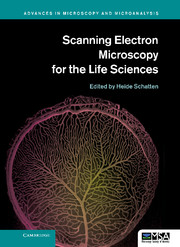
Scanning Electron Microscopy for the Life Sciences
Recent developments in scanning electron microscopy (SEM) have resulted in a wealth of new applications for cell and molecular biology, as well as related biological disciplines. It is now possible to analyze macromolecular complexes within their three-dimensional cellular microenvironment in near native states at high resolution and to identify specific molecules and their structural and molecular interactions. New approaches include cryo-SEM applications and environmental SEM (ESEM), staining techniques and processing applications combining embedding and resin-extraction for imaging with high resolution SEM, and advances in immuno-labeling. New developments include helium ion microscopy, automated block-face imaging combined with serial sectioning inside an SEM chamber, and Focused Ion Beam Milling (FIB) combined with block-face SEM. With chapters written by experts, this guide gives an overview of SEM and sample processing for SEM and highlights several advances in cell and molecular biology that greatly benefited from using conventional, cryo, immuno and high-resolution SEM.
eBook

Ethnoprimatology : a practical guide to research at the human-nonhuman primate interface
\"Ethnoprimatology, the combining of primatological and anthropological practice and the viewing of humans and other primates as living in integrated and shared ecological and social spaces, has become an increasingly popular approach to primate studies in the twenty-first century. Offering an insight into the investigation and documentation of human-nonhuman primate relations in the Anthropocene, this book guides the reader though the preparation, design, implementation, and analysis of an ethnoprimatological research project, offering practical examples of the vast array of methods and techniques at chapter level. With contributions from the world's leading experts in the field, Ethnoprimatology critically analyses current primate conservation efforts, outlines their major research questions, theoretical bases and methods, and tackles the challenges and complexities involved in mixed-methods research. Documenting the spectrum of current research in the field, it is an ideal volume for students and researchers in ethnoprimatology, primatology, anthropology, and conservation biology\"-- Provided by publisher.
Book

Synthesizing qualitative research
Recently, health care policymakers and practitioners have recognised the potential contribution of qualitative research to support decision making. Different methodological approaches have been developed and used in practice. Some approaches have focused on the inclusion of qualitative data only. Others have experimented with the integration of both quantitative and qualitative research results, or have been used to complement results from quantitative reviews. This book provides [an] overview of commonly used qualitative synthesis approaches in health care, with worked examples illustrating how appropriate methods are used in different situations. The methods covered include: Meta-aggregation, meta-ethnography, critical interpretive synthesis, realist review, mixed methods approach, [and] Bayesian approaches to the synthesis of qualitative and quantitative research findings. (DIPF/Orig.).
eBook


Logical modeling of biological systems
Systems Biology is the systematic study of the interactions between the components of a biological system and studies how these interactions give rise to the function and behavior of the living system. Through this, a life process is to be understood as a whole system rather than the collection of the parts considered separately. Systems Biology is therefore more than just an emerging field: it represents a new way of thinking about biology with a dramatic impact on the way that research is performed. The logical approach provides an intuitive method to provide explanations based on an expressive relational language. This book covers various aspects of logical modeling of biological systems, bringing together 10 recent logic-based approaches to Systems Biology by leading scientists. The chapters cover the biological fields of gene regulatory networks, signaling networks, metabolic pathways, molecular interaction and network dynamics, and show logical methods for these domains based on propositional and first-order logic, logic programming, answer set programming, temporal logic, Boolean networks, Petri nets, process hitting, and abductive and inductive logic programming. It provides an excellent guide for all scientists, biologists, bioinformaticians, and engineers, who are interested in logic-based modeling of biological systems, and the authors hope that new scientists will be encouraged to join this exciting scientific endeavor.
eBook