
Catalogue Search | MBRL


Are you sure you want to remove the book from the shelf?

{{itemTitle}}
617
result(s) for
"Biomedical Enhancement ethics."
Sort by:


Four ethical priorities for neurotechnologies and AI
Artificial intelligence and brain-computer interfaces must respect and preserve people's privacy, identity, agency and equality, say Rafael Yuste, Sara Goering and colleagues.
Journal Article

The ethics of ability and enhancement
This book explores our ethical responsibilities regarding health in general and disabilities in particular. Disability studies and human enhancement stand out as two emerging areas of research in medical ethics, prompting debates into ethical questions of identity, embodiment, discrimination, and accommodation, as well as questions concerning distributive justice and limitations on people's medical rights. Edited by two ethicist philosophers, this book combines their mastery of the theoretical debates surrounding disability and human enhancement with attention to real world questions that health workers and patients may face. By including a wide range of high-quality voices and perspectives, the book provides an invaluable resource for scholars who are working on this important and emerging area of leadership and health care ethics.
Book

Human Enhancement
To what extent should we use technology to try to make better human beings? Because of the remarkable advances in biomedical science, we must now find an answer to this question. Human enhancement aims to increase human capacities above normal levels. Many forms of human enhancement are already in use. Many students and academics take cognition enhancing drugs to get a competitive edge. Some top athletes boost their performance with legal and illegal substances. Many an office worker begins each day with a dose of caffeine. This is only the beginning. As science and technology advance further, it will become increasingly possible to enhance basic human capacities to increase or modulate cognition, mood, personality, and physical performance, and to control the biological processes underlying normal aging. Some have suggested that such advances would take us beyond the bounds of human nature. These trends, and these dramatic prospects, raise profound ethical questions. They have generated intense public debate and have become a central topic of discussion within practical ethics. Should we side with bioconservatives, and forgo the use of any biomedical interventions aimed at enhancing human capacities? Should we side with transhumanists and embrace the new opportunities? Or should we perhaps plot some middle course? Human Enhancement presents the latest moves in this crucial debate: original contributions from many of the world’s leading ethicists and moral thinkers, representing a wide range of perspectives, advocates and sceptics, enthusiasts and moderates. These are the arguments that will determine how humanity develops in the near future.
eBook
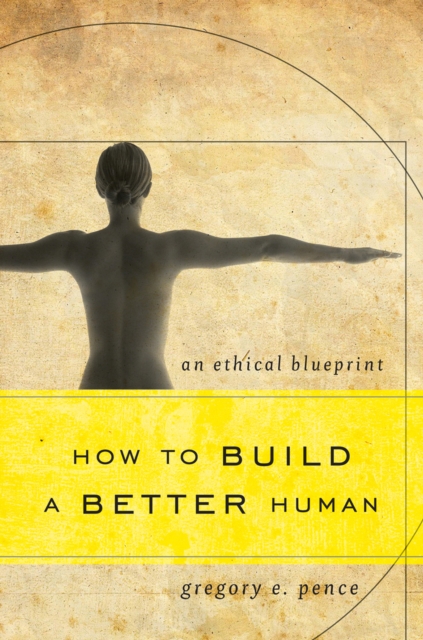
How to build a better human
Medicine has recently discovered spectacular tools for human enhancement. Yet to date, it has failed to use them well, in part because of ethical objections. Meanwhile, covert attempts flourish to enhance with steroids, mind-enhancing drugs, and cosmetic surgery—all largely unstudied scientifically.
The little success to date has been sporadic and financed privately. In How to Build a Better Human, prominent bioethicist Gregory E. Pence argues that people, if we are careful and ethical, can use genetics, biotechnology, and medicine to improve ourselves, and that we should publicly study what people are doing covertly. Pence believes that we need to transcend the two common frame stories of bioethics: bioconservative alarmism and uncritical enthusiasm, and that bioethics should become part of the solution—not the problem—in making better humans.
eBook

Cognitive gene enhancements and the capitalist meritocracy
The relationship between cognitive enhancements (CE) and human autonomy or authenticity is generally positioned as
how
CE impact human autonomy or authenticity. But rarely, if ever, do we consider whether the value and pursuit of CE is an authentic one. In this paper, I will argue that the moral permissibility of cognitive
gene
enhancements is undone by the legitimate concern that the near universal value for such modifications is likely driven by oppressive norms for superintelligence and productivity. I argue that these norms derive from the capitalist meritocracy: an economic system that structures inclusion and success based on patriarchal and racist norms of intelligence and productivity. The claim that the use of such enhancements fits within the autonomous scope of individual power is thus far weaker than it claims to be, particularly within the context of genetic modification.
Journal Article

Moral enhancement, freedom, and what we (should) value in moral behaviour
The enhancement of human traits has received academic attention for decades, but only recently has moral enhancement using biomedical means – moral bioenhancement (MB) – entered the discussion. After explaining why we ought to take the possibility of MB seriously, the paper considers the shape and content of moral improvement, addressing at some length a challenge presented by reasonable moral pluralism. The discussion then proceeds to this question: Assuming MB were safe, effective, and universally available, would it be morally desirable? In particular, would it pose an unacceptable threat to human freedom? After defending a negative answer to the latter question – which requires an investigation into the nature and value of human freedom – and arguing that there is nothing inherently wrong with MB, the paper closes with reflections on what we should value in moral behaviour.
Journal Article

Cognitive Enhancement: Methods, Ethics, Regulatory Challenges
Cognitive enhancement takes many and diverse forms. Various methods of cognitive enhancement have implications for the near future. At the same time, these technologies raise a range of ethical issues. For example, they interact with notions of authenticity, the good life, and the role of medicine in our lives. Present and anticipated methods for cognitive enhancement also create challenges for public policy and regulation.
Journal Article
Limits to human enhancement: nature, disease, therapy or betterment?
Background
New technologies facilitate the enhancement of a wide range of human dispositions, capacities, or abilities. While it is argued that we need to set limits to human enhancement, it is unclear where we should find resources to set such limits.
Discussion
Traditional routes for setting limits, such as referring to nature, the therapy-enhancement distinction, and the health-disease distinction, turn out to have some shortcomings. However, upon closer scrutiny the concept of enhancement is based on vague conceptions of what is to be enhanced. Explaining why it is better to become older, stronger, and more intelligent presupposes a clear conception of goodness, which is seldom provided. In particular, the qualitative
better
is frequently confused with the quantitative
more
. We may therefore not need “external” measures for setting its limits – they are available in the concept of enhancement itself.
Summary
While there may be shortcomings in traditional sources of limit setting to human enhancement, such as nature, therapy, and disease, such approaches may not be necessary. The specification-of-betterment problem inherent in the conception of human enhancement itself provides means to restrict its unwarranted proliferation. We only need to demand clear, sustainable, obtainable goals for enhancement that are based on evidence, and not on lofty speculations, hypes, analogies, or weak associations. Human enhancements that specify what will become better, and provide adequate evidence, are good and should be pursued. Others should not be accepted.
Journal Article

Discussions on Human Enhancement Meet Science: A Quantitative Analysis
The analysis of citation flow from a collection of scholarly articles might provide valuable insights into their thematic focus and the genealogy of their main concepts. In this study, we employ a topic model to delineate a subcorpus of 1,360 papers representative of bioethical discussions on enhancing human life. We subsequently conduct an analysis of almost 11,000 references cited in that subcorpus to examine quantitatively, from a bird’s-eye view, the degree of openness of this part of scholarship to the specialized knowledge produced in biosciences. Although almost half of the analyzed references point to journals classified as Natural Science and Engineering (NSE), we do not find strong evidence of the intellectual influence of recent discoveries in biosciences on discussions on human enhancement. We conclude that a large part of the discourse surrounding human enhancement is inflected with “science-fictional habits of mind.” Our findings point to the need for a more science-informed approach in discussions on enhancing human life.
Journal Article