
Catalogue Search | MBRL


Are you sure you want to remove the book from the shelf?

{{itemTitle}}
73,054
result(s) for
"Biotechnology laboratories."
Sort by:

That's my tiny-saurus rex
Forming a plan to render themselves the best Microsaur sitters ever, Danny and Lin are unexpectedly challenged by a pair of rampaging T-rex twins whose antics complicate a race against time to fix the Professor's wrecked lab before they are kicked out of the Microterium.
Book

Developing Digital Courseware for a Virtual Nano-Biotechnology Laboratory: A Design-based Research Approach
This paper first reviews applications of multimedia in engineering education, especially in laboratory learning. It then illustrates a model and accreditation criteria adopted for developing a specific set of nanotechnology laboratory courseware and reports the design-based research approach used in designing and developing the e-learning material. According to findings of the present study, the courseware developed satisfies the "e-Learning Courseware Quality Checklist version 3.0" in most dimensions. This paper concludes by presenting the researchers' findings and problems encountered in this ongoing study, and it describes a future study plan that will include the student input regarding these laboratories. This study should contribute to the innovative use of technology in facilitating engineering laboratory learning and in instructional design practice and research.
Journal Article

Tiny-stego stampede
\"Danny and Lin have gotten pretty good at taking care of tiny dinosaurs so when Lin's mom asks them to babysit Lin's little sister, ChuChu, they're sure they've got it covered. After all, what better place to spend an after noon than hanging out in the Fruity Stars Lab and playing with the Microsaurs? They will be the best babysitters ever! But when the biggest Microsaur they've ever seen starts a stego stampede. Danny and Lin realize they are up for their most important adventure yet. Not only do they need to stop the Microsaurs from destroying the Microterium, but they've also got to save ChuChu!\"--Back cover.
Book

Robotic workflows for automated long-term adaptive laboratory evolution: improving ethanol utilization by Corynebacterium glutamicum
Background
Adaptive laboratory evolution (ALE) is known as a powerful tool for untargeted engineering of microbial strains and genomics research. It is particularly well suited for the adaptation of microorganisms to new environmental conditions, such as alternative substrate sources. Since the probability of generating beneficial mutations increases with the frequency of DNA replication, ALE experiments are ideally free of constraints on the required duration of cell proliferation.
Results
Here, we present an extended robotic workflow for performing long-term evolution experiments based on fully automated repetitive batch cultures (rbALE) in a well-controlled microbioreactor environment. Using a microtiter plate recycling approach, the number of batches and thus cell generations is technically unlimited. By applying the validated workflow in three parallel rbALE runs, ethanol utilization by
Corynebacterium glutamicum
ATCC 13032 (WT) was significantly improved. The evolved mutant strain WT_EtOH-Evo showed a specific ethanol uptake rate of 8.45
±
0.12 mmol
EtOH
g
CDW
−1
h
−1
and a growth rate of 0.15 ± 0.01 h
−1
in lab-scale bioreactors. Genome sequencing of this strain revealed a striking single nucleotide variation (SNV) upstream of the
ald
gene (NCgl2698, cg3096) encoding acetaldehyde dehydrogenase (ALDH). The mutated basepair was previously predicted to be part of the binding site for the global transcriptional regulator GlxR, and re-engineering demonstrated that the identified SNV is key for enhanced ethanol assimilation. Decreased binding of GlxR leads to increased synthesis of the rate-limiting enzyme ALDH, which was confirmed by proteomics measurements.
Conclusions
The established rbALE technology is generally applicable to any microbial strain and selection pressure that fits the small-scale cultivation format. In addition, our specific results will enable improved production processes with
C. glutamicum
from ethanol, which is of particular interest for acetyl-CoA-derived products.
Journal Article

After the WHO report: what’s next in the search for COVID’s origins
A World Health Organization report makes a reasonable start, scientists say, but there are many questions yet to be answered.
A World Health Organization report makes a reasonable start, scientists say, but there are many questions yet to be answered.
Journal Article

Biotechnology : a laboratory course
The objectives of this Second Edition of Biotechnology: A Laboratory Course remain unchanged: to create a text that consists of a series of laboratory exercises that integrate molecular biology with protein biochemistry techniques while providing a continuum of experiments.
eBook
The art of research
Noam Shomron includes antiques and his own paintings of wildlife in the decor for his genomics lab.
Noam Shomron includes antiques and his own paintings of wildlife in the decor for his genomics lab.
Noam Shomron in his lab office, with his paintings and camera collection near his desk
Journal Article

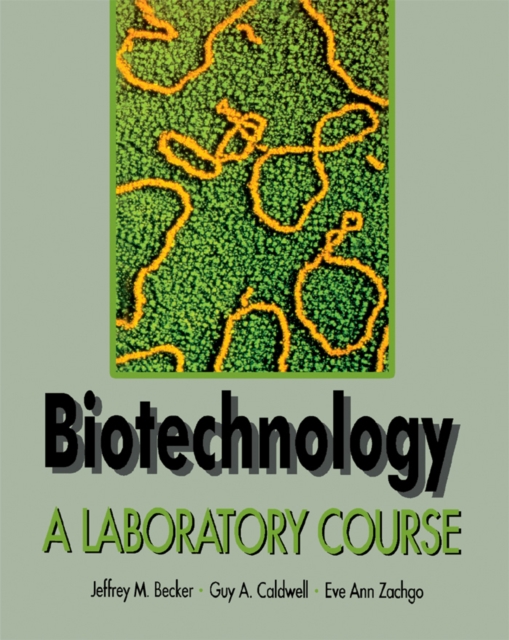
Biotechnology: a laboratory course
Biotechnology: A Laboratory Course is a series of laboratory exercises demonstrating the in-depth experience and understanding of selected methods, techniques, and instrumentation used in biotechnology. This manual is an outgrowth of an introductory laboratory course for senior undergraduate and first year graduate students in the biological sciences at The University of Tennessee.This book is composed of 19 chapters and begins with some introductory notes on record keeping and safety rules. The first exercises include pH measurement, the use of micropipettors and spectrophotometers, the concept of aseptic technique, and preparation of culture media. The subsequent exercises involve the application of the growth curve, the isolation, purification, and concentration of plasmid DNA from Escherichia coli, and the process of agarose gel electrophoresis. Other exercises include the preparation, purification, and hybridization of probe, the transformation of Saccharomyces cerevisiae, the transformation of E. coli by plasmid DNA, and the principles and applications of protein assays. The final exercises explore the ?-galactosidase assay and the purification and determination of ?-galactosidase in permeabilized yeast cells.This book is of great value to undergraduate biotechnology and molecular biology students.
eBook