
Catalogue Search | MBRL


Are you sure you want to remove the book from the shelf?

{{itemTitle}}
48
result(s) for
"Bird remains (Archaeology)"
Sort by:
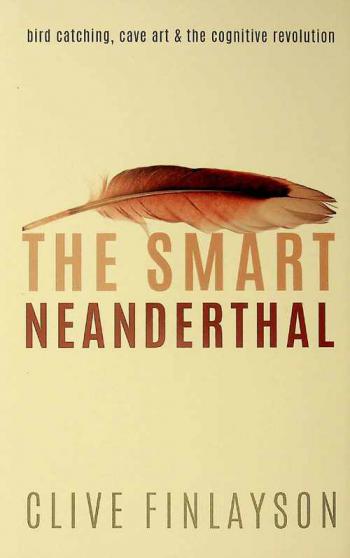
The smart Neanderthal : bird catching, cave art & the cognitive revolution
Since the late 1980s the dominant theory of human origins has been that a 'cognitive revolution' (C.50,000 years ago) led to the advent of our species, Homo sapiens. As a result of this revolution our species spread and eventually replaced all existing archaic Homo species, ultimately leading to the superiority of modern humans. Or so we thought. As Clive Finlayson explains, the latest advances in genetics prove that there was significant interbreeding between Modern Humans and the Neanderthals. All non-Africans today carry some Neanderthal genes. We have also discovered aspects of Neanderthal behaviour that indicate that they were not cognitively inferior to modern humans, as we once thought, and in fact had their own rituals and art. Finlayson, who is at the forefront of this research, recounts the discoveries of his team, providing evidence that Neanderthals caught birds of prey, and used their feathers for symbolic purposes. There is also evidence that Neanderthals practised other forms of art, as the recently discovered engravings in Gorham's Cave Gibraltar indicate. Linking all the recent evidence, The Smart Neanderthal casts a new light on the Neanderthals and the \"Cognitive Revolution\". Finlayson argues that there was no revolution and, instead, modern behaviour arose gradually and independently among different populations of Modern Humans and Neanderthals. Some practices were even adopted by Modern Humans from the Neanderthals. Finlayson overturns classic narratives of human origins, and raises important questions about who we really are.

Abundance or stress? Faunal exploitation patterns and subsistence strategies: The case study of Brush Hut 1 at Ohalo II, a submerged 23,000-year-old camp in the Sea of Galilee, Israel
The submerged site of Ohalo II was occupied during the Last Glacial Maximum (LGM), between 23,500–22,500 cal BP, bridging the Upper Paleolithic/Epipaleolithic transition in the southern Levant. The site is known for the excellent preservation of its brush huts and botanical remains. This study examines the behavior of its past inhabitants through analysis of the entire faunal assemblage found on the three successive floors of Brush Hut 1. Furthermore, it provides an opportunity to test differing models of prey choice and assess whether the observed resource diversification is the result of resource depression (explained by Optimal Foraging Theory) or resource abundance (explained by Niche Construction Theory). We focused on a quantitative, qualitative and spatial investigation of the more than 20,000 faunal remains, combining traditional zooarchaeological methods with microwear analysis of teeth and Fourier Transform Infrared Spectroscopy (FTIR) of burnt bones. Identification of faunal remains to the most detailed level possible, combined with analysis of skeletal element frequencies allowed reconstruction of a profile of the desired prey, highlighting the importance of small, expedient prey compared to larger game (ungulates). FTIR was used to identify degrees of burning and to develop a key to identifying burnt bones from water-logged environments. Availability of multiple food sources within a rich habitat may have driven exploitation of those varied local resources, rather than targeting energetically-rich large prey. The choice of a littoral habitat that could be intensively exploited is an example of niche selection. Comparison with contemporaneous and later sites contributes to the ongoing discussion about Early Epipaleolithic prey choice, and the impact, if any, of the LGM in the Jordan Valley. Ohalo II is an example of diverse prey choice motivated by abundance rather than stress, at a 23,000-year-old fisher-hunter-gatherers camp.
Journal Article

Stable Isotopes and Zooarchaeology at Teotihuacan, Mexico Reveal Earliest Evidence of Wild Carnivore Management in Mesoamerica
From Roman gladiatorial combat to Egyptian animal mummies, the capture and manipulation of carnivores was instrumental in helping to shape social hierarchies throughout the ancient world. This paper investigates the historical inflection point when humans began to control animals not only as alimental resources but as ritual symbols and social actors in the New World. At Teotihuacan (A.D. 1-550), one of the largest pre-Hispanic cities, animal remains were integral components of ritual caches expressing state ideology and militarism during the construction of the Moon and the Sun Pyramids. The caches contain the remains of nearly 200 carnivorous animals, human sacrificial victims and other symbolic artifacts. This paper argues the presence of skeletal pathologies of infectious disease and injuries manifest on the carnivore remains show direct evidence of captivity. Stable isotope analysis (δ13C and δ15N) of bones and teeth confirms that some of these carnivores were consuming high levels of C4 foods, likely reflecting a maize-based anthropocentric food chain. These results push back the antiquity of keeping captive carnivores for ritualistic purposes nearly 1000 years before the Spanish conquistadors described Moctezuma's zoo at the Aztec capital. Mirroring these documents the results indicate a select group of carnivores at Teotihuacan may have been fed maize-eating omnivores, such as dogs and humans. Unlike historical records, the present study provides the earliest and direct archaeological evidence for this practice in Mesoamerica. It also represents the first systematic isotopic exploration of a population of archaeological eagles (n = 24) and felids (n = 29).
Journal Article

The history of British birds
\"The History of British Birds reviews our knowledge of avifaunal history over the last 15,000 years, setting it in its wider historical and European context. The authors, one an ornithologist the other an archaeologist, integrate a wealth of archaeological data to illuminate and enliven the story, indicating the extent to which climatic, agricultural, and social changes have affected the avifauna. They discuss its present balance, as well as predicting possible future changes.\" \"It is a popular misconception that bird bones are rarely preserved (compared with mammals), and cannot be reliably identified when they are found. The book explores both of these contentions, armed with a database of 9,000 records of birds that have been identified on archaeological sites. Most are in England, but sites elsewhere in Great Britain, Ireland, the Isle of Man, and the Channel Isles are included.\" \"This authoritative reference work will be of particular relevance to students and researchers in the fields of archaeology and avian biology, as well as a broader audience of general ornithologists and natural historians.\"--Jacket.
Book

Ancient DNA and spatial modeling reveal a pre-Inca trans-Andean parrot trade
Vibrant feathers from Amazonian parrots were among the most prestigious symbols of status in the pre-Hispanic Andes, yet their acquisition required traversing the formidable Andean mountain range. Here, we investigate feathers recovered from an intact, elite masonry tomb at the coastal religious center of Pachacamac, associated with the pre-Inca Ychsma culture that flourished during the Late Intermediate Period (ca. 1000–1470 CE). By integrating ancient DNA, stable isotope analysis, and spatial modeling, we reconstruct the complete journey of these feathers. Genomic data identify four distinct Amazonian parrot species (
Ara macao
,
A. ararauna
,
A. chloropterus
,
Amazona farinosa
) and reveal high genetic diversity, indicating extraction from wild populations rather than local breeding. Stable carbon and nitrogen isotope analysis reveals that these birds consumed a C4-rich coastal diet, demonstrating they were transported alive across the Andes and kept in the arid coast. Finally, we identify specific trans-Andean corridors used for this exchange by combining species distribution models of ancient habitats with landscape resistance modeling. Our findings reveal a sophisticated, managed trade network operated by the Ychsma through intermediaries, challenging views of pre-Inca regionalism and establishing a multidisciplinary toolkit for tracing ancient exchange.
Here, the authors combine ancient DNA, stable isotopes, and computational modeling to study colorful feathers from a pre-Incan tomb in Peru. They identify four species of parrots, which were likely captured in the Amazon before being transported across the Andes before being fed a local, coastal diet.
Journal Article

The smart Neanderthal : bird catching, cave art & the cognitive revolution
Since the late 1980s the dominant theory of human origins has been that a 'cognitive revolution' (C.50,000 years ago) led to the advent of our species, Homo sapiens. As a result of this revolution our species spread and eventually replaced all existing archaic Homo species, ultimately leading to the superiority of modern humans.Or so we thought.As Clive Finlayson explains, the latest advances in genetics prove that there was significant interbreeding between Modern Humans and the Neanderthals. All non-Africans today carry some Neanderthal genes. We have also discovered aspects of Neanderthal behaviour that indicate that they were not cognitively inferior to modern humans, as we once thought, and in fact had their own rituals and art. Finlayson, who is at the forefront of this research, recounts the discoveries of his team, providing evidence that Neanderthals caught birds of prey, and used their feathers for symbolic purposes. There is also evidence that Neanderthals practised other forms of art, as the recently discovered engravings in Gorham's Cave Gibraltar indicate.Linking all the recent evidence, The Smart Neanderthal casts a new light on the Neanderthals and the \"Cognitive Revolution\". Finlayson argues that there was no revolution and, instead, modern behaviour arose gradually and independently among different populations of Modern Humans and Neanderthals. Some practices were even adopted by Modern Humans from the Neanderthals. Finlayson overturns classic narratives of human origins, and raises important questions about who we really are.
BOOK

Integrative analysis of DNA, macroscopic remains and stable isotopes of dog coprolites to reconstruct community diet
Paleofeces or coprolites are often used to reconstruct diet at archaeological sites, usually using macroscopic analyses or targeted DNA amplification and sequencing. Here we present an integrative analysis of dog coprolites, combining macroscopic analyses, stable isotope measurements, and DNA shotgun sequencing to examine diet and health status. Dog coprolites used in this study were recovered from the Janey B. Goode and East Saint Louis archaeological sites, both of which are located in the American Bottom, an extensive Mississippi River floodplain in Southwestern Illinois. Based on the context of recovery, coprolites are assigned to the Late Woodland and Terminal Late Woodland periods (ca. 600–1050 AD). Given the scarcity of human remains from this time period, these dog coprolites can be useful as a proxy for understanding human diet during the Late Woodland period. We find that the Late Woodland dogs consumed a variety of fish as well as bird and plant taxa, possibly including maize, and also harbored intestinal parasites and pathogenic bacteria. By sequencing the fecal microbiome of the coprolites, we find some similarities to modern dog microbiomes, as well as specific taxa that can be used to discriminate between modern and ancient microbiomes, excluding soil contaminants. As dogs are often used as a surrogate to assess human diet, humans living with these dogs likely had a similar diet and were affected by similar parasites. These analyses, when integrated, show a more comprehensive view of ancient dog and human diet and health in the region during the initial expansion of maize agriculture than any individual method could alone.
Journal Article

Avian Taphonomy at Bluefish Caves, Yukon, Canada
A recent analysis of the mammal bones from Bluefish Caves (northern Yukon Territory, Canada) suggests that modern humans visited the site on several occasions for short-term hunting activities as early as 23,500 calibrated years BP. Here we apply taphonomic methods to the avian remains recovered from the caves. Seventeen genera of birds are identified in the assemblage, including 450 ptarmigan individuals (Lagopus lagopus and Lagopus muta). We discuss paleoenvironmental implications and show that carnivores and birds of prey (e.g., foxes, Snowy Owls) were likely responsible for most of the accumulation and modification of avian remains. Human intervention, however, is reported on one Snow Goose bone and possibly on ptarmigan bones.
Une analyse récente des ossements de mammifères des Grottes du Poisson-Bleu (nord du Territoire du Yukon, Canada) suggère que les hommes modernes ont visité le site à plusieurs reprises pour des activités de chasse de courte durée dès 23 500 années calibrées avant le présent. Des méthodes d’analyses taphonomiques sont ici appliquées aux restes aviaires retrouvés dans les grottes. Dix-sept genres d’oiseaux sont identifiés, dont 450 lagopèdes (Lagopus lagopus et Lagopus muta). Nous discutons des implications paléoenvironnementales et suggérons que les carnivores et les oiseaux de proie (comme le renard et le harfang des neiges) sont probablement responsables de la majeure partie de l’accumulation et de la modification des restes aviaires. Une intervention humaine est toutefois signalée sur un os d’oie des neiges et peut-être également sur des restes de lagopède.
Journal Article

Investigating Plant Micro-Remains Embedded in Dental Calculus of the Phoenician Inhabitants of Motya (Sicily, Italy)
Plant records reveal remarkable evidence about past environments and human cultures. Exploiting dental calculus analysis and using a combined approach of microscopy and gas chromatography mass spectrometry, our research outlines dietary ecology and phytomedicinal practices of the ancient community of Motya (Sicily, eight to sixth century BC), one of the most important Phoenician settlements in the Mediterranean basin. Micro-remains suggest use or consumption of Triticeae cereals, and animal-derived sources (e.g., milk and aquatic birds). Markers of grape (or wine), herbs, and rhizomes, endemic of Mediterranean latitudes and the East, provide insight into the subsistence of this colony, in terms of foodstuffs and phytotherapeutic products. The application of resins and wood of Gymnosperms for social and cultural purposes is hypothesized through the identification of Pinaceae secondary metabolites and pollen grains. The information hidden in dental calculus discloses the strong human-plant interaction in Motya’s Phoenician community, in terms of cultural traditions and land use.
Journal Article