
Catalogue Search | MBRL


Are you sure you want to remove the book from the shelf?

{{itemTitle}}
22,964
result(s) for
"Birds Research"
Sort by:
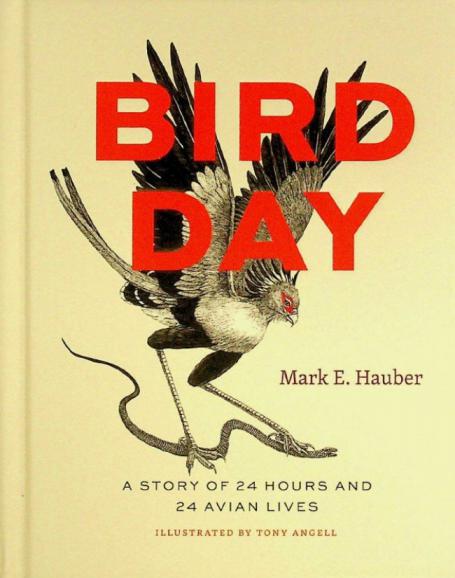
Bird day : a story of 24 hours and 24 avian lives
\"From morning to night and from the Antarctic to the equator, birds have busy days. In this short book, ornithologist Mark E. Hauber shows readers exactly how birds spend their time. Each of the book's twenty-four brief chapters covers a single bird and a single hour. At 1:00 in the night, we meet a nearly-blind kiwi, hunting with smell for earthworm prey. Later that morning, at 11:00, we float alongside a common pochard, a duck that can sleep with one eye open to avoid predators and bumping into other birds. At 8:00 that evening, we spot a hawk able to swallow bats whole in mid-flight, gorging on up to fifteen in rapid succession before retreating into the darkness. For each chapter, award-winning artist Tony Angell has depicted these scenes with his signature linocut-style illustrations-which grow increasingly light and then dark as our bird day passes\"-- Provided by publisher.
Book

Distance and size matters: A comparison of six wildlife camera traps and their usefulness for wild birds
Camera traps are increasingly used in ecological research. However, tests of their performance are scarce. It is already known from previous work that camera traps frequently fail to capture visits by animals. This can lead to a misinterpretation of ecological results such as density estimates or predation events. While previous work is mainly based on mammals, for birds, no data about if and how camera traps can be successfully used to estimate species diversity or density are available. Hence, the goal of our study was an empirical validation of six different camera traps in the field. We observed a total number of N = 4567 events (independent visits of a bird) in 100 different sessions from March 2017 until January 2018 while camera traps were deployed. In addition, N = 641 events are based on a comparison of the two close‐up camera traps especially designed for birds. These events were all directly observed by the authors. Thus, the cameras can be compared against the human observer. To give an overall assessment and a more generalizable result, we combined the data from the six camera traps and showed that bird size category (effect size = 0.207) and distance (effect size = 0.132) are the most important predictors for a successful trigger. Also, temperature had a small effect, and flock size had an impact with larger flocks being captured more often. The approach of the bird, whether it approached the camera frontally or laterally had no influence. In Table , we give some recommendations, based on our results, at which distances camera traps should be placed to get a 25%, 50%, and 75% capture rate for a given bird size. The goal of our study was an empirical validation of six different wildlife trail cameras in the field. We conducted a series of standardized tests to assess, if and under which conditions wildlife trail cameras can be used for bird research. In the field, we observed a total number of N = 4567 events. In addition, N = 641 observations are based on a comparison of the two close‐up cameras especially designed for birds. To give an overall assessment and a more generalizable result, we combined the data from the six cameras and showed that size and distance are the most important predictors for a successful capturing. Also, temperature had a weak effect, and flock size had an impact with larger flocks being captured more often. The approach of the bird, whether it approached the camera frontally or laterally had no influence.
Journal Article

Flight paths : how a passionate and quirky group of pioneering scientists solved the mystery of bird migration
\"Flight Paths is the never-before-told story of how a group of migration-obsessed scientists in the twentieth and twenty-first centuries engaged nearly every branch of science to understand bird migration--from where and when they take off to their flightpaths and behaviors, their destinations and the challenges they encounter getting there.\"-- Provided by publisher.
Book

Video surveillance of nesting birds
Declining bird populations, especially those that breed in North American grasslands, have stimulated extensive research on factors that affect nest failure and reduced reproductive success. Until now, this research has been hampered by the difficulties inherent in observing nest activities. Video Surveillance of Nesting Birds highlights the use of miniature video cameras and recording equipment yielding new important and some unanticipated insights into breeding bird biology, including previously undocumented observations of hatching, incubation, fledging, diurnal and nocturnal activity patterns, predator identification, predator-prey interactions, and cause-specific rates of nest loss. This seminal contribution to bird reproductive biology uses tools capable of generating astonishing results with the potential for fresh insights into bird conservation, management, and theory.
eBook

The secret of the bird's smart brain ... and more!
\"Students will enter the world of scientists as they uncover the secrets behind birds' brains, the most underappreciated of birds senses, the way frigate birds fly non-stop, how mama bears protect their cubs, and what grunts and bellows mean for pigs and alligators\"--Amazon.com.
Book

Relative Pitch and the Song of Black-Capped Chickadees
More than 2,000 years ago, the acerbic philosopher Marcus Tullius Cicero observed that Roman songbirds compose more excellent melodies than any musician. He certainly doesn't stand alone in history on that count; it is a nearly universal human experience to find joy and wonder in birdsong-and to compare the songs to human music. Here, Weisman and Ratcliffe discuss relative pitch-the ability to recognize relationships between acoustic frequencies, and that humans and songbirds share the ability to perceive relative pitch changes.
Journal Article
Eagle-Eyed Photographers Help Track Vulnerable Species
\"Scientist Megan Murgatroyd spends much of her time studying martial eagles, the biggest bird of its kind in Africa...But in the past few years, Murgatroyd and other scientists in South Africa noticed a drop in the number of martial eagles there. As scientists tried to figure out why the numbers were declining, they asked people throughout the country to help by taking photos whenever they saw one of the birds and 'tagging' their pictures with a location on social media.\" (Washington Post) Read more about this martial eagle research.
Newspaper Article
How Did Birds Survive While Dinosaurs Went Extinct?
\"Everyone knows what a bird is--and pretty much everyone knows what a dinosaur is. But not everyone is aware that birds evolved from dinosaurs approximately 160 million years ago. In fact, birds and dinosaurs lived together for about 100 million years. Birds descended from a particular group of dinosaurs called the dromaeosaurs, or 'running lizards,' which were a family of feathered theropod or 'beast foot' dinosaurs that included velociraptor. But when an asteroid struck Earth 66 million years ago off the coast of what is now Mexico, dinosaurs went extinct--but some birds remained. You might wonder why.\" (The Conversation U.S.) Read more about why birds survived, and dinosaurs did not.
Newspaper Article