
Catalogue Search | MBRL


Are you sure you want to remove the book from the shelf?

{{itemTitle}}
4,767
result(s) for
"Bisexuals"
Sort by:

Hockey girl loves drama boy
It should have been a night of triumph for Alix's hockey team. But her mean teammate Lindsay decided to start up with her usual rude comments and today Alix, who usually tries to control her anger, let it finally run free. Alix lashes out and before she knows it, her coach is dragging her off Lindsay, and the invitation to the Canada National Women's U18 Team's summer camp is on the line. She needs to learn how to control this anger, and she is sure Ezra, the popular and poised theater kid from her grade is the answer. So she asks for his help. But as they hang out and start get closer, Alix learns that there is more to Ezra than the cool front he puts on. And that maybe this friendship could become something more.
Book

The Health of Lesbian, Gay, Bisexual, and Transgender People
At a time when lesbian, gay, bisexual, and transgender individuals-often referred to under the umbrella acronym LGBT-are becoming more visible in society and more socially acknowledged, clinicians and researchers are faced with incomplete information about their health status. While LGBT populations often are combined as a single entity for research and advocacy purposes, each is a distinct population group with its own specific health needs. Furthermore, the experiences of LGBT individuals are not uniform and are shaped by factors of race, ethnicity, socioeconomic status, geographical location, and age, any of which can have an effect on health-related concerns and needs.
The Health of Lesbian, Gay, Bisexual, and Transgender People assesses the state of science on the health status of LGBT populations, identifies research gaps and opportunities, and outlines a research agenda for the National Institute of Health. The report examines the health status of these populations in three life stages: childhood and adolescence, early/middle adulthood, and later adulthood. At each life stage, the committee studied mental health, physical health, risks and protective factors, health services, and contextual influences. To advance understanding of the health needs of all LGBT individuals, the report finds that researchers need more data about the demographics of these populations, improved methods for collecting and analyzing data, and an increased participation of sexual and gender minorities in research.
The Health of Lesbian, Gay, Bisexual, and Transgender People is a valuable resource for policymakers, federal agencies including the National Institute of Health (NIH), LGBT advocacy groups, clinicians, and service providers.
eBook

Black LGBT health in the United States
\"Black LGBT Health in the United States: The Intersection of Race, Gender, and Sexual Orientation focuses on the mental, physical, and spiritual aspects of health, and considers both risk and resiliency factors for the Black LGBT population. Contributors to this collection intimately understand the associations between health and intersectional anti-Black racism, heterosexism, homonegativity, biphobia, transphobia, and social class. This collection fills a gap in current scholarship by providing information about an array of health issues like cancer, juvenile incarceration, and depression that affect all subpopulations of Black LGBT people, especially Black bisexual-identified women, Black bisexual-identified men, and Black transgender men. This book is recommended for readers interested in psychology, health, gender studies, race studies, social work, and sociology\"
eBook

Shanghai Lalas
This is the first ethnographic study of lala (lesbian, bisexual, and transgender) communities and politics in China, focusing on the city of Shanghai. Based on several years of in-depth interviews, the volume concentrates on lalas’ everyday struggle to reconcile same-sex desire with a dominant rhetoric of family harmony and compulsory marriage, all within a culture denying women’s active and legitimate sexual agency. Lucetta Yip Lo Kam reads discourses on homophobia in China, including the rhetoric of “Chinese tolerance” and considers the heteronormative demands imposed on tongzhi subjects. She treats “the politics of public correctness” as a newly emerging tongzhi practice developed from the culturally specific, Chinese forms of regulation that inform tongzhi survival strategies and self-identification. Alternating between Kam’s own queer biography and her extensive ethnographic findings, this text offers a contemporary portrait of female tongzhi communities and politics in urban China, making an invaluable contribution to global discussions and international debates on same-sex intimacies, homophobia, coming-out politics, and sexual governance.
eBook


Seeking Sanctuary
Seeking Sanctuary brings together poignant life stories
from fourteen lesbian, gay, bisexual and transgender (LGBT)
migrants, refugees and asylum seekers living in Johannesburg. The
stories, diverse in scope, chronicle each narrator's arduous
journey to South Africa, and their corresponding movement towards
self-love and self-acceptance. The narrators reveal their personal
battles to reconcile their faith with their sexuality and gender
identity, often in the face of violent persecution, and how they
have carved out spaces of hope and belonging in their new home
country. In these intimate testimonies, the narrators' resilience
in the midst of uncertain futures reveal the myriad ways in which
LGBT Africans push back against unjust and unequal systems.
Seeking Sanctuary makes a critical intervention by showing
the complex interplay between homophobia and xenophobia in South
Africa, and of the state of sexual orientation and gender identity
(SOGI) rights in Africa. By shedding light on the fraught
connections between sexuality, faith and migration, this
ground-breaking project also provides a model for religious
communities who are working towards justice, diversity and
inclusion.
Seeking Sanctuary brings together poignant life stories
from fourteen lesbian, gay, bisexual and transgender (LGBT)
migrants, refugees and asylum seekers living in Johannesburg. The
stories, diverse in scope, chronicle each narrator's arduous
journey to South Africa, and their corresponding movement towards
self-love and self-acceptance. The narrators reveal their personal
battles to reconcile their faith with their sexuality and gender
identity, often in the face of violent persecution, and how they
have carved out spaces of hope and belonging in their new home
country. In these intimate testimonies, the narrators' resilience
in the midst of uncertain futures reveal the myriad ways in which
LGBT Africans push back against unjust and unequal systems.
Seeking Sanctuary makes a critical intervention by showing
the complex interplay between homophobia and xenophobia in South
Africa, and of the state of sexual orientation and gender identity
(SOGI) rights in Africa. By shedding light on the fraught
connections between sexuality, faith and migration, this
ground-breaking project also provides a model for religious
communities who are working towards justice, diversity and
inclusion.
eBook

Eating disorders and disordered eating behaviors in the LGBT population: a review of the literature
Background
According to past research, lesbian, gay, bisexual, and transgender (LGBT) individuals experience a higher prevalence of psychopathology, which is attributable to the increased stress (i.e., stigma and prejudice) that they experience, as detailed by the minority stress model (MSM).
Main
This current literature review examined the empirical literature regarding the rates and types of, and risk factors for eating disorders and disordered eating behaviors in LGBT adults and adolescents, in addition to each individual subgroup (i.e., lesbians, gay males, bisexuals, transgender and gender-nonconforming individuals).
Conclusion
LGBT adults and adolescents experience greater incidence of eating disorders and disordered eating behaviors than their heterosexual and cisgender counterparts. Additionally, gay, bisexual, and transgender adults and adolescents were all at increased risk for eating disorders and disordered eating behaviors. Mixed results were found for lesbian adults and adolescents. Results are discussed within the framework of the MSM.
Journal Article
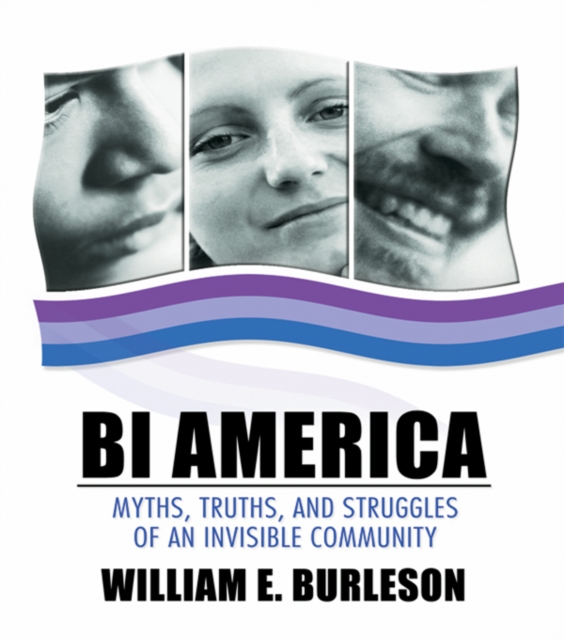
Bi America
Gain an in-depth understanding of the unique struggles of the bisexual community!
'To me the gay and straight worlds are exactly the same; equally limited, judgmental, and bourgeois . . . just mirror images of each other. I truly like and overlap with some of the gay world, but my roots refuse to take hold there and grow. Unfortunately, my well-established roots in the straight world are simultaneously shriveling and dying too, leaving me feeling extremely unstable.'
-'Cool,' a bisexual woman involved in a support group
There are at least five million bisexual people in America, generally invisible to straight society, the gay community, and even to each other. While the vast majority of these five million live within the straight or gay world, there are a few who have formed a community of their own. Bi America: Myths, Truths, and Struggles of an Invisible Community offers an inside look at the American bisexual community and gives an understanding of the special circumstances unique to being bisexual. The book takes the reader to bi community events from picnics, to conferences, to support groups, to performances in order to expose the everyday trials of the bisexual community.
Bi America includes very personal stories that let the voice of everyday bisexuals be heard through interviews, the 'Bisexual History Project,' in which ten bisexual people tell their life stories, and the 'Online Support Group,' a group of about 75 people who meet in cyberspace to talk about their lives and challenges. The book also includes the findings of a 2002 survey of about 300 bisexual people conducted via the Internet, an appendix that offers a concise list of resources for further study and personal enrichment, and an unabridged transcript of the 'Bisexual History Project.'
Get the answers to these questions in Bi America:
What is bisexuality
eBook

Attitudes toward Bisexual Men and Women among a Nationally Representative Probability Sample of Adults in the United States
As bisexual individuals in the United States (U.S.) face significant health disparities, researchers have posited that these differences may be fueled, at least in part, by negative attitudes, prejudice, stigma, and discrimination toward bisexual individuals from heterosexual and gay/lesbian individuals. Previous studies of individual and social attitudes toward bisexual men and women have been conducted almost exclusively with convenience samples, with limited generalizability to the broader U.S.
Our study provides an assessment of attitudes toward bisexual men and women among a nationally representative probability sample of heterosexual, gay, lesbian, and other-identified adults in the U.S. Data were collected from the 2015 National Survey of Sexual Health and Behavior (NSSHB), via an online questionnaire with a probability sample of adults (18 years and over) from throughout the U.S. We included two modified 5-item versions of the Bisexualities: Indiana Attitudes Scale (BIAS), validated sub-scales that were developed to measure attitudes toward bisexual men and women. Data were analyzed using descriptive statistics, gamma regression, and paired t-tests. Gender, sexual identity, age, race/ethnicity, income, and educational attainment were all significantly associated with participants' attitudes toward bisexual individuals. In terms of responses to individual scale items, participants were most likely to \"neither agree nor disagree\" with all attitudinal statements. Across sexual identities, self-identified other participants reported the most positive attitudes, while heterosexual male participants reported the least positive attitudes. As in previous research on convenience samples, we found a wide range of demographic characteristics were related with attitudes toward bisexual individuals in our nationally-representative study of heterosexual, gay/lesbian, and other-identified adults in the U.S. In particular, gender emerged as a significant characteristic; female participants' attitudes were more positive than male participants' attitudes, and all participants' attitudes were generally more positive toward bisexual women than bisexual men. While recent population data suggest a marked shift in more positive attitudes toward gay men and lesbian women in the general population of the U.S., the largest proportions of participants in our study reported a relative lack of agreement or disagreement with all affective-evaluative statements in the BIAS scales. Findings document the relative lack of positive attitudes toward bisexual individuals among the general population of adults in the U.S. and highlight the need for developing intervention approaches to promote more positive attitudes toward bisexual individuals, targeted toward not only heterosexual but also gay/lesbian individuals and communities.
Journal Article

Scarecrow
Who am I? Where did I come from? What is a family? How do families of choice develop? These questions permeate the pages of Scarecrow wherein a bisexual, nonbinary trans feminine person named Erin seeks to make sense of her life in relation to the places, people, and events she has seen and left behind over time. As the novel begins, Erin tells us that \"39 funerals, 35 years, and too many lovers to bother remembering brought me to this point.\" From this opening statement, Erin reflects on three-and-a-half decades of experiences growing up working class, white, and queer in the southeastern U.S.; navigating sexual, gender, classed, racial, and religious meanings and relationships; surviving varied types of love, trauma, kindness, and violence; and joining the upper-middle class world of the professoriate. As the novel progresses, she shows us how these experiences intertwine, create opportunities, and leave scars that together fashion who she has become over time and in relation to others. Scarecrow could be utilized in the teaching of sociology, social psychology, Symbolic Interactionism, narrative, families, gender, sexualities, race, class, geography, biography, Southern Studies, LGBTQIA studies, trauma recovery, courses about aging and the life course, or of course, it could be read entirely for pleasure.
eBook