
Catalogue Search | MBRL


Are you sure you want to remove the book from the shelf?

{{itemTitle}}
15
result(s) for
"Bison d"
Sort by:
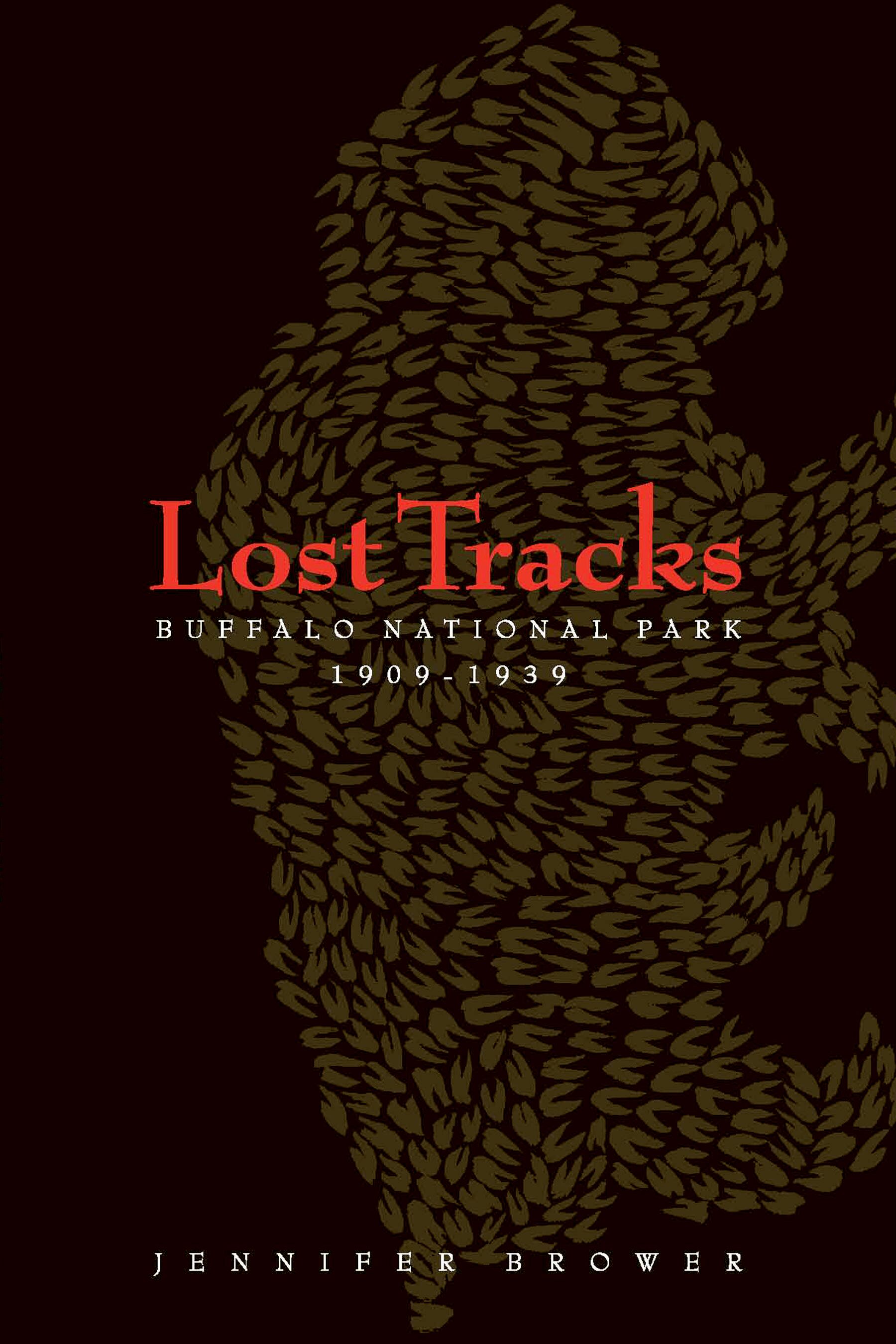
Lost Tracks: Buffalo National Park, 1909–1939
While contemporaries and historians alike hailed the establishment of Buffalo National Park in Wainwright, Alberta as a wildlife saving effort, the political climate of the early 20th century worked against it. The Canadian Parks Branch was never sufficiently funded to operate BNP effectively or to remedy the crises the animals faced as a result. Cross-breeding experiments with bison and domestic cattle proved unfruitful. Attempts at commercializing the herd had no success. Ultimately, the Department of National Defence repurposed the park for military training and the bison disappeared once more.
eBook

Social and Environmental Causes and Consequences of the Destruction of the Bison
L'extermination des bisons ne fut pas seulement une catastrophe écologique et sociale; elle illustre l'incapacité des chasseurs indiens à s'adapter aux variations erratiques de l'environnement et à la concurrence des Euro-Américains. Tant sur le plan idéologique qu'économique, les seconds ne pouvaient tolérer qu'une « race » condamnée préservât pour son seul usage un immense territoire riche de potentialités économiques. Mais au bout du compte, la victoire des chasseurs de peaux fut amère; ils ne connurent jamais l'enrichissement escompté. La leçon à tirer est celle du caractère imprévisible de la nature et des impératifs d'une société de consommation naissante.
Journal Article


Mozzarella du Quebec
Italie, une mozzarella artisanale qui vient d'être fabriquée... Pur délice !
Magazine Article

Some Problems and Hypotheses Relative to the Early Entry of Man into America
Les études portant sur ce qu'on appelle le \"corridor libre de glace\" situé à l'est des Rocheuses, sont trop souvent imprégnées d'impressions vagues. L'auteur de cet article évalue l'état actuel de nos connaissances sur le pléistocène du détroit de Béring et du \"corridor\". Cette étude l'amène à aborder la question de l'homme primitif en Amérique et à présenter deux hypothèses de travail: (1) que le \"corridor\" fut couvert de glace une seule fois entre les années 20,000 et 9,000 et (2) que l'immigration la plus importante en Amérique s'est accomplie au cours d'une période s'étendant de 25,000 à 20,000 années avant le siècle présent. De plus, l'auteur soutient que l'industrie primitive des têtes de flèches fut développée au sud de la couche de glace et qu'elle s'est propagée par la suite vers le nord.
Journal Article

Evidence for two independent domestications of cattle
The origin and taxonomic status of domesticated cattle are controversial. Zebu and taurine breeds are differentiated primarily by the presence or absence of a hump and have been recognized as separate species (Bos indicus and Bos taurus). However, the most widely held view is that both types of cattle derive from a single domestication event 8000-10,000 years ago. We have examined mtDNA sequences from representatives of six European (taurine) breeds, three Indian (zebu) breeds, and four African (three zebu, one taurine) breeds. Similar levels of average sequence divergence were observed among animals within each of the major continental groups: 0.41% (European), 0.38% (African), and 0.42% (Indian). However, the sequences fell into two very distinct geographic lineages that do not correspond with the taurine-zebu dichotomy: all European and African breeds are in one lineage, and all Indian breeds are in the other. There was little indication of breed clustering within either lineage. Application of a molecular clock suggests that the two major mtDNA clades diverged at least 200,000, and possibly as much as 1 million, years ago. This relatively large divergence is interpreted most simply as evidence for two separate domestication events, presumably of different subspecies of the aurochs, Bos primigenius. The clustering of all African zebu mtDNA sequences within the taurine lineage is attributed to ancestral crossbreeding with the earlier B. taurus inhabitants of the continent.
Journal Article

Identifying the water sources consumed by bison: implications for large mammalian grazers worldwide
The sources of drinking water consumed by grazers vary over time and may be highly selective, similar to choices in diet. Water sources consumed by large grazers in natural populations are not typically measured directly. Instead, consumption is inferred based on animal proximity to water sources. Here, we analysed the stable isotopic signature of water (δ
18
O and δD) extracted from fecal samples from a herd of bison in mesic grassland as a direct estimation of the water sources consumed over time. Bison at this site have their choice of a range of habitats and drinking water sources. Potential source-water samples measured had a large range of isotopic signatures, allowing the isotopic composition of water from bison fecal samples to be proportionally estimated based on varying sources. Results indicate bison have low reliance on multiple streams on site; rather, the majority of water consumed was from rainfall-fed sources (puddles and wallows) and from forage. Our research suggests that source-water analysis from fecal samples is a robust technique when samples from large grazers can be collected soon after production. These results have implications for analyses of the foraging patterns and landscape utilization by this and other large grazers, because hotter and drier future conditions are likely to reduce the frequency and amount of rainfall-fed puddles available for consumption in many grassland systems worldwide.
Journal Article

Phylogenetic Relationships of Northeast Asian Cattle to Other Cattle Populations Determined Using Mitochondrial DNA D-Loop Sequence Polymorphism
Phylogenetic relationships of Northeast Asian cattle to various other cattle breeds including Bos taurus, Bos indicus, and Bison bison were assessed using mtDNA D-loop sequences. A neighbor-joining tree was constructed using sequences determined for 4 Cheju Black, 4 Cheju Yellow, 4 Korean Yellow cattle (Bos taurus), and 2 American Brahman cattle (Bos indicus), and also published sequences for 31 Japanese Black cattle, 45 European breed cattle, 6 African zebus, 2 African taurines, and 6 Indian zebus. Five American bisons (Bison bison) were used as an outgroup. The neighbor-joining tree showed that American bisons and Indian zebus are clearly separate from other cattle breeds, respectively, and African cattle clustered together, although with a low bootstrap probability (< 50%). Results indicate that cattle in Northeast Asia, Europe, and Africa are closely related to each other-suggesting their recent divergence, but are separate from Indian zebus.
Journal Article