
Catalogue Search | MBRL


Are you sure you want to remove the book from the shelf?

{{itemTitle}}
18
result(s) for
"Blacklisting of entertainers United States."
Sort by:

Tender comrades : a backstory of the Hollywood blacklist
\"More than sixty years ago, McCarthyism silenced Hollywood. In the pages of Tender Comrades, those who were suppressed, whose lives and careers were ruined, finally have their say. A unique collection of profiles in cinematic courage, this extraordinary oral history brings to light the voices of thirty-six blacklist survivors (including two members of the Hollywood Ten), seminal directors of film noir and other genres, starring actresses and memorable supporting players, top screenwriters, and many less known to the public, who are rescued from obscurity by the stories they offer here that, beyond politics, open a rich window into moviemaking during the Golden Age of Hollywood. \"-- Provided by publisher.
Book

Film criticism, the Cold War, and the blacklist
Film Criticism, the Cold War, and the Blacklist examines the long-term reception of several key American films released during the postwar period, focusing on the two main critical lenses used in the interpretation of these films: propaganda and allegory. Produced in response to the hearings held by the House Committee on Un-American Activities (HUAC) that resulted in the Hollywood blacklist, these films’ ideological message and rhetorical effectiveness was often muddled by the inherent difficulties in dramatizing villains defined by their thoughts and belief systems rather than their actions. Whereas anti-Communist propaganda films offered explicit political exhortation, allegory was the preferred vehicle for veiled or hidden political comment in many police procedurals, historical films, Westerns, and science fiction films. Jeff Smith examines the way that particular heuristics, such as the mental availability of exemplars and the effects of framing, have encouraged critics to match filmic elements to contemporaneous historical events, persons, and policies. In charting the development of these particular readings, Film Criticism, the Cold War, and the Blacklist features case studies of many canonical Cold War titles, including The Red Menace, On the Waterfront, The Robe, High Noon, and Invasion of the Body Snatchers.
eBook

High noon : the Hollywood blacklist and the making of an American classic
\"The story behind the classic movie High Noon shares insights into the toxic political climate in which it was created, recounting how, during the film shoot, screenwriter Carl Foreman was interrogated and blacklisted by the House Committee on Un-American Activities. By the New York Times best-selling author of The Searchers.\"-- Provided by publisher.
Book
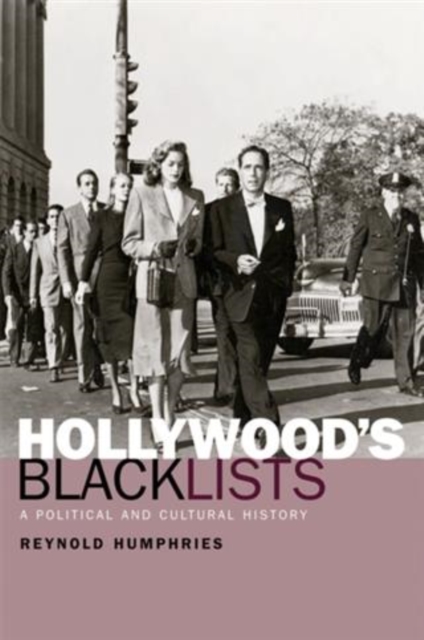
Hollywood's Blacklists
'Hollywood's Blacklists' is a history of the political and cultural factors relevant to understanding the whys and hows of the various investigations of the alleged communist infiltration of Hollywood in the 1950s.
eBook

Wasn't that a time : the Weavers, the blacklist, and the battle for the soul of America
\"Following a series of top-ten hits that became instant American standards, the Weavers dissolved at the height of their fame. [This book] details the remarkable rise of Pete Seeger's unlikely band of folk heroes, from basement hootenannies to the top of the charts, and the harassment campaign that brought them down. Exploring how a pop group's harmonies might be heard as a threat worthy of decades of investigation by the FBI, [this book] turns the black-and-white 1950s into vivid color, using the Weavers to illuminate a dark and complex period of American history. With origins in the radical folk collective the Almanac Singers and the ambitious People's Songs, the singing activists in the Weavers set out to change the world with songs as their weapons, pioneering the use of music as a transformative political organizing tool. Using previously unseen journals and letters, unreleased recordings, once-secret government documents, and other archival research, Jesse Jarnow uncovers the immense hopes, incredible pressures, and daily struggles of the four distinct and often unharmonious personalities at the heart of the Weavers.\" -- Amazon.com.
Book
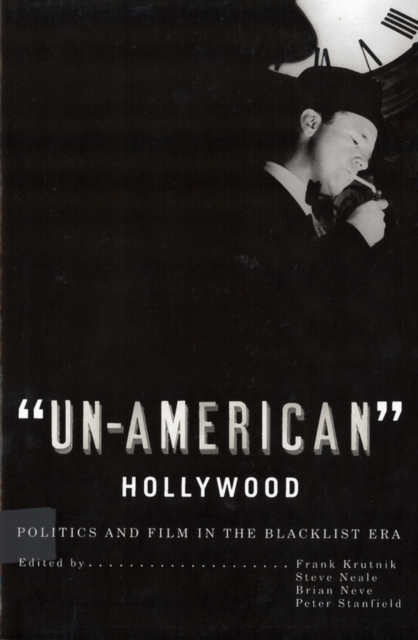
Un-American' Hollywood
The concept of \"un-Americanism,\" so vital to the HUAC crusade of the 1940s and 1950s, was resoundingly revived in the emotional rhetoric that followed the September 11th terrorist attacks. Today's political and cultural climate makes it more crucial than ever to come to terms with the consequences of this earlier period of repression and with the contested claims of Americanism that it generated.
\"Un-American\" Hollywoodreopens the intense critical debate on the blacklist era and on the aesthetic and political work of the Hollywood Left. In a series of fresh case studies focusing on contexts of production and reception, the contributors offer exciting and original perspectives on the role of progressive politics within a capitalist media industry.
Original essays scrutinize the work of individual practitioners, such as Robert Rossen, Joseph Losey, Jules Dassin, and Edward Dmytryk, and examine key films, includingThe Robe, Christ in Concrete, The House I Live In, The Lawless, The Naked City, The Prowler, Body and Soul,andFTA.
eBook

Blacklisted! : Hollywood, the Cold War, and the First Amendment
Discusses the case \"of 19 men from the film industry who were investigated for suspected Communist ties during the Cold War, and the 10--known as the Hollywood Ten--who were blacklisted for standing up for their First Amendment rights and refusing to cooperate\"--Publisher's description.
Book

The Marxist and the Movies
As part of its effort to expose Communist infiltration in the United States and eliminate Communist influence on movies, from 1947--1953 the House Committee on Un-American Activities subpoenaed hundreds of movie industry employees suspected of membership in the Communist Party. Most of them, including screenwriter Paul Jarrico (1915--1997), invoked the Fifth Amendment and refused to answer questions about their political associations. They were all blacklisted.
In The Marxist and the Movies, Larry Ceplair narrates the life, movie career, and political activities of Jarrico, the recipient of an Oscar nomination for his screenplay for Tom, Dick and Harry (1941) and the producer of Salt of the Earth (1954), one of the most politically besieged films in the history of the United States. Though Jarrico did not reach the upper eschelon of screenwriting, he worked steadily in Hollywood until his blacklisting. He was one of the movie industry's most engaged Communists, working on behalf of dozens of social and political causes. Song of Russia (1944) was one of the few assignments that allowed him to express his political beliefs through his screenwriting craft. Though MGM planned the film as a conventional means of boosting domestic support for the USSR, a wartime ally of the United States, it came under attack by a host of anti-Communists.
Jarrico fought the blacklist in many ways, and his greatest battle involved the making of Salt of the Earth. Jarrico, other blacklisted individuals, and the families of the miners who were the subject of the film created a landmark film in motion picture history. As did others on the blacklist, Jarrico decided that Europe offered a freer atmosphere than that of the cold war United States. Although he continued to support political causes while living abroad, he found it difficult to find remunerative black market screenwriting assignments. On the scripts he did complete, he had to use a pseudonym or allow the producers to give screen credit to others. Upon returning to the United States in 1977, he led the fight to restore screen credits to the blacklisted writers who, like himself, had been denied screen credit from the late 1940s to the mid-1960s.
Despite all the obstacles he encountered, Jarrico never lost his faith in the progressive potential of movies and the possibility of a socialist future. The Marxist and the Movies details the relationship between a screenwriter's work and his Communist beliefs. From Jarrico's immense archive, interviews with him and those who knew him best, and a host of other sources, Ceplair has crafted an insider's view of Paul Jarrico's life and work, placing both in the context of U.S. cultural history.
eBook


You Gotta' Stand Up
If its true that were known by the company we keep, then Texas humorist, First Amendment Advocate, Hee Haws homespun philosopher, and 1950s media blacklist buster, John Henry Faulks character was first quality. His story intersects some of Americas best and brightest: Eugene Victor Debs, the Texas Triumvirate, Edward R. Murrow, Mark Goodson, Louis Nizer, Myrna Loy, Eleanor Roosevelt, Joe Papp, and host of others. Consciously risking a lucrative television career, he seized the buz.
eBook