
Catalogue Search | MBRL


Are you sure you want to remove the book from the shelf?

{{itemTitle}}
8
result(s) for
"Blacks Civil rights South Africa History 20th century."
Sort by:


The Cold War and the color line : American race relations in the global arena
After World War II the United States faced two preeminent challenges: how to administer its responsibilities abroad as the world's strongest power, and how to manage the rising movement at home for racial justice and civil rights. The effort to contain the growing influence of the Soviet Union resulted in the Cold War, a conflict that emphasized the American commitment to freedom. The absence of that freedom for nonwhite American citizens confronted the nation's leaders with an embarrassing contradiction. Racial discrimination after 1945 was a foreign as well as a domestic problem. World War II opened the door to both the U.S. civil rights movement and the struggle of Asians and Africans abroad for independence from colonial rule. America's closest allies against the Soviet Union, however, were colonial powers whose interests had to be balanced against those of the emerging independent Third World in a multiracial, anticommunist alliance. At the same time, U.S. racial reform was essential to preserve the domestic consensus needed to sustain the Cold War struggle. The Cold War and the Color Line is the first comprehensive examination of how the Cold War intersected with the final destruction of global white supremacy. Thomas Borstelmann pays close attention to the two Souths—Southern Africa and the American South—as the primary sites of white authority's last stand. He reveals America's efforts to contain the racial polarization that threatened to unravel the anticommunist western alliance. In so doing, he recasts the history of American race relations in its true international context, one that is meaningful and relevant for our own era of globalization.
eBook


Race for sanctions : African Americans against apartheid, 1946-1994
An important contribution to the political history of this period
[and] a must for those interested in the influence of the great
pan-Africanists. -- Elliott P. Skinner This study traces the
evolution of the anti-apartheid movement from its origins in the 1940s through the
civil rights and black power eras to its maturation in the 1980s as a force that
transformed U.S. foreign policy. The movement initially met resistance and
was soon repressed, only to reemerge during the civil rights era, when it became
radicalized with the coming of the black freedom movement. The book looks at three
important political groups: TransAfrica -- the black lobby for Africa and the
Caribbean; the Free South Africa Movement; and lastly the Congressional Black Caucus
and its role in passing sanctions against South Africa over President Reagan's veto.
It concludes with an assessment of the impact of sanctions on the release of Nelson
Mandela and his eventual election as president of South Africa.
eBook
Twilight people
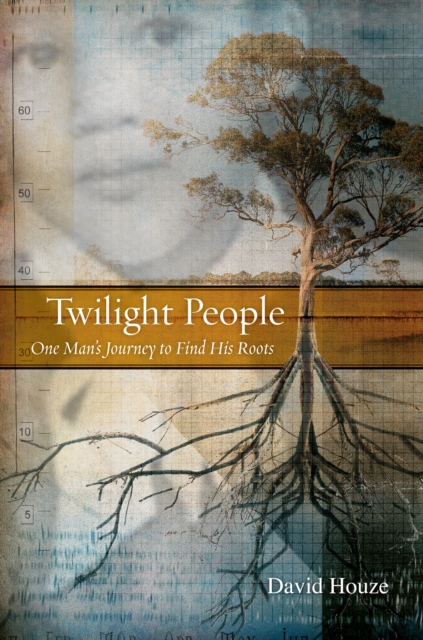
David Houze was twenty-six and living in a single room occupancy hotel in Atlanta when he discovered that three little girls in an old photo he'd seen years earlier were actually his sisters. The girls had been left behind in South Africa when Houze and his mother fled the country in 1966, at the height of apartheid, to start a new life in Meridian, Mississippi, with Houze's American father. This revelation triggers a journey of self-discovery and reconnection that ranges from the shores of South Africa to the dirt roads of Mississippi—and back. Gripping, vivid, and poignant, this deeply personal narrative uses the unraveling mystery of Houze's family and his quest for identity as a prism through which to view the tumultuous events of the civil rights movement in Mississippi and the rise and fall of apartheid in South Africa. Twilight People is a stirring memoir that grapples with issues of family, love, abandonment, and ultimately, forgiveness and reconciliation. It is also a spellbinding detective story—steeped in racial politics and the troubled history of two continents—of one man's search for the truth behind the enigmas of his, and his mother's, lives.
eBook

A burning hunger : one family's struggle against apartheid
A Burning Hunger follows the Mashinini family, ordinary Soweto parents and their thirteen children drawn into South Africa's antiapartheid struggle. Through exile, imprisonment, and courage, their story reveals the human cost and resilience behind the fight for freedom.
eBook

Civilizing the Natives: Marriage in Post-Apartheid South Africa
Chambers focuses on the multiple reactions of South Africans to the 1998 adoption of a new marriage law that, though permitting some of the external trappings of the traditional marriage system to continue, eliminated by law much of the core of its male-centered rules. Legislators felt the law was required to promote gender equality under the new constitution, but traditional leaders and others from rural areas felt the law failed to honor black people's traditions in a new black South Africa.
Journal Article