
Catalogue Search | MBRL


Are you sure you want to remove the book from the shelf?

{{itemTitle}}
1,791
result(s) for
"Blaise Pascal"
Sort by:


Pascal’s Wafer: The Concept of Piety in Blaise Pascal’s Theological Anthropology
The concept of piety occupies a central, if hidden or obscure place in Blaise Pascal’s theological anthropology. As a product of the Fall, the human self is “hateful” and perpetually incapable of fulfilling any sense of duty or purity before God. As the means by which the human self is “annihilated,” piety entails endurance and an embrace of uncertainty. At the same time, however, piety does not exclusively involve self-annihilating acts. There are also different states of piety – what Pascal refers to as the “beginning,” “progress” and “consummation” of piety – that are increasingly “filled” and directed toward a final, heavenly state. There is thus a way in which pious acts and states work in tandem and toward the same end. As I seek to show, piety, for Pascal, is fundamentally a childlike phenomenon – an act and state simultaneously whereby a person, rather than presenting him- or herself before God, is brought into God’s presence.
Journal Article
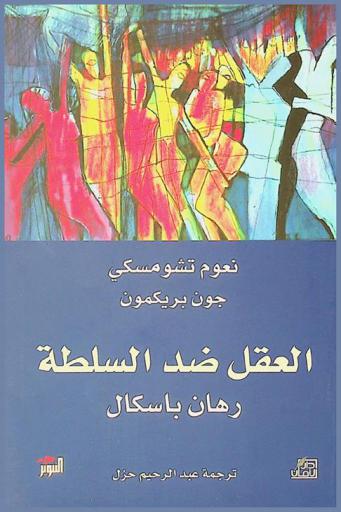
العقل ضد السلطة : رهان باسكال
يمثل عنوان هذا الكتاب تلخيصا وافيا بأعمال تشومسكي وإجمالا لمسار حياته فالمثقف الذي من طينته لا يملك إلا العقل وسيلة لخوض المعارك والخلاف بين تشومسكي ومثقفين معاصرين عديدين يتمثل في أن هؤلاء كثيرا ما نبذوا سلاح العقل بل إن منهم من يعد هذا السلاح في جوهره سلاحا قمعيا وغير أن تشومسكي لا يحمل إيمانا ساذجا بقوة العقل بل يرى أن العقل هو كل ما نملك ولا يصدر تشومسكي كذلك عن إيمان ساذج بالتقدم لكن الديمقراطية والحريات الفردية واللائكية وتحرر المستعمرات وحقوق الأقليات وحقوق النساء وحقوق الأجيال المقبلة الحركة من أجل حماية البيئة.
Book

From Mathematics to Art: Modelling the Pascal’s Triangle with Petri Nets
Pascal’s triangle is a classical mathematical construct, historically studied for centuries, that organises binomial coefficients in a triangular array and serves as a cornerstone in combinatorics, algebra, and number theory. Herein, we propose to model it with Petri nets, a formal specification technique derived from discrete event systems. A minimal Petri net is created that generates Pascal’s triangle under a simple arithmetic rule. Token counts in each place coincide with binomial coefficients, providing a direct combinatorial interpretation. Two other classical structures emerge from this model: by colouring tokens depending on their parity, the Sierpiński triangle appears; by routing tokens randomly at each branching, the binomial distribution arises, converging to a Gaussian limit as depth increases. As a result, a single Petri construction unifies three mathematical objects: Pascal’s Triangle, Sierpiński’s Triangle, and the Gaussian distribution. This connection illustrates the invaluable potential of Petri nets as unifying tools for modelling discrete mathematical structures and beyond.
Journal Article
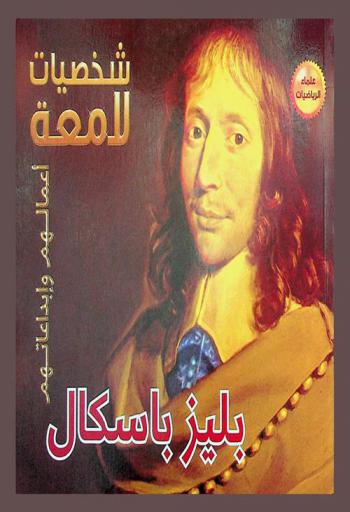

Pascal and Blondel on Real and Notional Knowledge
This article examines real and notional knowledge in the work of Blaise Pascal (1623–1662) and French Catholic philosopher Maurice Blondel (1861–1949). It explores the relationship between real and notional knowledge through the themes of disproportion, diversion, contingency, and faith in each thinker and argues that the right relationship between real and notional knowledge is the organizing principle of their thoughts.
Journal Article
الإله الخفي
يتناول كتاب \"الإله الخفي\" والذي قام بتأليفه \"لوسيان غولدمان\" في حوالي (621) صفحة من القطع المتوسط موضوع (الأدب الفرنسي)، عن مجموعة من النظريات الفكرية التي وضعها فلاسفة العصر الحديث، من روسو، وهولدرلان، وباسكال، وديكارت، وسواهم، في محاولة منه لصياغة منظومة فكرية متراصة الأبعاد، ومضبوطة المعايير، انطلاقا من رؤى سابقة ودراسات فلسفية كان لها أثرها على الفكر الإنساني ككل. يلفت الباحث في مؤلفه إلى أن الغرض الأساسي من أي فكر فلسفي هو الإنسان، ووعيه، وسلوكه، فكل فلسفة هي أنثربولوجيا إلى حد ما، فلا يمكننا بطبيعة الحال أن نعرض في عمل ما مكرس لدراسة مجموعة من الأعمال الجزئية كلية موقفنا الفلسفي، ومع ذلك من المسموح أن نقول بضع كلمات عن تصورنا للوعي بوجه العموم، وعن الإبداع الأدبي والفلسفي بوجه خاص. ويرى غولدمان أنه لا ينبغي على مؤرخ الفلسفة والأدب أن يدرس رؤى العالم فحسب، بل أن يدرس أيضا تعبيراتها الملموسة، أي يتوجب عليه، في حدود إمكاناته بالطبع، ألا يتقيد في دراسته للعمل بما تفسره الرؤية هذه أو تلك، كما عليه التساؤل عن الأسباب الاجتماعية أو الفردية التي جعلت من هذه الرؤية تظهر في البحث. ويناقش الباحث ضمن إطار فلسفي بحت، تراجيديات كلاسيكية، وأعمالا خالدة، في مجال الفكر والمسرح والذات الإلهية، في فصل بعنوان \"الرؤية التراجيدية.. الله متنقلا في الفضاء الأرسطي\"، والفكر الفرنسي الحديث، وأفكار باسكال وسبينوزا، ليفتح الباحث المجال أمام طرح تساؤلات عميقة ونقدية، تضع الإنسان أحيانا في حيز التناقض.
BOOK

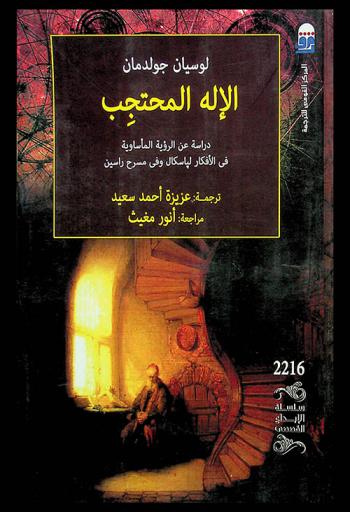
الإله المحتجب : دراسة عن الرؤية المأساوية في \الأفكار\ لباسكال وفي مسرح راسين
تقوم الفكرة الأساسية في هذا الكتاب على أن الوقائع الإنسانية دائما ما تكون بنى دالة شاملة لها طابع عملى ونظرى وإنفعالي في أن واحد ولا يمكن دراسة هذه البنى بطريقة وضعية بمعنى تفسيرها وفهمها إلا من خلال منظور عملي يستند إلى قبول مجموعة من القيم كما يهدف إلى المساهمة في توضيح هذه القضية بدراسة عدة مؤلفات تشكل بالنسبة لتاريخ الفكر والأدب مجموعة متميزة ومحدودة من الوقائع العينية.
BOOK

Pascal the Philosopher
Blaise Pascal has always been appreciated as a literary giant and a religious guide, but has received only grudging recognition as a philosopher: philosophers have mistaken Pascal’s harsh criticism of their discipline as a rejection of it. But according to Graeme Hunter, Pascal’s critics have simply failed to grasp his lean, but powerful conception of philosophy. This accessibly written book provides the first introduction to Pascal’s philosophy as an organic whole.
Hunter argues that Pascal’s aim is not merely to humble philosophy, but to save it from a kind of failure to which it is prone. He lays out Pascal’s development of a more promising and fruitful path for philosophical inquiry, one that responded to the scientific, religious, and political upheaval of his time. Finally, Hunter illuminates Pascal’s significance for contemporary readers, allowing him to emerge as the rare philosopher who is spiritual, literary, and rigorous all at once – both a brilliant controversialist and a thinker of substance.
eBook