
Catalogue Search | MBRL


Are you sure you want to remove the book from the shelf?

{{itemTitle}}
6,720
result(s) for
"Blow-up"
Sort by:

Re-/Dissolving Mimesis
A woman is implicated in an assassination and captured on CCTV.Instead of looking for a truth behind the image - is she really guilty?- the writer and curator Shumon Basar dives deeper into the image itself.
eBook
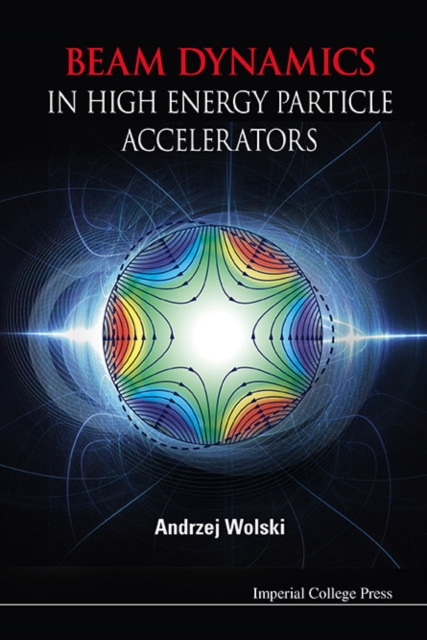
Beam dynamics in high energy particle accelerators
Particle accelerators are essential tools for scientific research in fields as diverse as high energy physics, materials science and structural biology. They are also widely used in industry and medicine. Producing the optimum design and achieving the best performance for an accelerator depends on a detailed understanding of many (often complex and sometimes subtle) effects that determine the properties and behavior of the particle beam. Beam Dynamics in High Energy Particle Accelerators provides an introduction to the concepts underlying accelerator beam line design and analysis, taking an approach that emphasizes the elegance of the subject and leads into the development of a range of powerful techniques for understanding and modeling charged particle beams.
eBook


The Lin-Ni’s problem for mean convex domains
The authors prove some refined asymptotic estimates for positive blow-up solutions to $\\Delta u+\\epsilon u=n(n-2)u^{\\frac{n+2}{n-2}}$ on $\\Omega$, $\\partial_\\nu u=0$ on $\\partial\\Omega$, $\\Omega$ being a smooth bounded domain of $\\mathbb{R}^n$, $n\\geq 3$. In particular, they show that concentration can occur only on boundary points with nonpositive mean curvature when $n=3$ or $n\\geq 7$. As a direct consequence, they prove the validity of the Lin-Ni's conjecture in dimension $n=3$ and $n\\geq 7$ for mean convex domains and with bounded energy. Recent examples by Wang-Wei-Yan show that the bound on the energy is a necessary condition.
eBook

Construction of Blowup Solutions for the Complex Ginzburg-Landau Equation with Critical Parameters
We construct a solution for the Complex Ginzburg-Landau (CGL) equation in a general critical case, which blows up in finite time
eBook

Points and curves in the Monster tower
Cartan introduced the method of prolongation which can be applied either to manifolds with distributions (Pfaffian systems) or integral curves to these distributions. Repeated application of prolongation to the plane endowed with its tangent bundle yields the Monster tower, a sequence of manifolds, each a circle bundle over the previous one, each endowed with a rank 2 distribution. In an earlier paper (2001), the authors proved that the problem of classifying points in the Monster tower up to symmetry is the same as the problem of classifying Goursat distribution flags up to local diffeomorphism. The first level of the Monster tower is a three-dimensional contact manifold and its integral curves are Legendrian curves. The philosophy driving the current work is that all questions regarding the Monster tower (and hence regarding Goursat distribution germs) can be reduced to problems regarding Legendrian curve singularities.
eBook

On Pseudoconformal Blow-Up Solutions to the Self-Dual Chern-Simons-Schrödinger Equation: Existence, Uniqueness, and Instability
We consider the self-dual Chern-Simons-Schrödinger equation (CSS), also known as a gauged nonlinear Schrödinger equation (NLS). CSS
is
We are inspired by
works in the
eBook


On the Stability of Type I Blow Up For the Energy Super Critical Heat Equation
The authors consider the energy super critical semilinear heat equation \\partial _{t}u=\\Delta u+u^{p}, x\\in \\mathbb{R}^3, p>5. The authors first revisit the construction of radially symmetric self similar solutions performed through an ode approach and propose a bifurcation type argument which allows for a sharp control of the spectrum of the corresponding linearized operator in suitable weighted spaces. They then show how the sole knowledge of this spectral gap in weighted spaces implies the finite codimensional nonradial stability of these solutions for smooth well localized initial data using energy bounds. The whole scheme draws a route map for the derivation of the existence and stability of self-similar blow up in nonradial energy super critical settings.
eBook