
Catalogue Search | MBRL


Are you sure you want to remove the book from the shelf?

{{itemTitle}}
203
result(s) for
"Bluetooth technology (Standard)"
Sort by:
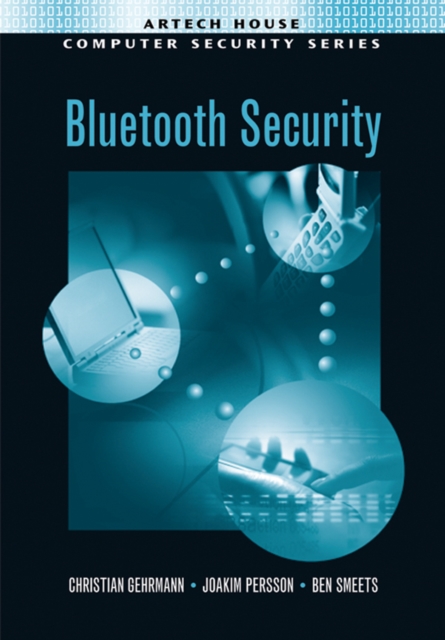
Bluetooth Security
This first-of-its-kind book, from expert authors actively contributing to the evolution of Bluetooth specifications, provides an overview and detailed descriptions of all the security functions and features of this standard's latest core release. After categorizing all the security issues involved in ad hoc networking, this hands-on volume shows you how to design a highly secure Bluetooth system and implement security enhancements. The book also helps you fully understand the main security risks involved with introducing Bluetooth-based communications in your organization.This cutting-edge resource examines all known attacks on Bluetooth security mechanisms and their implementations, demonstrating how some of these known weaknesses can be avoided with appropriate defensive measures. The book presents concrete examples of how to design security solutions for some Bluetooth applications and products built on these applications. You find real-world case studies including technical algorithms, mechanisms and protocols, and security architectures. These architectures offer valuable guidelines for use in building Bluetooth and non-Bluetooth-specific security mechanisms.
eBook

Wireless Personal Communications
This volume presents a broad range of topics in wireless communications, including perspectives from both industry and academia. It serves as a reflection of emerging technologies in wireless communications and features papers from world-renowned authors on the subject. A new tutorial on the emerging Bluetooth technology is also presented. This book may be used as a text for advanced courses on the subject should serve as a useful reference tool for graduate students, postgraduate researchers, academics, and anyone working in the research aspect of the wireless communications industry.
eBook

The Newer, the More Secure? Standards-Compliant Bluetooth Low Energy Man-in-the-Middle Attacks on Fitness Trackers
The trend in self-tracking devices has remained unabated for years. Even if they record a large quantity of sensitive data, most users are not concerned about their data being transmitted and stored in a secure way from the device via the companion app to the vendor’s server. However, the secure implementation of this chain from the manufacturer is not always given, as various publications have already shown. Therefore, we first provide an overview of attack vectors within the ecosystem of self-tracking devices. Second, we evaluate the data security of eight contemporary fitness trackers from leading vendors by applying four still partly standards-compliant Bluetooth Low-Energy Man-in-the-Middle (MitM) attacks. Our results show that the examined devices are partially vulnerable against the attacks. For most of the trackers, the manufacturers put different security measures in place. These include short and user-initiated visibility and connectivity or app-level authentication to limit the attack surface. Interestingly, newer models are more likely to be attackable, underlining the constant need for verifying the security of BLE devices, reporting found vulnerabilities, and also strengthening standards and improving security awareness among manufacturers and users. Therefore, we finish our work with recommendations and best practices for law- and regulation-makers, vendors, and users on how to strengthen the security of BLE devices.
Journal Article
From Sensor Networks to Internet of Things. Bluetooth Low Energy, a Standard for This Evolution
Current sensor networks need to be improved and updated to satisfy new essential requirements of the Internet of Things, where cutting-edge applications will appear. These requirements are: total coverage, zero fails (high performance), scalability and sustainability (hardware and software). We are going to evaluate Bluetooth Low Energy as wireless transmission technology and as the ideal candidate for these improvements, due to its low power consumption, its low cost radio chips and its ability to communicate with users directly, using their smartphones or smartbands. However, this technology is relatively recent, and standard network topologies are not able to fulfil its new requirements. To address these shortcomings, the implementation of other more flexible topologies (as the mesh topology) will be very interesting. After studying it in depth, we have identified certain weaknesses, for example, specific devices are needed to provide network scalability, and the need to choose between high performance or sustainability. In this paper, after presenting the studies carried out on these new technologies, we propose a new packet format and a new BLE mesh topology, with two different configurations: Individual Mesh and Collaborative Mesh. Our results show how this topology improves the scalability, sustainability, coverage and performance.
Journal Article

Man-in-the-middle attacks on Secure Simple Pairing in Bluetooth standard V5.0 and its countermeasure
Bluetooth devices are widely employed in the home network systems. It is important to secure the home members’ Bluetooth devices, because they always store and transmit personal sensitive information. In the Bluetooth standard, Secure Simple Pairing (SSP) is an essential security mechanism for Bluetooth devices. We examine the security of SSP in the recent Bluetooth standard V5.0. The passkey entry association model in SSP is analyzed under the man-in-the-middle (MITM) attacks. Our contribution is twofold. (1) We demonstrate that the passkey entry association model is vulnerable to the MITM attack, once the host reuses the passkey. (2) An improved passkey entry protocol is therefore designed to fix the reusing passkey defect in the passkey entry association model. The improved passkey entry protocol can be easily adapted to the Bluetooth standard, because it only uses the basic cryptographic components existed in the Bluetooth standard. Our research results are beneficial to the security enhancement of Bluetooth devices in the home network systems.
Journal Article

Measurement-based evaluation of Google/Apple Exposure Notification API for proximity detection in a light-rail tram
We report on the results of a Covid-19 contact tracing app measurement study carried out on a standard design of European commuter tram. Our measurements indicate that in the tram there is little correlation between Bluetooth received signal strength and distance between handsets. We applied the detection rules used by the Italian, Swiss and German apps to our measurement data and also characterised the impact on performance of changes in the parameters used in these detection rules. We find that the Swiss and German detection rules trigger no exposure notifications on our data, while the Italian detection rule generates a true positive rate of 50% and a false positive rate of 50%. Our analysis indicates that the performance of such detection rules is similar to that of triggering notifications by randomly selecting from the participants in our experiments, regardless of proximity.
Journal Article

Validation of the portable Bluetooth® Air Next spirometer in patients with different respiratory diseases
Background
Chronic respiratory diseases constitute a considerable part in the practice of pulmonologists and primary care physicians; spirometry is integral for the diagnosis and monitoring of these diseases, yet remains underutilized. The Air Next spirometer (NuvoAir, Sweden) is a novel ultra-portable device that performs spirometric measurements connected to a smartphone or tablet via Bluetooth
®
.
Methods
The objective of this study was to assess the accuracy and validity of these measurements by comparing them with the ones obtained with a conventional desktop spirometer. Two hundred subjects were enrolled in the study with various spirometric patterns (50 patients with asthma, 50 with chronic obstructive pulmonary disease and 50 with interstitial lung disease) as well as 50 healthy individuals.
Results
For the key spirometric parameters in the interpretation of spirometry, i.e. FEV
1
, FVC, FEV
1
/FVC and FEF
25–75%
, Pearson correlation and Interclass Correlation Coefficient were greater than 0.94, exhibiting perfect concordance between the two spirometers. Similar results were observed in an exploratory analysis of the subgroups of patients. Using Bland-Altman plots we have shown good reproducibility in the measurements between the two devices, with small mean differences for the evaluated spirometric parameters and the majority of measurements being well within the limits of agreement.
Conclusions
Our results support the use of Air Next as a reliable spirometer for the screening and diagnosis of various spirometric patterns in clinical practice.
Journal Article

Address Privacy of Bluetooth Low Energy
Bluetooth low energy (LE) devices have been widely used in the Internet of Things (IoT) and wireless personal area networks (WPAN). However, attackers may compromise user privacy by tracking the addresses of the LE device. The resolvable private address (RPA) mechanism provides address privacy protection for the LE device. Similar to Zhang and Lin’s work in CCS 2022, we investigate the privacy of the RPA mechanism in this paper. Our contributions are threefold. First, we discover that the RPA mechanism has a privacy weakness. The attacker can track the targeted device by exploiting the runs of the RPA mechanism when he intercepts the targeted device’s obsolete RPA value. Second, we propose an improved RPA mechanism to overcome the privacy weakness in the RPA mechanism. The improved RPA mechanism leads to a small amount of extra overheads without requiring modification to the basic cryptographic tools used in the standard specification. Third, we formalize a privacy model to capture the address privacy of the RPA mechanisms. Our improved RPA mechanism provides enhanced privacy guarantees to Bluetooth LE devices in wireless personal applications.
Journal Article

Enhancing Wireless Sensor Networks with Bluetooth Low-Energy Mesh and Ant Colony Optimization Algorithm
Wireless Sensor Networks (WSNs) face persistent challenges of uneven energy depletion, limited scalability, and reduced network lifetime, all of which hinder their effectiveness in Internet of Things (IoT) applications. This paper introduces a hybrid framework that integrates Bluetooth Low-Energy (BLE) mesh networking with Ant Colony Optimization (ACO) to deliver energy-aware, adaptive routing over a standards-compliant mesh fabric. BLE mesh contributes a resilient many-to-many topology with Friend/Low-Power Node roles that minimize idle listening, while ACO dynamically selects next hops based on residual energy, distance, and link quality to balance load and prevent hot spots. Using large-scale simulations with 1000 nodes over a 1000 × 1000 m field, the proposed BLE-ACO system reduced overall energy consumption by approximately 35%, extended network lifetime by 40%, and improved throughput by 25% compared with conventional BLE forwarding, while also surpassing a LEACH-like clustering baseline. Confidence interval analysis confirmed the statistical robustness of these results. The findings demonstrate that BLE-ACO is a scalable, sustainable, and standards-aligned solution for energy-constrained IoT deployments, particularly in smart cities, industrial automation, and environmental monitoring, where long-term performance and adaptability are critical.
Journal Article