
Catalogue Search | MBRL


Are you sure you want to remove the book from the shelf?

{{itemTitle}}
83
result(s) for
"Bodleian Library"
Sort by:

Fifty maps and the stories they tell
From medieval maps to digital cartograms, this book features highlights from the Bodleian Library's extraordinary map collection together with rare artefacts and some stunning examples from twenty-first-century map-makers. Each map is accompanied by a narrative revealing the story behind how it came to be made and the significance of what it shows. The chronological arrangement highlights how cartography has evolved over the centuries and how it reflects political and social change. Showcasing a twelfth-century Arabic map of the Mediterranean, highly decorated portolan charts, military maps, trade maps, a Siberian sealskin map, maps of heaven and hell, C.S. Lewis's map of Narnia, J.R.R. Tolkien's cosmology of Middle-earth and Grayson Perry's tapestry map, this book is a treasure-trove of cartographical delights spanning over a thousand years.
Book

Medieval Sex Lives
Medieval Sex Lives examines
courtly song as a complex cultural product and social force in the
early fourteenth century, exploring how it illuminates the
relationship between artistic production and the everyday lives of
the elites for whom this music and poetry was composed and
performed. In a focused analysis of the Oxford Bodelian
Library's Douce 308 manuscript-a fourteenth-century compilation
that includes over five hundred Old French lyrics composed over two
centuries alongside a narrative account of elaborate courtly
festivities centered on a week-long tournament-Elizabeth Eva Leach
explores two distinct but related lines of inquiry: first, why the
lyric tradition of \"courtly love\" had such a long and successful
history in Western European culture; and, second, why the songs in
the Bodleian manuscript would have been so important to the book's
compilers, owners, and readers.
The manuscript's lack of musical notation and authorial
attributions make it unusual among Old French songbooks; its
arrangement of the lyrics by genre invites inquiry into the
relationship between this long musical tradition and the emotional
and sexual lives of its readers. Combining an original account of
the manuscript's contents and their likely social milieu with
in-depth musical and poetic analyses, Leach proposes that lyrics,
whether read or heard aloud, provided a fertile means of
propagating and enabling various sexual scripts in the Middle Ages.
Drawing on musicology, literary history, and the sociology and
psychology of sexuality, Medieval Sex Lives presents a
provocative hypothesis about the power of courtly songs to model,
inspire, and support sexual behaviors and fantasies.
eBook
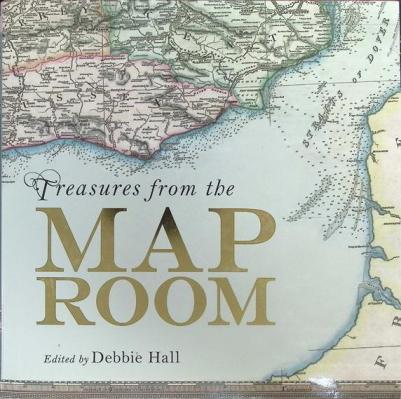
Treasures from the Map Room : a journey through the Bodleian Collections
\"Treasures from the Map Room\" is a scholarly survey of the world-renowned cartographic archives held by the Bodleian Libraries at the University of Oxford. Edited by Debbie Hall, a senior map curator, the volume selects seventy-five of the most significant items from a collection of over 1.5 million maps to illustrate the evolution of human perception, exploration, and geopolitical power. The work spans over a millennium, from medieval mappa mundi to contemporary satellite imagery, treating maps not merely as navigational tools but as artifacts of cultural history and artistic achievement.
BOOK
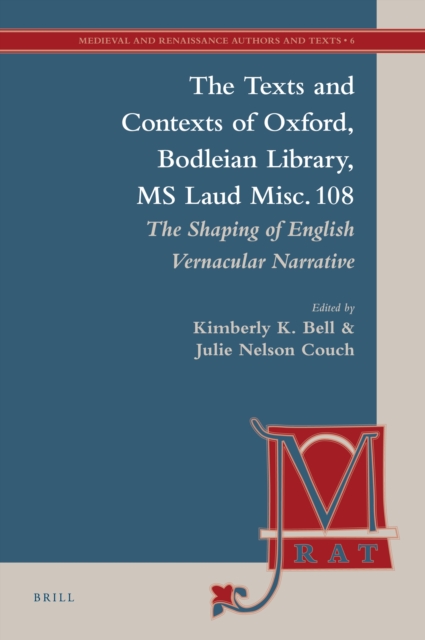
The Texts and Contexts of Oxford, Bodleian Library, MS Laud Misc. 108
This book serves as the essential companion to the late thirteenth-century, Middle English manuscript, Oxford, Bodleian Library, MS Laud Misc. 108. It marks a collaborative effort by scholars who investigate the codicological and contextual features of this manuscript's vernacular poems.
eBook

An early Ottoman history : the Oxford Anonymous chronicle (Bodleian Library, Ms Marsh 313)
The manuscript translated here contains one of the most important texts for understanding the development of early Ottoman historiography in the fifteenth century. The so-called Oxford Anonymous chronicle is a comprehensive history of the Ottoman dynasty in Turkish, compiled from various sources to tell the story of the dynasty from its rise to the year 1484 (AH 889).
Book

「照廈門原本改良」:博德利圖書館藏閩南歌仔冊封面圖象及其出版網絡
在英國牛津大學博德利(Bodleian)圖書館所藏閩南歌仔冊中,有幾種封面標示「照廈門原本改良」、「廈門會文堂原本」者,例如《新出臭頭新娘娘子合歌》、《改良廈門市鎮歌》、《最新烏白蛇借傘歌》、《西廂記傳張拱跳檣》、《最新水災歌全本》等,但從其封底標示「廈門會文堂書局印」或「廈門會文堂書局印行」的廣告書單來看,這些歌仔冊照理說應該就是廈門會文堂的刊本,是以所謂「廈門原本」、「廈門會文堂原本」究竟何指?不免令人好奇。若從這些刊本封面的圖象來看,確實與目前所知由廈門會文堂刊行之相同題名唱本有所不同,構圖或繁或簡,各有特色,本文以博德利圖書館所藏閩南歌仔冊封面圖象為研究對象,從印刷技術、圖象內容,兼及廈門、上海、廣州、南洋、臺灣,在通俗讀物、俗曲唱本的印製、出版、發行、銷售方面的跨國圖書商業網絡展開討論。
Journal Article

Treasures of Ethiopia and Eritrea in the Bodleian Library, Oxford
In Ethiopia and Eritrea, manuscripts, often beautifully illustrated, have been for centuries the principal means of recording not just the Scriptures but also historical information. Ethiopic manuscripts thus provide a unique window into the life and culture of Ethiopians and Eritreans up to the twenty-first century. This collection of Ethiopic manuscripts in the Bodleian Library in Oxford is one of the most significant in Europe.
Book
Transforming the Bodleian
The transformation of the Bodleian Libraries provides an example of how major libraries can meet twenty-first century challenges: in 2008 it was facing a failed system installation, a failed plan to cope with its storage needs and the threat of losing status as a repository suitable to house important manuscripts. Three years later it had a new state-of-the-art repository already holding 7 million items under full automated control, a new advanced library system, transformed reader spaces and the reconstruction of its major building well under way; This was achieved in record-breaking time without significant interruptions in service.
eBook
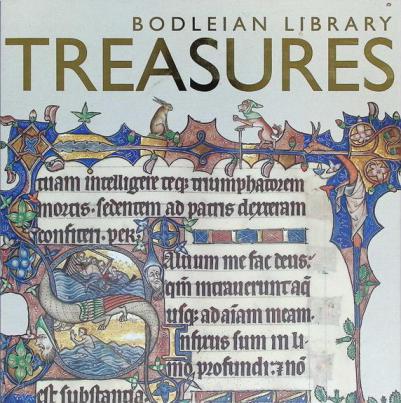
Bodleian Library treasures
In this authoritative volume, David Vaisey, a former Bodley’s Librarian, provides an expert guided tour through the incomparable collections of the Bodleian Library at the University of Oxford. As one of the oldest and most prestigious libraries in Europe, the Bodleian serves as a legal deposit institution with a history spanning over four centuries. Vaisey selects and interprets the library's most significant \"treasures,\" ranging from ancient papyri and medieval illuminated manuscripts to rare first editions and personal archives of world-renowned thinkers.
BOOK

Pastoral Rules: Pomerius, Gregory the Great and the Making of Patristic Tradition
Scholars have debated how the themes discussed by Pomerius in his De vita contemplativa found ample resonance across Gregory the Great's work, and reflect similar concerns. While it is impossible to determine whether the Roman bishop read the treatise authored by the North African rhetor, their parallel authority on the matter was recognised by Carolingian copyists, who often reported their works alongside each other. The discovery of a glossa sourced from Gregory's literary production in Pomerius’ manuscript tradition might both substantiate this claim and shed some light on the networks of medieval scriptoria.
Journal Article