
Catalogue Search | MBRL


Are you sure you want to remove the book from the shelf?

{{itemTitle}}
4,851
result(s) for
"Body Temperature Regulation"
Sort by:

Too hot? Too cold? : keeping body temperature just right
Explains how people and animals living in different parts of the world survive in hotter and colder climates using remarkable adaptive strategies and behaviors.
Book

l-Menthol mouth rinse or ice slurry ingestion during the latter stages of exercise in the heat provide a novel stimulus to enhance performance despite elevation in mean body temperature
PurposeThis study investigated the effects of l-menthol mouth rinse and ice slurry ingestion on time to exhaustion, when administered at the latter stages (~ 85%) of baseline exercise duration in the heat (35 °C).MethodTen male participants performed four time to exhaustion (TTE) trials on a cycle ergometer at 70% Wmax. In a randomized crossover design, (1) placebo-flavored non-calorific mouth rinse, (2) l-menthol mouth rinse (0.01%), or (3) ice ingestion (1.25 g kg−1), was administered at 85% of participants’ baseline TTE. Time to exhaustion, core and skin temperature, heart rate, rating of perceived effort, thermal comfort and thermal sensation were recorded.ResultsFrom the point of administration at 85% of baseline TTE, exercise time was extended by 1% (placebo, 15 s), 6% (l-menthol, 82 s) and 7% (ice, 108 s), relative to baseline performance (P = 0.036), with no difference between l-menthol and ice (P > 0.05). Core temperature, skin temperature, and heart rate increased with time but did not differ between conditions (P > 0.05). Thermal sensation did not differ significantly but demonstrated a large effect size (P = 0.080; \\[ _p^2\\] = 0.260).ConclusionThese results indicate that both thermally cooling and non-thermally cooling oral stimuli have an equal and immediate behavioral, rather than physiological, influence on exhaustive exercise in the heat.
Journal Article
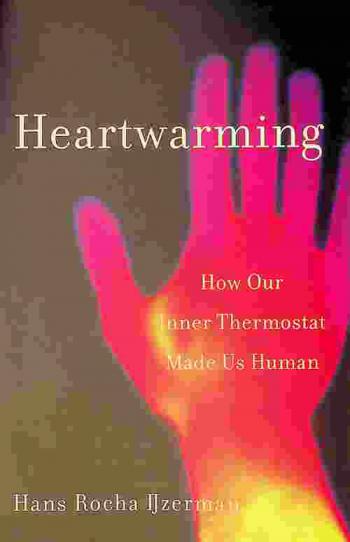
Heartwarming : how our inner thermostat made us human
\"A compelling investigation into the quest to maintain core body temperature-and how it drives genetic and social evolution, civilization, health, and technology. A cup of tea, coffee, or cocoa is calming and comforting-but why? Recent research suggests that temperature, even that derived from holding a hot beverage, can influence our emotions and behaviors. In Heartwarming, social psychologist Hans IJzerman explores temperature and its role in our daily lives through the long lens of evolution. Besides breathing, regulating body temperature is one of the most important tasks for any animal. Like huddling penguins, we humans have long relied each other to maintain our temperatures. Over millennia, this instinct for thermoregulation has driven our social lives. Understanding how temperature affects human sociality leads to fascinating new questions in our changing world: How will climate change impact society? Can thermoregulation keep relationships closer, even across distance? IJzerman offers new insights for therapists, doctors, sufferers of illnesses both mental and physical, and all of us who want to better understand our bodies and our connections. Heartwarming takes readers on a captivating journey through the world, seen from the perspective of coldness and warmth\"-- Provided by publisher.
The effect of 8-day oral taurine supplementation on thermoregulation during low-intensity exercise at fixed heat production in hot conditions of incremental humidity
PurposeTo determine the effect of taurine supplementation on sweating and core temperature responses, including the transition from compensable to uncompensable heat stress, during prolonged low-intensity exercise of a fixed-heat production (~ 200W/m2) in hot conditions (37.5 °C), at both fixed and incremental vapour-pressure.MethodsFifteen females (n = 3) and males (n = 12; 27 ± 5 years, 78 ± 9 kg, V˙O2max 50.3 ± 7.8 mL/kg/min), completed a treadmill walking protocol (~ 200W/m2 heat production [Ḣprod]) in the heat (37.5 ± 0.1 °C) at fixed-(16-mmHg) and ramped-humidity (∆1.5-mmHg/5-min) following 1 week of oral taurine supplementation (50 mg/kg/bm) or placebo, in a double-blind, randomised, cross-over design. Participants were assessed for whole-body sweat loss (WBSL), local sweat rate (LSR), sweat gland activation (SGA), core temperature (Tcore), breakpoint of compensability (Pcrit) and calorimetric heat transfer components. Plasma volume and plasma taurine concentrations were established through pre- and post-trial blood samples.ResultsTaurine supplementation increased WBSL by 26.6% and 5.1% (p = 0.035), LSR by 15.5% and 7.8% (p = 0.013), SGA (1 × 1 cm) by 32.2% and 29.9% (p < 0.001) and SGA (3 × 3 cm) by 22.1% and 17.1% (p = 0.015) during the fixed- and ramped-humidity exercise periods, respectively. Evaporative heat loss was enhanced by 27% (p = 0.010), heat-storage reduced by 72% (p = 0.024) and Pcrit was greater in taurine vs placebo (25.0-mmHg vs 21.7-mmHg; p = 0.002).ConclusionTaurine supplementation increased sweating responses during fixed Ḣprod in hot conditions, prior to substantial heat strain and before the breakpoint of compensability, demonstrating improved thermoregulatory capacity. The enhanced evaporative cooling and reduced heat-storage delayed the subsequent upward inflection in Tcore—represented by a greater Pcrit—and offers a potential dietary supplementation strategy to support thermoregulation.
Journal Article

How do penguins stay warm?
\"Read this book to learn more about how penguins stay warm in cold climates\"-- Provided by publisher.
Book
Caffeine ingestion compromises thermoregulation and does not improve cycling time to exhaustion in the heat amongst males
PurposeCaffeine is a commonly used ergogenic aid for endurance events; however, its efficacy and safety have been questioned in hot environmental conditions. The aim of this study was to investigate the effects of acute caffeine supplementation on cycling time to exhaustion and thermoregulation in the heat.MethodsIn a double-blind, randomised, cross-over trial, 12 healthy caffeine-habituated and unacclimatised males cycled to exhaustion in the heat (35 °C, 40% RH) at an intensity associated with the thermoneutral gas exchange threshold, on two separate occasions, 60 min after ingesting caffeine (5 mg/kg) or placebo (5 mg/kg).ResultsThere was no effect of caffeine supplementation on cycling time to exhaustion (TTE) (caffeine; 28.5 ± 8.3 min vs. placebo; 29.9 ± 8.8 min, P = 0.251). Caffeine increased pulmonary oxygen uptake by 7.4% (P = 0.003), heat production by 7.9% (P = 0.004), whole-body sweat rate (WBSR) by 21% (P = 0.008), evaporative heat transfer by 16.5% (P = 0.006) and decreased estimated skin blood flow by 14.1% (P < 0.001) compared to placebo. Core temperature was higher by 0.6% (P = 0.013) but thermal comfort decreased by − 18.3% (P = 0.040), in the caffeine condition, with no changes in rate of perceived exertion (P > 0.05).ConclusionThe greater heat production and storage, as indicated by a sustained increase in core temperature, corroborate previous research showing a thermogenic effect of caffeine ingestion. When exercising at the pre-determined gas exchange threshold in the heat, 5 mg/kg of caffeine did not provide a performance benefit and increased the thermal strain of participants.
Journal Article

Do frogs drink hot chocolate? : how animals keep warm
\"Do polar bears build homes to keep warm? Do penguins snuggle with a friend? Yes! But their homes aren't made of wood, and penguins don't cuddle on a couch. Instead, these animals -- and many others -- have adapted in amazing ways to survive chilly weather. [This book] is a light-hearted introduction to animal adaptations around the world. Funny interactive questions paired with comic illustrations will leave readers laughing for more!\"-- Back cover.
Book

The effect of alcohol consumption on human physiological and perceptual responses to heat stress: a systematic scoping review
Background
Ethyl alcohol (ethanol) consumption is ostensibly known to increase the risk of morbidity and mortality during hot weather and heatwaves. However, how alcohol independently alters physiological, perceptual, and behavioral responses to heat stress remains poorly understood. Therefore, we conducted a systematic scoping review to understand how alcohol consumption affects thermoregulatory responses to the heat.
Methods
We searched five databases employing the following eligibility criteria, studies must have: 1) involved the oral consumption of ethanol, 2) employed a randomized or crossover-control study design with a control trial consisting of a volume-matched, non-alcoholic beverage, 3) been conducted in healthy adult humans, 4) reported thermophysiological, perceptual, hydration status markers, and/or behavioral outcomes, 5) been published in English, 6) been conducted in air or water at temperatures of > 28°C, 7) involved passive rest or exercise, and 8) been published before October 4th, 2023.
Results
After removing duplicates, 7256 titles were screened, 29 papers were assessed for eligibility and 8 papers were included in the final review. Across the 8 studies, there were a total of 93 participants (93 male/0 female), the average time of heat exposure was 70 min and average alcohol dose was 0.68 g·kg
1
. There were 23 unique outcome variables analyzed from the studies. The physiological marker most influenced by alcohol was core temperature (lowered with alcohol consumption in 3/4 studies). Additionally, skin blood flow was increased with alcohol consumption in the one study that measured it. Typical markers of dehydration, such as increased urine volume (1/3 studies), mass loss (1/3 studies) and decreased plasma volume (0/2 studies) were not consistently observed in these studies, except for in the study with the highest alcohol dose.
Conclusion
The effect of alcohol consumption on thermoregulatory responses is understudied, and is limited by moderate doses of alcohol consumption, short durations of heat exposure, and only conducted in young-healthy males. Contrary to current heat-health advice, the available literature suggests that alcohol consumption does not seem to impair physiological responses to heat in young healthy males.
Journal Article


Delineating the impacts of air temperature and humidity for endurance exercise
New Findings What is the central question of this study? What are the independent effects of air temperature and humidity on performance, physiological and perceptual responses during endurance exercise? What is the main finding and its importance? When examined independently, elevated air temperature increased heat strain and impaired aerobic exercise performance, but to a lesser extent than has been reported previously. These findings highlight the importance of absolute humidity relative to temperature when exercising or working under severe heat stress. Many studies have reported that ambient heat stress increases physiological and perceptual strain and impairs endurance exercise, but effects of air temperature per se remain almost unexamined. Most studies have used matched relative humidity, thereby exponentially increasing absolute humidity (water content in air) concurrently with temperature. Absolute (not relative) humidity governs evaporative rate and is more important at higher work rates and air temperatures. Therefore, we examined the independent effects of air temperature and humidity on performance, thermal, cardiovascular and perceptual measures during endurance exercise. Utilizing a crossover design, 14 trained participants (7 females) completed 45 min fixed‐intensity cycling (70% V̇O2peak ${\\dot V_{{{\\rm{O}}_{\\rm{2}}}{\\rm{peak}}}$ ) followed by a 20‐km time trial in each of four environments: three air temperatures at matched absolute humidity (Cool, 18°C; Moderate, 27°C; and Hot, 36°C; at 1.96 kPa, air velocity ∼4.5 m/s), and one at elevated humidity (Hot Humid, 36°C at 3.92 kPa). Warmer air caused warmer skin (0.5°C/°C; P < 0.001), higher heart rate (1 bpm/°C; P < 0.001), sweat rate (0.04 l/h/°C; P < 0.001) and thermal perceptions during fixed‐intensity exercise, but minimally affected core temperature (<0.01°C/°C; P = 0.053). Time‐trial performance was comparable between Cool and Moderate (95% CI: –1.4, 5.9%; P = 0.263), but 3.6–6% slower in Hot (95% CI: ±2.4%; P ≤ 0.006). Elevated humidity increased core temperature (P < 0.001), perceived temperature and discomfort but not skin temperature or heart rate, and reduced mean blood pressure (P = 0.046) during fixed‐intensity exercise. Elevated humidity impaired time‐trial performance by 3.4% (95% CI: ±2.2%; P = 0.006). In conclusion, these findings quantify the importance of absolute humidity alongside air temperature when exercising under severe heat stress.
Journal Article