
Catalogue Search | MBRL


Are you sure you want to remove the book from the shelf?

{{itemTitle}}
22
result(s) for
"Body snatching."
Sort by:

Body snatching
Examines religious, economic, scientific, and political motives for body snatching and grave robbing.
Book

Politics by night: histories of extraversion and rumours of body part theft on the south coast of Kenya
This article analyses an episode of public anxiety when, in late 2013, word spread throughout Kenya’s rural Lunga Lunga constituency that politically connected gangs called mumiani were abducting and killing children for their eyes, tongues and genitals. The rapid spread of these rumours coincided with a regional drought, parliamentary election campaigns, and the apparent discovery of ‘devil worship paraphernalia’ inside a shipping container at the nearby port of Mombasa. I analyse the 2013 mumiani scare in relation to histories of famine survival strategies, predatory patronage and occult speculation to argue that the 2013 mumiani panic condensed and expressed these histories in figural rather than temporal form. As ‘constellations’ of coastal Kenyan historical consciousness, mumiani are (and have long been) a key feature of, and at the same time iconic of, a broader critical discourse about the dark side of political largesse – ‘politics by night’.
Journal Article


The Anatomy Murders
Up the close and down the stair, Up and down with Burke and Hare. Burke's the butcher, Hare's the thief, Knox the man who buys the beef.-anonymous children's song On Halloween night 1828, in the West Port district of Edinburgh, Scotland, a woman sometimes known as Madgy Docherty was last seen in the company of William Burke and William Hare. Days later, police discovered her remains in the surgery of the prominent anatomist Dr. Robert Knox. Docherty was the final victim of the most atrocious murder spree of the century, outflanking even Jack the Ripper's. Together with their accomplices, Burke and Hare would be accused of killing sixteen people over the course of twelve months in order to sell the corpses as \"subjects\" for dissection. The ensuing criminal investigation into the \"Anatomy Murders\" raised troubling questions about the common practices by which medical men obtained cadavers, the lives of the poor in Edinburgh's back alleys, and the ability of the police to protect the public from cold-blooded murder. Famous among true crime aficionados, Burke and Hare were the first serial killers to capture media attention, yetThe Anatomy Murdersis the first book to situate their story against the social and cultural forces that were bringing early nineteenth-century Britain into modernity. In Lisa Rosner's deft treatment, each of the murder victims, from the beautiful, doomed Mary Paterson to the unfortunate \"Daft Jamie,\" opens a window on a different aspect of this world in transition. Tapping into a wealth of unpublished materials, Rosner meticulously portrays the aspirations of doctors and anatomists, the makeshift existence of the so-called dangerous classes, the rudimentary police apparatus, and the half-fiction, half-journalism of the popular press.The Anatomy Murdersresurrects a tale of murder and medicine in a city whose grand Georgian squares and crescents stood beside a maze of slums, a place in which a dead body was far more valuable than a living laborer.
eBook

The Liverpool Cholera Epidemic of 1832 and Anatomical Dissection—Medical Mistrust and Civil Unrest
Asiatic cholera reached Britain for the first time in late 1831, with the main epidemic occurring during 1832. The disease caused profuse diarrhea, severe dehydration, collapse, and often death. There was widespread public fear, and the political and medical response to this new disease was variable and inadequate. In the summer of 1832, a series of “cholera riots” occurred in various towns and cities throughout Britain, frequently directed against the authorities, doctors, or both. The city of Liverpool, in the northwest of England, experienced more riots than elsewhere. Between 29 May and 10 June 1832, eight major street riots occurred, with several other minor disturbances. The object of the crowd’s anger was the local medical fraternity. The public perception was that cholera victims were being removed to the hospital to be killed by doctors in order to use them for anatomical dissection. “Bring out the Burkers” was one cry of the Liverpool mobs, referring to the Burke and Hare scandal four years earlier, when two men had murdered people in Edinburgh in order to sell their bodies for dissection to the local anatomy school. This issue was of special concern to the Liverpool citizenry because in 1826, thirty-three bodies had been discovered on the Liverpool docks, about to be shipped to Scotland for dissection. Two years later a local surgeon, William Gill, was tried and found guilty of running an extensive local grave-robbing system to supply corpses for his dissection rooms. The widespread cholera rioting in Liverpool was thus as much related to local anatomical issues as it was to the national epidemic. The riots ended relatively abruptly, largely in response to an appeal by the Roman Catholic clergy read from church pulpits, and also published in the local press. In addition, a respected local doctor, James Collins, published a passionate appeal for calm. The Liverpool Cholera Riots of 1832 demonstrate the complex social responses to epidemic disease, as well as the fragile interface between the public and the medical profession.
Journal Article
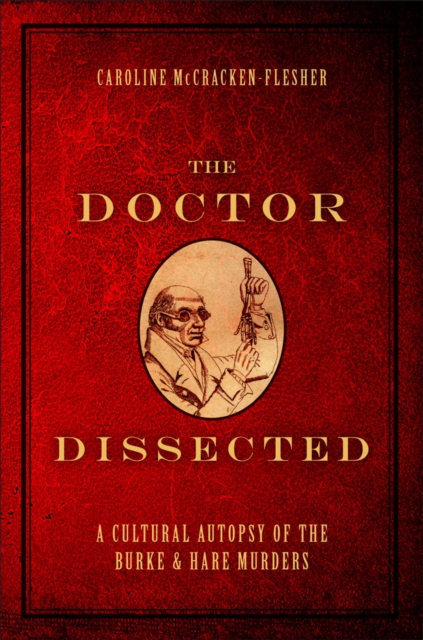
The doctor dissected : a cultural autopsy of the Burke and Hare murders
A series of bizarre disappearances filled the citizens of early nineteenth-century Scotland with terror. When the perpetrators were finally apprehended in 1828, their motive roiled the nation: William Burke and William Hare had murdered for profit. The cadavers supplied a ready payout, courtesy of Dr. Robert Knox, who was desperate for anatomical subjects. Nearly two hundred years later, these scandalous murders continue to fire imagination in Scotland and beyond. From the start, the sensational events provoked artists and writers. While Sir Walter Scott resisted public comment, his correspondence gives his trenchant private opinion and shows him working busily behind the scenes and against the doctor. Many more mined the news outright. Serial novelist David Pae exploited the disturbance to lobby for religious belief in an increasingly secular world. A subsequent generation resurrected the grisly drama as fodder for the Victorian gothic—the murders figure prominently in Robert Louis Stevenson's “The Body Snatcher” and, more obliquely, in Strange Case of Dr. Jekyll and Mr. Hyde. The twentieth century saw the specters of Burke and Hare emerge in James Bridie's play The Anatomist Hollywood horror films, television programs like Alfred Hitchcock Presents, and Frankensteinian retellings from Alasdair Gray. In this century, the story has been picked up by Smallville and Doctor Who. Recent allusions and reenactments range from the somber—in popular detective fiction by Ian Rankin—to the dark, camp comedy of Fringe Festival performances and the slapstick of John Landis's Burke and Hare.
eBook

\Body Snatching\ an excerpt from \Double Monster\
An excerpt from Double Monster 2000, a visual project shown simultaneously in New York and Los Angeles galleries with a seven-volume book edition, \"twins\" the Los Angeles library card catalog's remains with the obsolete card catalogs of the College of Physicians Library and the Mutter Museum, a medical museum of pathological specimens, in Philadelphia, is presented. In this moment of historical shift from a physical way of knowing to the virtual, Double Monster examines the physicality of the card catalogue as allegory for the physical body--dead, buried, then 'body snatched' and re-animated.
Journal Article

MEDICAL MUMMIES: THE HISTORY OF THE BURNS COLLECTION
In 1820 the University of Maryland School of Medicine acquired the Burns Museum, a specimen collection of human anatomical structures. The extensive collection had been created by Allen Burns during the 18th century in order to study the complexities of the human body. After his death, the collection was passed on to an associate who then passed it to Granville Sharp Pattison who then sold it to the University of Maryland School of Medicine where it resides to this day. En 1820 la Escuela de Medicina de la Universidad de Maryland adquirió una colección de especímenes anatómicos llamada \"Museo de Burns\". Esta vasta colección fue la obra de Allen Burns quien estaba interesado en la complejidad del cuerpo humano. Después de su muerte la colección pasó por varios dueños, incluyendo a Ganville Sharp Pattison quien la vendió a la Escuela de Medicina de la Universidad de Maryland, donde reside actualmente.
Journal Article
