
Catalogue Search | MBRL


Are you sure you want to remove the book from the shelf?

{{itemTitle}}
2,764
result(s) for
"Bodybuilding Training."
Sort by:

Bodybuilding : the complete contest preparation handbook
\"The purpose of this book is to provide a comprehensive overview of the bodybuilding contest preparation process from the start of contest preparation, through show-day, and into the transition to the offseason\"-- Provided by publisher.
Book
Critical Readings in Bodybuilding
In recent years the 'body' has become one of the most popular areas of study in the arts, humanities and social sciences. Bodybuilding, in particular, continues to be of interest to scholars of gender, media, film, cultural studies and sociology. However, there is surprisingly little scholarship available on contemporary bodybuilding. Critical Readings in Bodybuilding is the first collection to address the contemporary practice of bodybuilding, especially the way in which the activity has become increasingly more extreme and to consider much neglected debates of gender, eroticism, and sexuality related to the activity. Featuring the leading scholars of bodybuilding and the body as well as emerging voices, this volume will be a key addition to the fields of Sociology, Sport Studies, and Cultural Studies.
eBook

You are your own gym : the bible of bodyweight exercises
Presents a training guide to improving muscle strength and overall appearance, providing instructions for 125 exercises geared toward varying levels of fitness, and requiring only the resistance of one's own bodyweight.
Book

Comparative analysis of single vs. two-muscle training programs on upper body muscle growth
This study investigates the effects of different bodybuilding training methodologies—single muscle versus multiple muscle training—on upper body muscle growth. Despite the established benefits of resistance training for muscle hypertrophy, the optimal structuring of workouts remains debated. An experimental design was utilized, dividing 44 participants from the Iraqi Federation for Bodybuilding and Fitness into two groups, with one focusing on training a single muscle per session and the other on training two muscles per session over 12 weeks. Pre- and post-test measurements were taken to assess changes in chest, upper arm, and forearm circumferences, alongside strength gains. Statistical analysis using SPSS revealed significant increases in muscle size for both training approaches, with the single muscle group demonstrating superior hypertrophic outcomes. These findings suggest that training one muscle group per session may provide a more effective stimulus for muscle growth compared to training multiple groups simultaneously. The results contribute valuable insights into bodybuilding training practices, indicating that specific training strategies can optimize hypertrophy and enhance strength in bodybuilders.
Journal Article

Muscle explosion : 28 days to maximum mass
Provides muscle strength training exercises with eating strategies to build mass.
Book
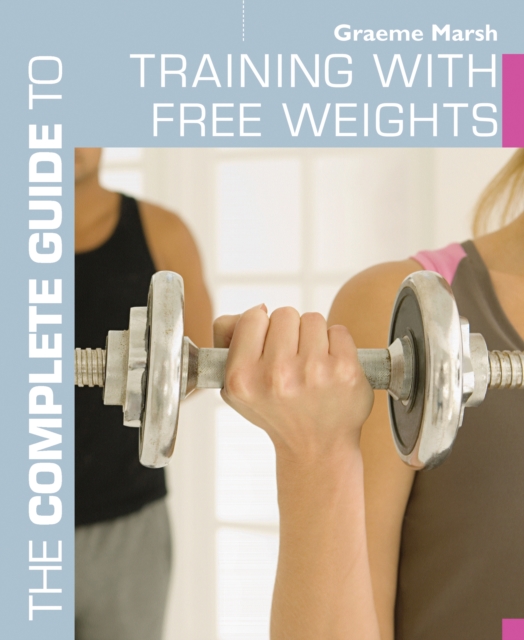
The Complete Guide to Training with Free Weights
A key title in the successful Complete Guides series, this is the definitive text on using free weights for strength, conditioning and flexibility training.Free weights are the simplest and most effective pieces of equipment and are found in every gym and many homes.
eBook


Death, drugs, and muscle
A behind-the-scenes look at the underground world of bodybuilding, this exposé is a tragic tale of drugs, murder, and self-destruction. Detailing Gregg Valentino's fame as the man whose biceps exploded,\" this portrayal reveals how he quickly rose to the top of the weight-lifting scene, becoming both a spokesman for the sport and a celebrity among fans. This account also discusses how he crossed into the illegal world of steroids and drugsbecoming the biggest supplier of Steris products in the United Statesand how his world of sex, drugs, and money came crashing down when his girlfriend died from a drug overdose and he was arrested. A gripping, uncensored story about a muscle-worshipping culture, this provocative, harrowing biography uncovers the dark and dangerous world of steroid use and drug dealing.
eBook


Potential Mechanisms for a Role of Metabolic Stress in Hypertrophic Adaptations to Resistance Training
It is well established that regimented resistance training can promote increases in muscle hypertrophy. The prevailing body of research indicates that mechanical stress is the primary impetus for this adaptive response and studies show that mechanical stress alone can initiate anabolic signalling. Given the dominant role of mechanical stress in muscle growth, the question arises as to whether other factors may enhance the post-exercise hypertrophic response. Several researchers have proposed that exercise-induced metabolic stress may in fact confer such an anabolic effect and some have even suggested that metabolite accumulation may be more important than high force development in optimizing muscle growth. Metabolic stress pursuant to traditional resistance training manifests as a result of exercise that relies on anaerobic glycolysis for adenosine triphosphate production. This, in turn, causes the subsequent accumulation of metabolites, particularly lactate and H
+
. Acute muscle hypoxia associated with such training methods may further heighten metabolic buildup. Therefore, the purpose of this paper will be to review the emerging body of research suggesting a role for exercise-induced metabolic stress in maximizing muscle development and present insights as to the potential mechanisms by which these hypertrophic adaptations may occur. These mechanisms include increased fibre recruitment, elevated systemic hormonal production, alterations in local myokines, heightened production of reactive oxygen species and cell swelling. Recommendations are provided for potential areas of future research on the subject.
Journal Article