
Catalogue Search | MBRL


Are you sure you want to remove the book from the shelf?

{{itemTitle}}
14
result(s) for
"Bohemia (Czech Republic) History To 1526."
Sort by:


The Czech Lands in Medieval Transformation
The book on the Medieval transformation that impacted the Czech lands in the 13th century, focussed on the onset of landed nobility, the transformation of the rural milieu, and the early urban history. The explanation is anchored in a broad European context.
eBook
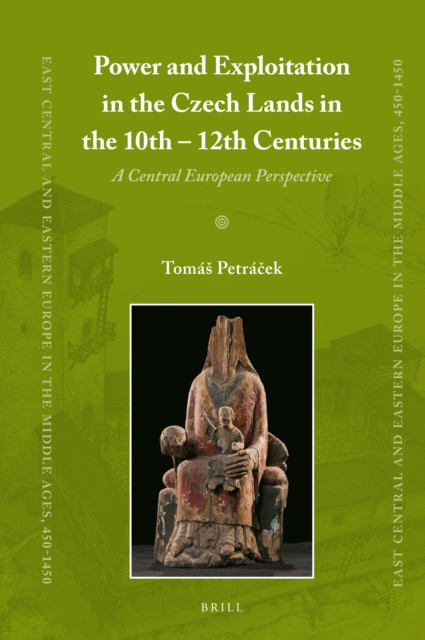
Power and Exploitation in the Czech Lands in the 10th-12th Centuries
This study offers an analysis of the history of early medieval Czech society, focusing attention on the role of serfdom and slavery in the early period of the Přemyslid dynasty, and the transformation of land and property ownership and access.
eBook
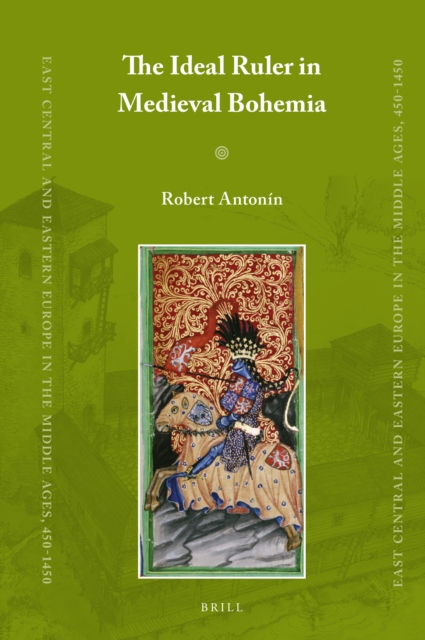
The ideal ruler in medieval Bohemia
The Ideal Ruler in Medieval Bohemia discusses the development of medieval concepts and ideas about just and unjust rulership in medieval Bohemia. This theme is examined in the context of the European political thinking between 6th and 14th centuries.
eBook

Vladislaus Henry : the formation of Moravian identity
In Vladislaus Henry Martin Wihoda offers a biography of this ruler, who ruled the Margraviate of Moravia from 1198 to 1222, and also reflects on the beginnings of the politically emancipated community of the Moravians during the 13th century.
eBook
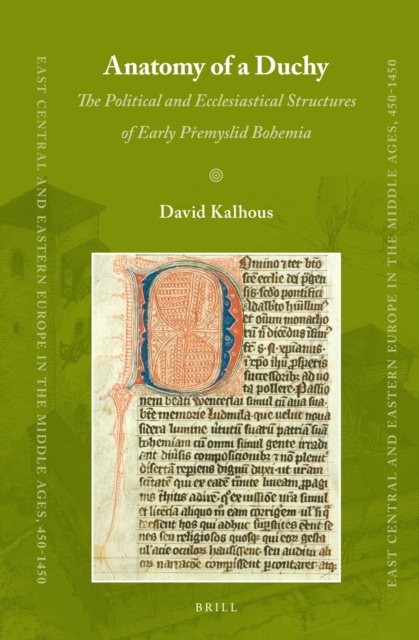
Anatomy of a duchy : the political and ecclesiastical structures of early Přemyslid Bohemia
An analysis of the early Premyslid realm provides an opportunity for recognizing the importance of different factors involved in the formation of stable social structures in the early medieval regnum. The contemporary narrative emphasizes the importance of violence, where the Premyslid princes and their powerful retinues imposed princely will on elites and freemen in Bohemia and Moravia. However, our attention also turns to the problematic evidence of assumed powerful cavalry armies and the importance of communication between prince, elites and church, somewhat problematizing the role of violence as the primary tool of governance.Furthermore, an analysis of \"otherness\" in Saxon chronicles and a comparison of different traditions of St. Wenceslas and Great Moravia confirm the importance of the \"Identitätsbildung\"-process and \"ideology\" as stabilising factors in the new Premyslid regnum.
eBook

Hastening Toward Prague
This is the first comprehensive study in English of Czech society and politics in the High Middle Ages. It paints a vivid portrait of a flourishing Christian community in the decades between 1050 and 1200. Bohemia's social and political landscape remained remarkably cohesive, centered on a throne in Prague, the Premyslid duke who occupied it, a society of property-owning freemen, and the ascendant Catholic church. In decades fraught with political violence, these provided a focal point for Czech identity and political order. In this, the Czechs' heavenly patron, Saint Vaclav, and the German emperor beyond their borders too had a role to play.An impressive, systematic dissection of a medieval polity, Hastening Toward Prague is based on a close rereading of written and material artifacts from the eleventh and twelfth centuries. Arguing against a view that puts state or nation formation at heart, Wolverton examines interactions among dukes, emperors, freemen, and the church on their own terms, asking what powers the dukes of Bohemia possessed and how they were exercised within a broader political community. Evaluating not only the foundations and practice of ducal lordship but also the form and progress of resistance to it, she argues in particular that violence was not a sign of political instability but should be interpreted as reflecting a dynamic economy of checks and balances in a fluid, mature political system. This also reveals the values and strategies that sustained the Czech Lands as a community. The study honors the complexity and dynamism of the medieval exercise of power.
eBook

The Emergence of the Bohemian State
Drawing especially on new data from archaeology, history, art history and cultural or social anthropology, this book offers a new vision of the origins of the Bohemian state. It is based both on interpretation of evidence not sufficiently taken into consideration up to now, and on research results of a wide range of international scholarship.
eBook
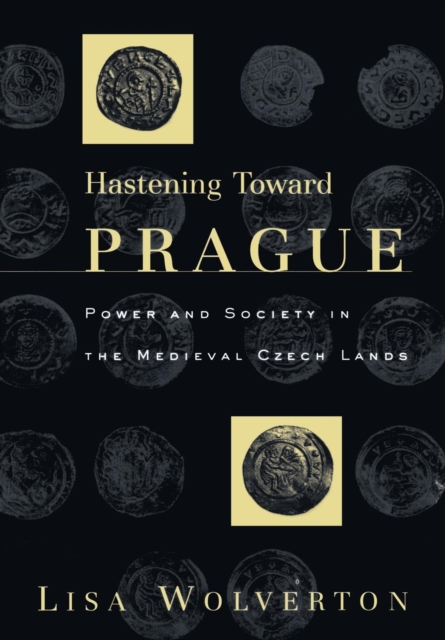
Hastening toward Prague : power and society in the medieval Czech lands
This is the first comprehensive study in English of Czech society and politics in the High Middle Ages. It paints a vivid portrait of a flourishing Christian community in the decades between 1050 and 1200. Bohemia's social and political landscape remained remarkably cohesive, centered on a throne in Prague, the Premyslid duke who occupied it, a society of property-owning freemen, and the ascendant Catholic church. In decades fraught with political violence, these provided a focal point for Czech identity and political order. In this, the Czechs' heavenly patron, Saint Vaclav, and the German emperor beyond their borders too had a role to play.An impressive, systematic dissection of a medieval polity, Hastening Toward Prague is based on a close rereading of written and material artifacts from the eleventh and twelfth centuries. Arguing against a view that puts state or nation formation at heart, Wolverton examines interactions among dukes, emperors, freemen, and the church on their own terms, asking what powers the dukes of Bohemia possessed and how they were exercised within a broader political community. Evaluating not only the foundations and practice of ducal lordship but also the form and progress of resistance to it, she argues in particular that violence was not a sign of political instability but should be interpreted as reflecting a dynamic economy of checks and balances in a fluid, mature political system. This also reveals the values and strategies that sustained the Czech Lands as a community. The study honors the complexity and dynamism of the medieval exercise of power.
eBook