
Catalogue Search | MBRL


Are you sure you want to remove the book from the shelf?

{{itemTitle}}
640,525
result(s) for
"Bombing"
Sort by:

Trump says man responsible for Abbey Gate bombing captured
President Donald Trump announced March 4 that the U.S. has detained a “top terrorist” involved in a bombing during the evacuation of Afghanistan in 2021.
Streaming Video

The Bomber Mafia : a dream, a temptation, and the longest night of the second World War
\"Malcolm Gladwell weaves together the stories of a Dutch genius and his homemade computer, a band of brothers in central Alabama, a British psychopath, and pyromaniacal chemists at Harvard to examine one of the greatest moral challenges in modern American history. Most military thinkers in the years leading up to World War II saw the airplane as an afterthought. But a small band of idealistic strategists had a different view. This 'Bomber Mafia' asked: What if precision bombing could, just by taking out critical choke points -- industrial or transportation hubs -- cripple the enemy and make war far less lethal? In his podcast, Revisionist History, Gladwell re-examines moments from the past and asks whether we got it right the first time. In The Bomber Mafia, he steps back from the bombing of Tokyo, the deadliest night of the war, and asks, \"Was it worth it?\" The attack was the brainchild of General Curtis LeMay, whose brutal pragmatism and scorched-earth tactics in Japan cost thousands of civilian lives, but may have spared more by averting a planned US invasion. Things might have gone differently had LeMay's predecessor, General Haywood Hansell, remained in charge. As a key member of the Bomber Mafia, Haywood's theories of precision bombing had been foiled by bad weather, enemy jet fighters, and human error. When he and Curtis LeMay squared off for a leadership handover in the jungles of Guam, LeMay emerged victorious, leading to the darkest night of World War II. The Bomber Mafia is a riveting tale of persistence, innovation, and the incalculable wages of war.\" -- Provided by publisher.
Book

German Historians and the Bombing of German Cities
Today, strategic aerial bombardments of urban areas that harm civilians, at times intentionally, are becoming increasingly common in global conflicts. This book reveals the history of these tactics as employed by nations that initiated aerial bombardments of civilians after World War I and during World War II.As one of the major symbols of German suffering, the Allied bombing left a strong imprint on German society. Bas von Benda-Beckmann explores how German historical accounts reflected debates on post-war identity and looks at whether the history of the air war forms a counter-narrative against the idea of German collective guilt. Provocative and unflinching, this study offers a valuable contribution to German historiography.
eBook


Rhetoric and Reality in Air Warfare
A major revision of our understanding of long-range bombing, this book examines how Anglo-American ideas about \"strategic\" bombing were formed and implemented. It argues that ideas about bombing civilian targets rested on--and gained validity from--widespread but substantially erroneous assumptions about the nature of modern industrial societies and their vulnerability to aerial bombardment. These assumptions were derived from the social and political context of the day and were maintained largely through cognitive error and bias. Tami Davis Biddle explains how air theorists, and those influenced by them, came to believe that strategic bombing would be an especially effective coercive tool and how they responded when their assumptions were challenged. Biddle analyzes how a particular interpretation of the World War I experience, together with airmen's organizational interests, shaped interwar debates about strategic bombing and preserved conceptions of its potentially revolutionary character. This flawed interpretation as well as a failure to anticipate implementation problems were revealed as World War II commenced. By then, the British and Americans had invested heavily in strategic bombing. They saw little choice but to try to solve the problems in real time and make long-range bombing as effective as possible. Combining narrative with analysis, this book presents the first-ever comparative history of British and American strategic bombing from its origins through 1945. In examining the ideas and rhetoric on which strategic bombing depended, it offers critical insights into the validity and robustness of those ideas--not only as they applied to World War II but as they apply to contemporary warfare.
eBook
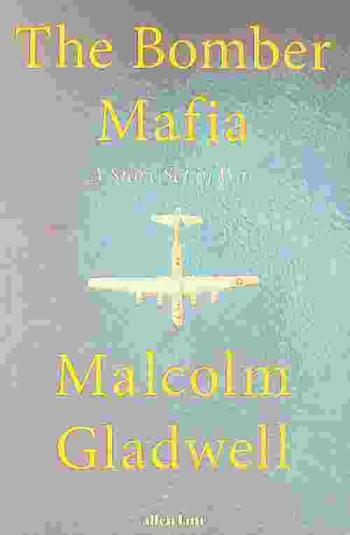
The bomber Mafia : a story set in war
'The Bomber Mafia is a case study in how dreams go awry. When some shiny new idea drops from the heavens, it does not land softly in our laps. It lands hard, on the ground, and shatters.' In the years before the Second World War, in a sleepy air force base in central Alabama, a small group of renegade pilots put forth a radical idea. What if we made bombing so accurate that wars could be fought entirely from the air? What if we could make the brutal clashes between armies on the ground a thing of the past? This book tells the story of what happened when that dream was put to the test. The Bomber Mafia follows the stories of a reclusive Dutch genius and his homemade computer, Winston Churchill's forbidding best friend, a team of pyromaniacal chemists at Harvard, a brilliant pilot who sang vaudeville tunes to his crew, and the bomber commander, Curtis Emerson LeMay, who would order the bloodiest attack of the Second World War. In this tale of innovation and obsession, Gladwell asks- what happens when technology and best intentions collide in the heat of war? And what is the price of progress?
Nigerians react to U.S. airstrike on ISIS
Nigerians reacted to the U.S. airstrike targeting ISIS militants in northwest Nigeria, on Dec. 26.
Streaming Video

