
Catalogue Search | MBRL


Are you sure you want to remove the book from the shelf?

{{itemTitle}}
2,073
result(s) for
"Book collecting."
Sort by:

Book madness : a story of book collectors in America
\"The fascinating history of American bookishness as told through the sale of Charles Lamb's library in 1848-- Charles Lamb's library-a heap of sixty scruffy old books singed with smoke, soaked with gin, sprinkled with crumbs, stripped of illustrations, and bescribbled by the essayist and his literary friends-caused a sensation when it was sold in New York in 1848. The transatlantic book world watched as the relics of a man revered as the patron saint of book collectors were dispersed. Following those books through the stories of the bibliophiles who shaped intellectual life in America-booksellers, publishers, journalists, editors, bibliographers, librarians, actors, antiquarians, philanthropists, politicians, poets, clergymen-Denise Gigante brings to life a lost world of letters at a time when Americans were busy assembling the country's major public, university, and society libraries\"-- Publisher's description.
BOOK

Book Trade Catalogues in Early Modern Europe
This edited collection offers the latest scholarship on book catalogues in early modern Europe. Contributors discuss the role that these catalogues played in bookselling and book auctions, as well as in guiding the tastes of book collectors.
eBook

The woman who fell to earth
When a body falls on to the roof of Tanya Sewell's house in the middle of the night, the world's media arrives, demanding answers. Tanya recognises the woman as her old friend, the researcher Catherine Richards, but where did she come from and how did she end up on Tanya's roof? The reporters move on, but Tanya is unable to, not least because she has inherited Catherine's house, which is full of more books than Tanya could imagine any one person owning. But there is another remarkable development, and Tanya finds herself caught up in a confusion of space and time, books and authors, fact and fiction, all of which seem to be the result of the mysterious Sixtystone, an artefact referred to in the fourteenth century by a third-century geographer, Solinus, and in the fiction of the nineteenth-century author Arthur Machen.
BOOK

Documenting the Early Modern Book World
This volume examines a number of different book lists from a variety of European countries during the fifteenth, sixteenth and seventeenth centuries. It offers a wide-ranging re-evaluation of one of the most interesting and underused resources for early modern book history.
eBook

Shadow lines : searching for the book beyond the shelf
The 'shadow line' is a term Royle uses to describe the faint line on the top edge of the text block that allows him to see whether a book on a shelf contains an inclusion - those items inserted into books and long forgotten.
BOOK

Bibliophiles, Murderous Bookmen, and Mad Librarians
The word bibliophilia indicates a love of books, both as texts to be read and objects to be cherished for their physical qualities. Throughout the history of Iberian print culture, bibliophiles have attempted to explain the psychological experiences of reading and collecting books, as well as the social and economic conditions of book production.
Bibliophiles, Murderous Bookmen, and Mad Librarians analyses Spanish bibliophiles who catalogue, organize, and archive books, as well as the publishers, artists, and writers who create them. Robert Richmond Ellis examines how books are represented in modern Spanish writing and how Spanish bibliophiles reflect on the role of books in their lives and in the histories and cultures of modern Spain. Through the combined approaches of literary studies, book history, and the book arts, Ellis argues that two strains of Spanish bibliophilia coalesce in the modern period: one that envisions books as a means of achieving personal fulfilment, and another that engages with politics and uses books to affirm linguistic, cultural, and regional and national identities.
eBook

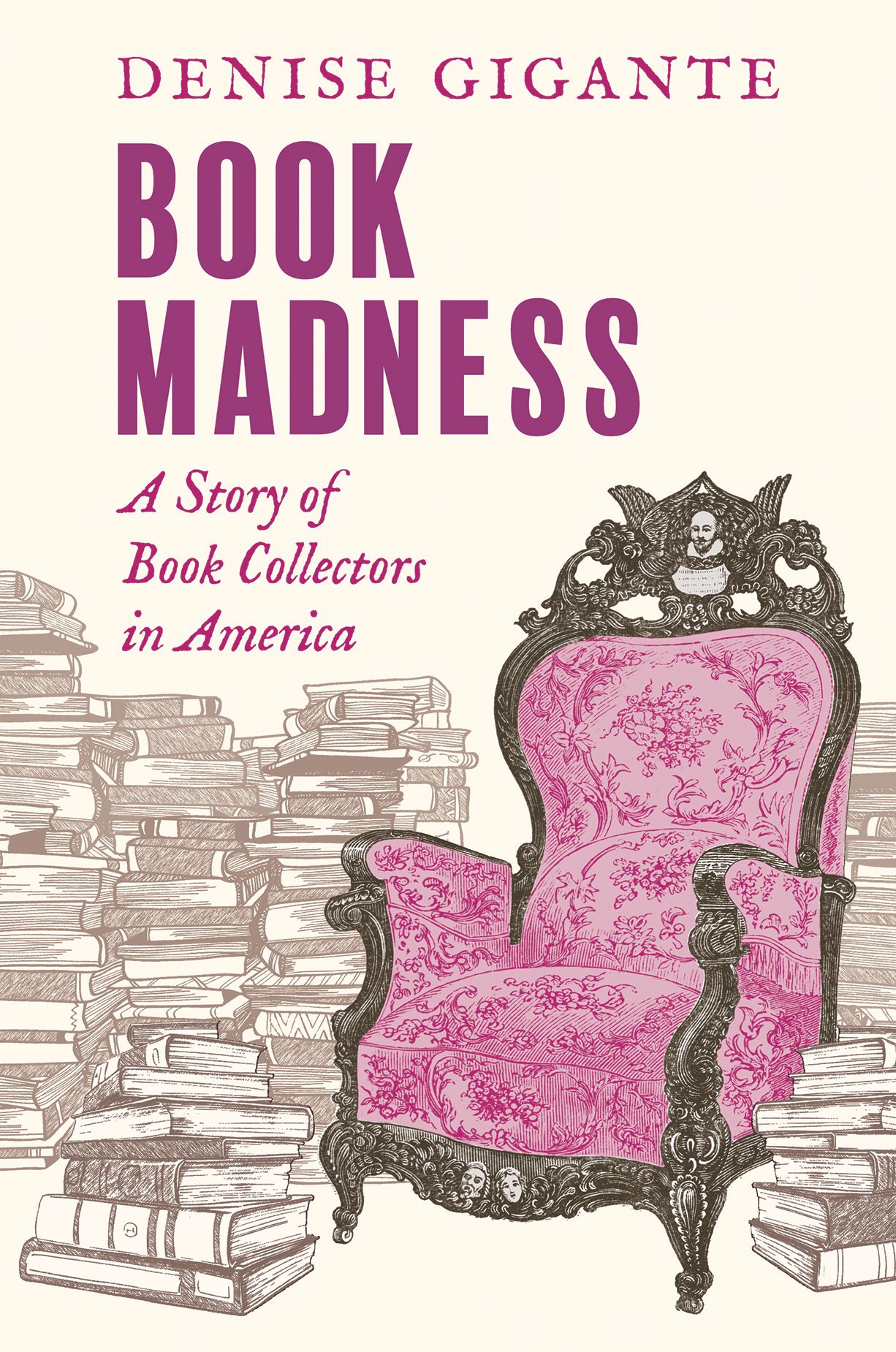
Book madness
\"The fascinating history of American bookishness as told through the sale of Charles Lamb's library in 1848-- Charles Lamb's library-a heap of sixty scruffy old books singed with smoke, soaked with gin, sprinkled with crumbs, stripped of illustrations, and bescribbled by the essayist and his literary friends-caused a sensation when it was sold in New York in 1848. The transatlantic book world watched as the relics of a man revered as the patron saint of book collectors were dispersed. Following those books through the stories of the bibliophiles who shaped intellectual life in America-booksellers, publishers, journalists, editors, bibliographers, librarians, actors, antiquarians, philanthropists, politicians, poets, clergymen-Denise Gigante brings to life a lost world of letters at a time when Americans were busy assembling the country's major public, university, and society libraries.\"
eBook

The rise of the Arabic book
\"During the thirteenth century, Europe's largest library owned fewer than 2,000 volumes. Libraries in the Arab world at the time had exponentially larger collections. Five libraries in Baghdad alone held between 200,000 and 1,000,000 books each, including multiple copies of standard works so that their many patrons could enjoy simultaneous access. How did the Arabic codex become so popular during the Middle Ages, even as the well-established form languished in Europe? Beatrice Gruendler's The Rise of the Arabic Book answers this question through in-depth stories of bookmakers and book collectors, stationers and librarians, scholars and poets of the ninth century. The history of the book has been written with an outsize focus on Europe. The role books played in shaping the great literary cultures of the world beyond the West has been less known-until now. An internationally renowned expert in classical Arabic literature, Gruendler corrects this oversight and takes us into the rich literary milieu of early Arabic letters\"-- Provided by publisher.
Book

From Liguria to Sardinia : notes about some incunabula in the Biblioteca Universitaria of Cagliari
The text examines some incunabula now in the Biblioteca Universitaria in Cagliari and their ex libris, which belong to the library collection of Giulio Salinero (1574-1612), a lawyer born in Savona, and also to the Dominican Convent of Savona. These books, formerly part of the Simon collection, settled in in Alghero, and of the Library of the Piarist Order in Cagliari, were given to the Biblioteca Universitaria in the second half of XIX century. They relate to the antiquarian interests growing in Sardinia between the end of XVIIth and the beginning of X [Publisher's text]
Journal Article