
Catalogue Search | MBRL


Are you sure you want to remove the book from the shelf?

{{itemTitle}}
6,994
result(s) for
"Bookbinding."
Sort by:
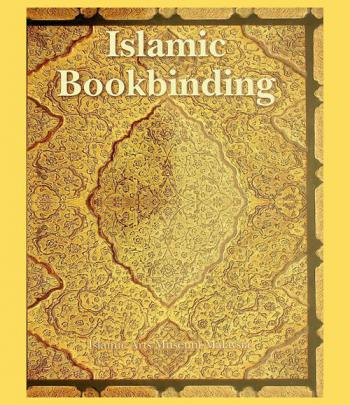
Islamic bookbinding
\"Islamic Bookbinding is dedicated to highlight the development of the binding tradition in the Islamic world. Over 70 bindings from the collection of the Islamic Arts Museum Malaysia are analysed and presented within their historical context. Bindings made of leather, lacquer and textile, gilded or blind tooled or exquisitely painted form the catalogue section of this publication. Moreover, the catalogue take a comprehensive look into the bookbinding technique discuss the stitching process, the preparation of the binding and its doublure, and flap. The catalogue also explores the art of bookbinding from around the Islamic world, spanning geographically from the Maghreb and moving eastward to cover the Malay world and China, and covering the various practices and decorative repertoire of binding known to Islamic dynasties such as the Mamluk, Ottoman, Safavid and Qajar\"-- back cover.
Book


Bookbinding : a step-by-step guide
This practical guidebook introduces the techniques required to bookbind successfully. It looks at single-section, paperback, hardback and leather binding techniques, as well as other formating techniques such as slipcases and portfolio cases.
Book

Jericho’s Daughters: Feminist Historiography and Class Resistance in Pip Williams’ The Bookbinder of Jericho
This article examines the intersecting forces of gender, class, and education in early twentieth-century Britain through a feminist reading of Pip Williams’ historical novel The Bookbinder of Jericho. Centering on the fictional character Peggy Jones—a working-class young woman employed in the Oxford University Press bindery—the study explores how women’s intellectual ambitions were constrained by economic hardship, institutional gatekeeping, and patriarchal social norms. By integrating close literary analysis with historical research on women bookbinders, educational reform, and the impact of World War I, the paper reveals how the novel functions as both a narrative of personal development and a broader critique of systemic exclusion. Drawing on the genre of the female Bildungsroman, the article argues that Peggy’s journey—from bindery worker to aspiring scholar—mirrors the real struggles of working-class women who sought education and recognition in a male-dominated society. It also highlights the significance of female solidarity, especially among those who served as volunteers, caregivers, and community organizers during wartime. Through the symbolic geography of Oxford and its working-class district of Jericho, the novel foregrounds the spatial and social divides that shaped women’s lives and labor. Ultimately, this study shows how The Bookbinder of Jericho offers not only a fictional portrait of one woman’s aspirations but also a feminist intervention that recovers and reinterprets the overlooked histories of British women workers. The novel becomes a literary space for reclaiming agency, articulating resistance, and criticizing the gendered boundaries of knowledge, work, and belonging.
Journal Article

Bookbinding and the Look of the Romantic-Era Novel
The transition from buying books unbound or temporarily bound to buying them already bound represents a fundamental turning point in literary history, yet bookbinding's influence on the novel remains underexplored. This essay challenges two \"truths\" about the novel's material forms: first, that most Romantic-era readers would have purchased novels in unbound sheets or temporary board bindings, and second, that most historical readers would have viewed board bindings as \"temporary.\" Using quantitative analysis of available datasets and bibliographic research on hundreds of volumes in their original bindings, the essay argues that novels were marketed to readers as ready-bound objects much earlier than is commonly understood.
Journal Article
Bookbindings Bearing the Signature of Mehmed al-Sharīf and Their Decorative Characteristics
Bookbinding is a covering, usually made of leather-encased cardboard, for holding book pages or various magazines together, and the person who performs this art is called a bookbinder. The subject of this article involves the bindings bearing the signature of the Seljuk bookbinder Mehmet al-Sharīf and the decorative features of these bindings. As a result of the research made in the manuscript libraries and the literature on this field, a total of eight bindings have been found bearing the signature of Mehmed al-Sharīf (TPML A.465 and 2334, Yusuf Aga ML 191, Sulaymaniyah ML Mahmud Pasha 237 and Turhan Valide Sultan 253, Vahit Pasha ML 1169 and 1175, V&A Museum). Signature seals can be found on the corners of the bindings, in the middle of the covers, on the fore-edge flap, or on the envelope flap. The seals are circular with diameters of 5 mm, and bearing the name of Mehmed (Mohammad) within the seal; they are placed at the top of the text line due to respect for the name of the Prophet Mohammed (pbuh). The lower part of the seal has the phrase “al-Sharīf.” When examining the bindings, Mehmed al-Sharīf is seen to have continued the construction and decorative style of the Anatolian Seljuk binding. When considering the two examples TPML A.2334 (dated 654/1256) and TPML A.465 (dated 699/1299), Mehmed al-Sharīf is identified as having been a Seljuk-period bookbinder who produced works in the second half of the 13th century at the latest.
Journal Article
The technique of Islamic bookbinding : methods, materials and regional varieties
'The Technique of Islamic Bookbinding' explores the development of the bookbinding tradition in the Islamic world. Based on an assessment of the collections in the University Library Leiden and focussing on construction, it covers in detail the various sewing techniques, board attachment structures, and the application of covering materials. A comparative analysis of the historic treatises on bookbinding provides further insight in the actual making of the Islamic book. It becomes clear that the tradition is more varied than often thought, and that distinctive material characteristics can be indicative for production in a certain period or region. Karin Scheper further demonstrates how diverse methods were used to create sound structures, which fundamentally changes our understanding of the Islamic bookbinding practice.
Book

The Decorated Bindings in Marsh's Library, Dublin
Among the many books in original bindings in Marsh's Library, Dublin, a surprisingly large number are in decorated blind- or gold-tooled, calf, pigskin or goatskin bindings, which date from the 15th to the 19th centuries. The bindings come from all over Europe, ranging from Ireland to eastern Europe. While most were made in England, some fine and interesting examples from Germany, Italy, France, Spain and Holland are also included. In this volume, leading scholar Mirjam Foot first gives an overview of how books were bound by hand and then describes the bindings by country of origin, within each section treating them chronologically and by type of decoration. The detailed descriptions of the bindings are illustrated with 52 black and white photos and 8 colour plates.
Contents: Introduction; Great Britain; Ireland; France; Spain, Italy and Russia; The Netherlands and Germany; Afterword; Selected literature; Index.
eBook