
Catalogue Search | MBRL


Are you sure you want to remove the book from the shelf?

{{itemTitle}}
1,139
result(s) for
"Booties"
Sort by:

A positive theory of the predatory state
While the distinction between public and private goods is essential in developing a normative theory of non-predatory states, the focus of this article is on a positive theory of predatory states. Since the predatory relationship between the state and its subjects depends on the power of the state to grab or to appropriate coercively and the subject’s ability to escape or hide, the boundaries of the state are decided by the nature of the assets that can be taken more or less easily. Accordingly, I will introduce a new distinction between captive and fugitive assets that positively captures the frontiers of a state space. The US railroading in the nineteenth century provides an illustration regarding the explanatory power of an asset-appropriating perspective of the state compared to a public goods approach.
Journal Article
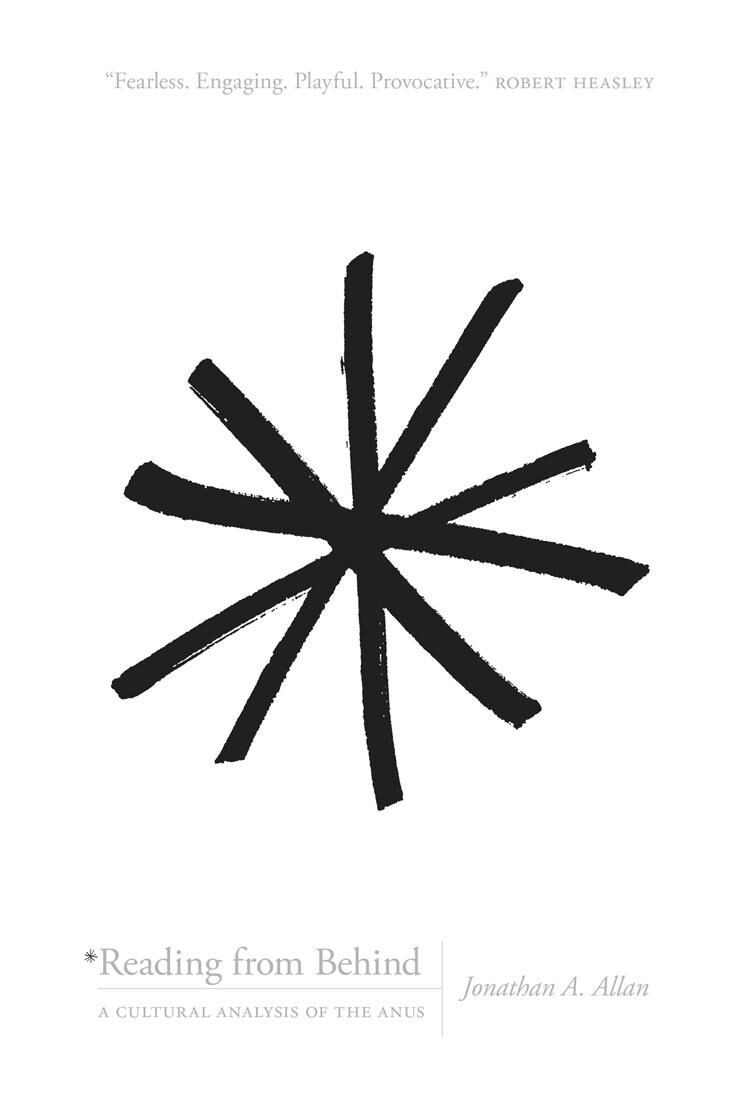
Reading from Behind
Since we all have one and use it every day, why is it that people squirm when the anus is mentioned? In Reading from Behind, Jonathan Allan addresses this question in a playful, yet scholarly exploration of everything from porn to poetry, from Brokeback Mountain to Myra Breckinridge, democratizing the anus as a site of necessity and as a location of pleasure.
eBook

Booty Power Politics: The Social-mediated Consumption of Black Female Bodies in Popular Culture
This article analyses the concept of booty power, objectification and consumption of the female body in popular culture. Booty power is used here to refer to discourses around the Stocko Sama2K, initially a group of five women who were caught on camera dancing the \"John Vul' igate\" song and dance challenge, and their sexualized dance routines. I draw on digital ethnography and interviews to argue that objectification presents us with complexities, and conclude that it is a multi-dimensional maze shaped by different socio-cultural agents. The article casts light on how women's bodies are used as a source of conversations on decency, morality, power and culture. Objectification theory is used to demonstrate the power of objectification by others and also by the self. The research concludes that objectification and self-objectification worked in both directions, as disempowering and empowering, especially to women, given the conflicting socio-cultural elements at play.
Journal Article

Casual sexual relationships: Identifying definitions for one night stands, booty calls, fuck buddies, and friends with benefits
Operational definitions of casual sexual relationships (CSRs; i.e., Friends with Benefits, Booty Call) have not been validated in previous research. In this exploratory study of terminology used to describe various CSRs, participants were provided with definitions for One Night Stand, Booty Call, Fuck Buddy, and Friends with Benefits relationships and asked to identify the corresponding label for each definition. Overall, a majority (i.e., ≥81%) of men (n=341) and women (n=544) accurately identified the corresponding labels. Specifically, a higher proportion of participants with sexual intercourse experience identified the corresponding definition labels, whereas there was no difference in the proportion of those with or without previous casual sex experience. Furthermore, a higher proportion of female participants identified the corresponding labels, possibly reflecting a greater capacity to identify subtle relationship cues conveyed within the definitions. Given the prevalence of CSRs in the current cultural context, it is vital for researchers to ensure that the terminology they use accurately reflects their participants' understanding of the concepts under investigation.
Journal Article

Four Functions for Four Relationships: Consensus Definitions of University Students
In this study (
N
= 192; 124 women, 68 men), consensus definitions of one-night stands, booty-call relationships, friends-with-benefits, and serious romantic relationships were fashioned using a sample of university students. Participants provided a Likert and forced-choice assessment of how each relationship was characterized by the functions of
sexual gratification
,
trial run
,
placeholder
, and
socioemotional support
. Serious romantic relationships were primarily used to gain socioemotional support. Friends-with-benefits relationships were motivated by seeking a placeholder until someone better came along and as a trial run for a more serious relationship. Booty-call relationships and one-night stands were motivated primarily by a desire for sexual gratification. Men ascribed a greater range of reasons to engage in sexual relationships than women did and the more short-term the relationship was in nature, the greater the emergence of sex differences in ascribed functions.
Journal Article


Booty in the Sullan Civil War of 83-82 B.C
This article examines the evidence for the sale of booty from Italian towns sacked by Sullan armies in the civil war of 83-82 B. C. Appian, Cicero, and Plutarch attest that Sena Gallica, Praeneste, Tuder, and Ariminum were plundered, and that Norba would have been sacked if it had not first been destroyed. Florus, in a passage which is generally understood to refer to veteran settlement, indicates that there were also booty sales at Spoletium, Interamna Nahars, Florentia, and Sulmo. The evidence for booty is substantial, yet it has received only minimal scholarly attention. This article offers the first systematic analysis.
Journal Article

Netflix and Chill? What Sex Differences Can Tell Us About Mate Preferences in (Hypothetical) Booty-Call Relationships
The booty-call relationship is defined by both sexual characteristics and emotional involvement. In the current study, men’s and women’s preferences for a booty-call mate were explored. Men and women were predicted to exhibit different mate preferences depending on whether they considered a booty-call relationship a short- or long-term relationship. Participants (N = 559, 74% women) completed an anonymous online questionnaire, designing their ideal booty-call mate using the mate dollars paradigm. Both sexes considered the physical attractiveness and kindness of a booty-call mate a necessity, expressing both short- and long-term mate preferences. The current study highlights the need to explore mate preferences outside the dichotomy of short- and long-term relationships, providing evidence of a compromise relationship.
Journal Article

Reading the Raids : the sacred value of the spoils : some considerations on Il., 2, 686-694, Il., 9, 128-140 and Il., 19, 252-266
A careful reading of the texts concerning the capture and the complex restitution procedure of both Briseïs and Chryseïs, allows us to highlight the legal-religious implications, expressed ‘inside’ the word ληΐς, -ίδος, as actually perceived by Homer’s first audience. Briseïs’ release procedure has been considered here, while the one relating to Chryseïs has been discussed in the monograph on the ληΐς, -ίδος, within the Iliad and the Odyssey. The hubristic disrespect of the sacrosanct value of the war booty of the Thessalian prince arouses and justifies his wrath, involving private and public components. The linguistic analysis of the noun and derived terms, and the survey of the contexts in which they are found, suggest that we deal with some features closely related to the very early stages of the rising of the Iliadic traditions, that entirely gravitate towards Achilles’ μῆνις. The comparison with selected LBA Anatolian documents and Biblical sources will follow in the forthcoming essay. This further examination indicates that ληΐς, -ίδος, and the ideological, socio-economic, legal and religious elements which are synthesized within this word, constitute a very old Greek peculiarity, that probably traces back to the pre-Archaic phases of the epic poetry.
Journal Article
Booty in the Sullan Civil War of 83–82 B. C
This article examines the evidence for the sale of booty from Italian towns sacked by Sullan armies in the civil war of 83-82 B. C. Appian, Cicero, and Plutarch attest that Sena Gallica, Praeneste, Tuder, and Ariminum were plundered, and that Norba would have been sacked if it had not first been destroyed. Florus, in a passage which is generally understood to refer to veteran settlement, indicates that there were also booty sales at Spoletium, Interamna Nahars, Florentia, and Sulmo. The evidence for booty is substantial, yet it has received only minimal scholarly attention. This article offers the first systematic analysis.
Journal Article