
Catalogue Search | MBRL


Are you sure you want to remove the book from the shelf?

{{itemTitle}}
169,887
result(s) for
"Border security"
Sort by:


Border walls
Two decades after the fall of the Berlin Wall, why are the notable democracies of the United States, India, and Israel building massive walls and fences on their borders? Despite predictions of a borderless world through globalization, these three countries alone have built security barriers totaling an astonishing 5,700 kilometers in length. In this groundbreaking work, Reece Jones analyzes how these controversial walls were justified, their impact on those living behind them, and the long-term effects of the hardening of political boundaries. Border Walls is a bold, important intervention that demonstrates that the exclusion and violence necessary to secure the borders of the modern state often undermine the very ideals of freedom and democracy the barriers are meant to protect.
eBook

The dynamics of interstate boundaries
This title explains why some borders deter insurgents, smugglers, bandits, and militants while most suffer from infiltration and crisis.
Book

Migrant Feelings, Migrant Knowledge
The digital storytelling project Humanizing Deportation invites
migrants to present their own stories in the world's largest and
most diverse archive of its kind. Since 2017, more than 300
community storytellers have created their own audiovisual
testimonial narratives, sharing their personal experiences of
migration and repatriation. With Migrant Feelings, Migrant
Knowledge , the project's coordinator, Robert Irwin, and other
team members introduce the project's innovative participatory
methodology, drawing out key issues regarding the human
consequences of contemporary migration control regimes, as well as
insights from migrants whose world-making endeavors may challenge
what we think we know about migration.
In recent decades, migrants in North America have been treated
with unprecedented harshness. Migrant Feelings, Migrant
Knowledge outlines this recent history, revealing stories both
of grave injustice and of seemingly unsurmountable obstacles
overcome. As Irwin writes, \"The greatest source of expertise on the
human consequences of contemporary migration control are the
migrants who have experienced them,\" and their voices in this
searing collection jump off the page and into our hearts and
minds.
eBook


Border Policing
An extensive history examining how North American nations have tried (and often failed) to police their borders, Border Policing presents diverse scholarly perspectives on attempts to regulate people and goods at borders, as well as on the ways that individuals and communities have navigated, contested, and evaded such regulation. The contributors explore these power dynamics though a series of case studies on subjects ranging from competing allegiances at the northeastern border during the War of 1812 to struggles over Indian sovereignty and from the effects of the Mexican Revolution to the experiences of smugglers along the Rio Grande during Prohibition. Later chapters stretch into the twenty-first century and consider immigration enforcement, drug trafficking, and representations of border policing in reality television. Together, the contributors explore the powerful ways in which federal authorities impose political agendas on borderlands and how local border residents and regions interact with, and push back against, such agendas. With its rich mix of political, legal, social, and cultural history, this collection provides new insights into the distinct realities that have shaped the international borders of North America.
eBook

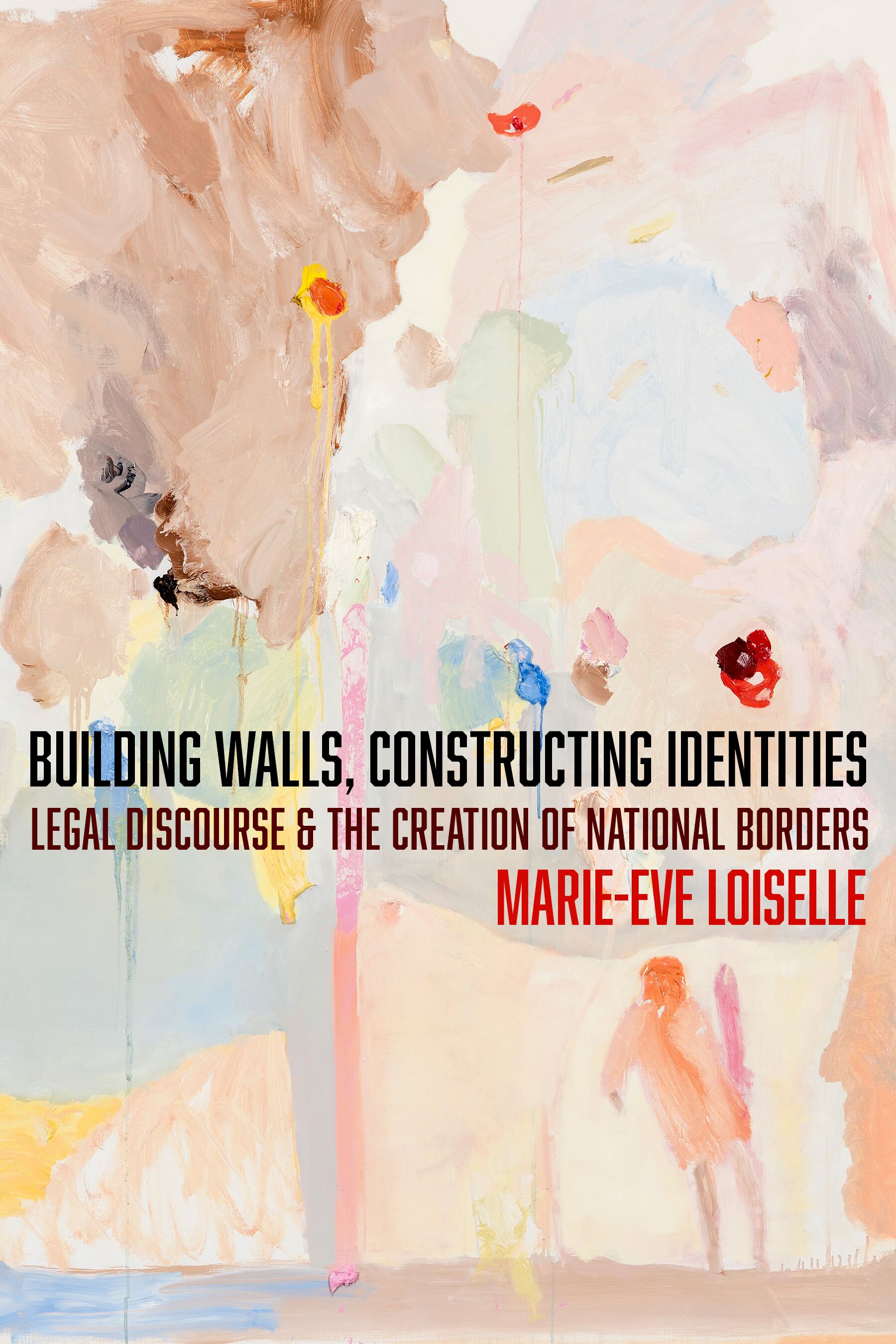
Building Walls, Constructing Identities
States are erecting walls at their borders at a pace unmatched in history, and the wall between the United States and Mexico stands as an icon among these dividing structures. Much has been said about the US-Mexico border wall in the last few decades, yet American walling projects have a much longer history, dating back almost a century. Building Walls, Constructing Identities offers a rich account of this legal history, informed by two episodes of wall-building—the Act of August 19, 1935, and the Secure Fence Act of 2006. These two legislative periods illustrate that today's wall imprints onto the landscape a grammar of racial inequality underpinned by a settler colonial rationality. Marie-Eve Loiselle argues in favor of an account of the law that considers its material translation into space and identifies discursive processes by which the law and the wall come together to communicate legal knowledge about territory and identity.
eBook


The Securitization of Migration
The international movement of people is provoking worldwide anxiety and apprehension. Nation-states around the globe, especially Western ones, are cracking down on migration for security reasons. International migration has become a key security issue and is perceived, by some, as an existential security threat.
The Securitization of Migration is about the movement of people and the system of order underpinning the movement. In undertaking a comparative study of Canada and France, the study analyzes the process of securitizing migration. It explores the process of discursively and institutionally integrating international migration into security frameworks that emphasize policing and defence. Drawing upon social theory, migration studies, and Securitization Theory, Philippe Bourbeau seeks to understand the concepts of power underlying security frameworks and how these affect the treatment of migrants and immigrants. This book is one of the first to systematically and comparatively examine the role of political agents, media agents, and contextual factors in the process of securitizing migration.
The book will be of interest to students and scholars concerned with comparative and theoretical approaches to security and migration studies.
eBook