
Catalogue Search | MBRL


Are you sure you want to remove the book from the shelf?

{{itemTitle}}
7,612
result(s) for
"Bosnia and Herzegovina"
Sort by:

Whose Bosnia?
As the site of the assassination that triggered World War I and the place where the term \"ethnic cleansing\" was invented during the Yugoslav Wars of the 1990s, Bosnia has become a global symbol of nationalist conflict and ethnic division. But as Edin Hajdarpasic shows, formative contestations over the region began well before 1914, emerging with the rise of new nineteenth-century forces-Serbian and Croatian nationalisms as well as Ottoman, Habsburg, Muslim, and Yugoslav political movements-that claimed this province as their own.Whose Bosnia?reveals the political pressures and moral arguments that made this land a prime target of escalating nationalist activity.
To explain the remarkable proliferation of national movements since the nineteenth century, Hajdarpasic draws on a vast range of sources-records of secret societies, imperial surveillance files, poetry, paintings, personal correspondences-spanning Bosnia, Serbia, Croatia, Turkey, and Austria. Challenging conventional readings of Balkan histories,Whose Bosnia?provides new insight into central themes of modern politics, illuminating core subjects like \"the people,\" state-building, and national suffering. Hajdarpasic uses South Slavic debates over Bosnian Muslim identity to propose a new figure in the history of nationalism: the(br)other, a character signifying at the same time the potential of being both \"brother\" and \"Other,\" containing the fantasy of both complete assimilation and insurmountable difference. By bringing such figures into focus,Whose Bosnia?shows nationalism to be an immensely dynamic and open-ended force, one that eludes any clear sense of historical closure.
eBook

Innocence and Victimhood
The 1992–95 war in Bosnia-Herzegovina following the dissolution of socialist Yugoslavia became notorious for “ethnic cleansing” and mass rapes targeting the Bosniac (Bosnian Muslim) population. Postwar social and political processes have continued to be dominated by competing nationalisms representing Bosniacs, Serbs, and Croats, as well as those supporting a multiethnic Bosnian state, in which narratives of victimhood take center stage, often in gendered form. Elissa Helms shows that in the aftermath of the war, initiatives by and for Bosnian women perpetuated and complicated dominant images of women as victims and peacemakers in a conflict and political system led by men. In a sober corrective to such accounts, she offers a critical look at the politics of women’s activism and gendered nationalism in a postwar and postsocialist society. Drawing on ethnographic research spanning fifteen years,
Innocence and Victimhood demonstrates how women’s activists and NGOs responded to, challenged, and often reinforced essentialist images in affirmative ways, utilizing the moral purity associated with the position of victimhood to bolster social claims, shape political visions, pursue foreign funding, and wage campaigns for postwar justice. Deeply sensitive to the suffering at the heart of Bosnian women’s (and men’s) wartime experiences, this book also reveals the limitations to strategies that emphasize innocence and victimhood.
eBook

Surviving the peace : the struggle for postwar recovery in Bosnia-Herzegovina
\"Reportage describing postwar life in Bosnia between 1995 and 2015, exploring the interplay between the three centers of political power: the domestic power structure, the international community, and the grassroots human rights campaigns. Provides digestible explanations of the region's complex postwar history through interviews and conversations with Bosnian citizens and activists\"-- Provided by publisher.
Book
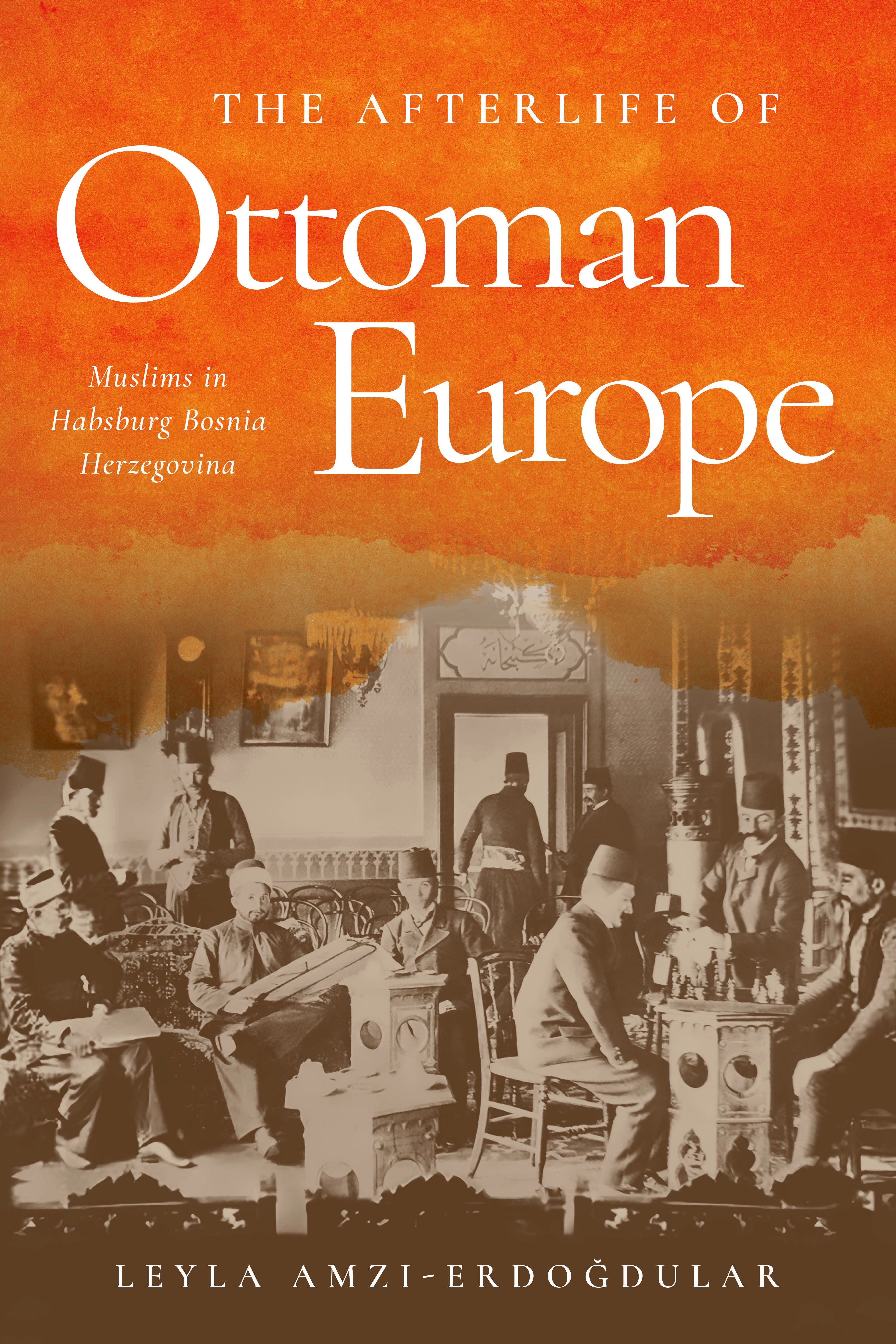
The Afterlife of Ottoman Europe
The Afterlife of Ottoman Europe examines how Bosnian
Muslims navigated the Ottoman and Habsburg domains following the
Habsburg occupation of Bosnia Herzegovina after the 1878 Berlin
Congress. Prominent members of the Ottoman imperial polity, Bosnian
Muslims became minority subjects of Austria-Hungary, developing a
relationship with the new authorities in Vienna while transforming
their interactions with Istanbul and the rest of the Muslim world.
Leyla Amzi-Erdoğdular explores the enduring influence of the
Ottoman Empire during this period-an influence perpetuated by the
efforts of the imperial state from afar, and by its former subjects
in Bosnia Herzegovina negotiating their new geopolitical reality.
Muslims' endeavors to maintain their prominence and shape their
organizations and institutions influenced imperial considerations
and policies on occupation, sovereignty, minorities, and
migration.
This book introduces Ottoman archival sources and draws on
Ottoman and Eastern European historiographies to reframe the study
of Habsburg Bosnia Herzegovina within broader intellectual and
political trends at the turn of the twentieth century. Tracing
transregional connections, imperial continuities, and multilayered
allegiances, The Afterlife of Ottoman Europe bridges
Ottoman, Islamic, Middle Eastern, and Balkan studies.
Amzi-Erdoğdular tells the story of Muslims who redefined their
place and influence in both empires and the modern world, and
argues for the inclusion of Islamic intellectual history within the
history of Bosnia Herzegovina and Eastern Europe.
eBook

EU foreign and security policy in Bosnia
This book represents the first ever comprehensive study of the EU’s foreign and security policy in Bosnia. Drawing on a wealth of fresh empirical material, it demonstrates that institutions are a key variable in explaining levels of common foreign security policy (CFSP) coherence and effectiveness over time. In doing so, it also sheds new light on the role that intergovernmental, bureaucratic and local political contestation have played in the formulation and implementation of a European foreign policy. The study concludes that the EU’s involvement in Bosnia has not only had a significant impact on this Balkan country in its path from stabilisation to integration, but has also transformed the EU, its foreign and security policy and shaped the development of the EU’s international identity along the way. The book will be of great interest to researchers and students of EU politics, International Relations and Bosnian politics.
eBook

A Neglected Right
The right to be elected, although an important political right guaranteed in human rights documents on international and regional levels, is still an under-researched and undertheorized concept with many synonyms in use. While the right to vote is often correlated with democracy, the closely related right to be elected is often neglected, and the constitutions of most countries are silent about it.
The 2009 European Court of Human Rights (ECtHR) decision in the case of Sejdić and Finci v. Bosnia and Herzegovina started the discussions concerning the discrimination in enjoyment of the right to be elected in Bosnia and Herzegovina. Although the right to be elected is not explicitly guaranteed in the Dayton Constitution but only in the Law on Election, the ECtHR considered equal enjoyment of this right by everyone in Bosnia and Herzegovina of high importance and declared the relevant Dayton Constitution’s provisions discriminatory.
The book explains the conceptual relevance of the right to be elected, its interrelatedness with the right to vote and both these rights’ significance for democratic systems. Through analyzing and explaining the regional human rights tribunal’s decisions concerning the right to be elected, the importance of this political right is elucidated.
eBook