
Catalogue Search | MBRL


Are you sure you want to remove the book from the shelf?

{{itemTitle}}
927
result(s) for
"Bosnia and Herzegovina History"
Sort by:


Whose Bosnia?
As the site of the assassination that triggered World War I and the place where the term \"ethnic cleansing\" was invented during the Yugoslav Wars of the 1990s, Bosnia has become a global symbol of nationalist conflict and ethnic division. But as Edin Hajdarpasic shows, formative contestations over the region began well before 1914, emerging with the rise of new nineteenth-century forces-Serbian and Croatian nationalisms as well as Ottoman, Habsburg, Muslim, and Yugoslav political movements-that claimed this province as their own.Whose Bosnia?reveals the political pressures and moral arguments that made this land a prime target of escalating nationalist activity.
To explain the remarkable proliferation of national movements since the nineteenth century, Hajdarpasic draws on a vast range of sources-records of secret societies, imperial surveillance files, poetry, paintings, personal correspondences-spanning Bosnia, Serbia, Croatia, Turkey, and Austria. Challenging conventional readings of Balkan histories,Whose Bosnia?provides new insight into central themes of modern politics, illuminating core subjects like \"the people,\" state-building, and national suffering. Hajdarpasic uses South Slavic debates over Bosnian Muslim identity to propose a new figure in the history of nationalism: the(br)other, a character signifying at the same time the potential of being both \"brother\" and \"Other,\" containing the fantasy of both complete assimilation and insurmountable difference. By bringing such figures into focus,Whose Bosnia?shows nationalism to be an immensely dynamic and open-ended force, one that eludes any clear sense of historical closure.
eBook


Show Time
In Show Time
, Lee Ann Fujii asks why some perpetrators of political
violence, from lynch mobs to genocidal killers, display their acts
of violence so publicly and extravagantly. Closely
examining three horrific and extreme episodes-the murder of a
prominent Tutsi family amidst the genocide in Rwanda, the execution
of Muslim men in a Serb-controlled village in Bosnia during the
Balkan Wars, and the lynching of a twenty-two-year old Black
farmhand on Maryland's Eastern Shore in 1933-Fujii shows how
\"violent displays\" are staged to not merely to kill those perceived
to be enemies or threats, but also to affect and influence
observers, neighbors, and the larger society.
Watching and participating in these violent displays profoundly
transforms those involved, reinforcing political identities, social
hierarchies, and power structures. Such public spectacles of
violence also force members of the community to choose sides-openly
show support for the goals of the violence, or risk becoming
victims, themselves. Tracing the ways in which public displays of
violence unfold, Show Time reveals how the perpetrators
exploit the fluidity of social ties for their own ends.
eBook

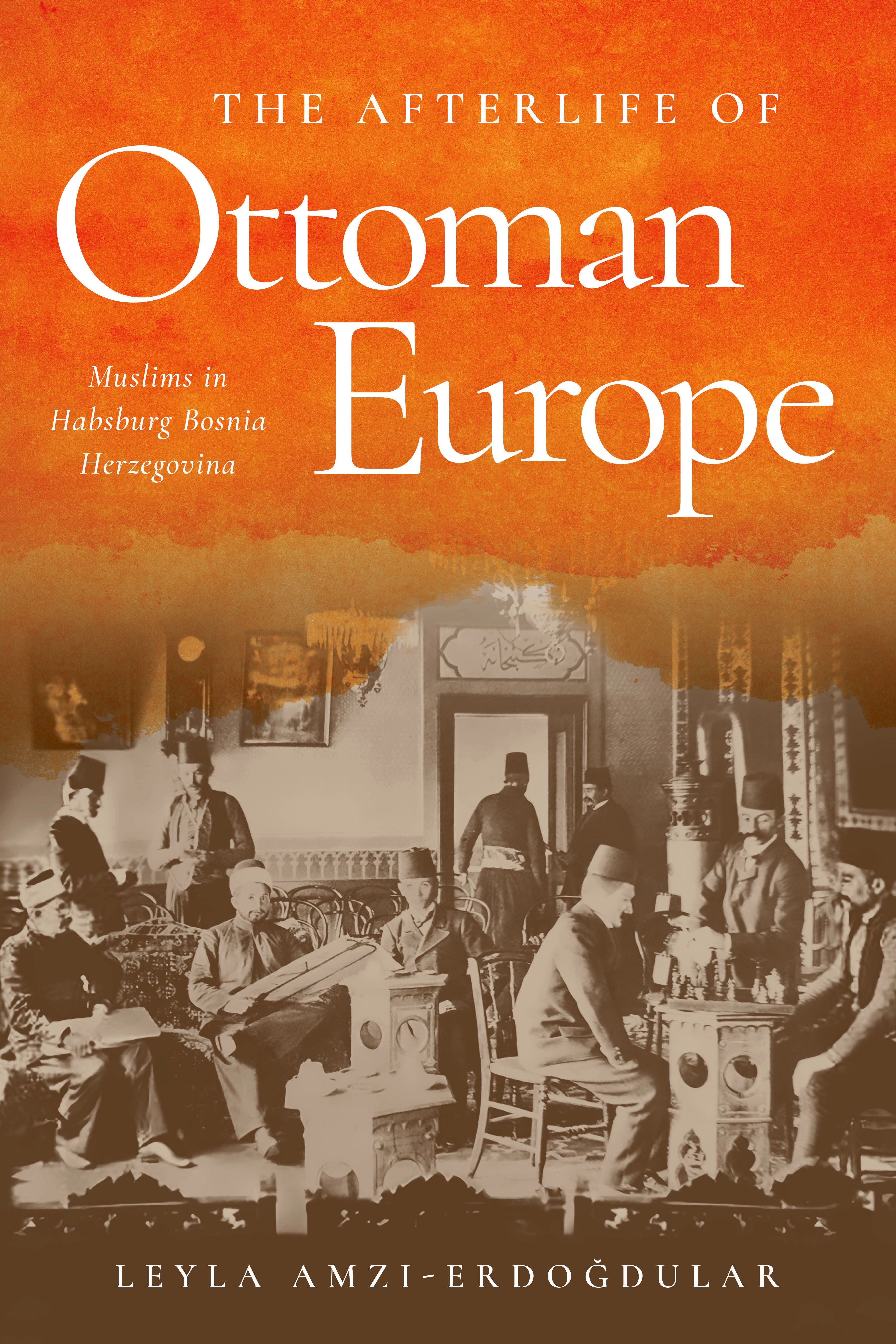
The Afterlife of Ottoman Europe
The Afterlife of Ottoman Europe examines how Bosnian
Muslims navigated the Ottoman and Habsburg domains following the
Habsburg occupation of Bosnia Herzegovina after the 1878 Berlin
Congress. Prominent members of the Ottoman imperial polity, Bosnian
Muslims became minority subjects of Austria-Hungary, developing a
relationship with the new authorities in Vienna while transforming
their interactions with Istanbul and the rest of the Muslim world.
Leyla Amzi-Erdoğdular explores the enduring influence of the
Ottoman Empire during this period-an influence perpetuated by the
efforts of the imperial state from afar, and by its former subjects
in Bosnia Herzegovina negotiating their new geopolitical reality.
Muslims' endeavors to maintain their prominence and shape their
organizations and institutions influenced imperial considerations
and policies on occupation, sovereignty, minorities, and
migration.
This book introduces Ottoman archival sources and draws on
Ottoman and Eastern European historiographies to reframe the study
of Habsburg Bosnia Herzegovina within broader intellectual and
political trends at the turn of the twentieth century. Tracing
transregional connections, imperial continuities, and multilayered
allegiances, The Afterlife of Ottoman Europe bridges
Ottoman, Islamic, Middle Eastern, and Balkan studies.
Amzi-Erdoğdular tells the story of Muslims who redefined their
place and influence in both empires and the modern world, and
argues for the inclusion of Islamic intellectual history within the
history of Bosnia Herzegovina and Eastern Europe.
eBook

Surviving the peace : the struggle for postwar recovery in Bosnia-Herzegovina
\"Reportage describing postwar life in Bosnia between 1995 and 2015, exploring the interplay between the three centers of political power: the domestic power structure, the international community, and the grassroots human rights campaigns. Provides digestible explanations of the region's complex postwar history through interviews and conversations with Bosnian citizens and activists\"-- Provided by publisher.
Book


Medieval Bosnia and South-East European Relations
As a small, landlocked country, medieval Bosnia managed to
preserve its individuality, characterized by religious plurality and by the
persistence of its own ancient customs. But its central position in the region,
situated between east and west, and between Catholic and Orthodox Christianity,
meant it was heavily influenced, both politically and culturally by the
Venetian Republic, the Hungarian Kingdom, and the Byzantine Empire. Due to language
issues and scarcity of sources, this region has largely been overlooked by
western historiography. This volume features contributions from an exciting new
generation of medievalists, who are working to rectify this gap in the
narrative.
eBook