
Catalogue Search | MBRL


Are you sure you want to remove the book from the shelf?

{{itemTitle}}
20
result(s) for
"Brain Duality."
Sort by:

Divided brains : the biology and behaviour of brain asymmetries
\"Asymmetry of the brain and behaviour (lateralization) has traditionally been considered unique to humans. However, research has shown that this phenomenon is widespread throughout the vertebrate kingdom and found even in some invertebrate species. A similar basic plan of organisation exists across vertebrates. Summarising the evidence and highlighting research from the last twenty years, the authors discuss lateralization from four perspectives - function, evolution, development and causation - covering a wide range of animals, including humans. The evolution of lateralization is traced from our earliest ancestors, through fish and reptiles to birds and mammals. The benefits of having a divided brain are discussed, as well as the influence of experience on its development. A final chapter discusses outstanding problems and areas for further investigation. Experts in this field, the authors present the latest scientific knowledge clearly and engagingly, making this a valuable tool for anyone interested in the biology and behaviour of brain asymmetries\"-- Provided by publisher.
Book

Divided Brains
Asymmetry of the brain and behaviour (lateralization) has traditionally been considered unique to humans. However, research has shown that this phenomenon is widespread throughout the vertebrate kingdom and found even in some invertebrate species. A similar basic plan of organisation exists across vertebrates. Summarising the evidence and highlighting research from the last twenty years, the authors discuss lateralization from four perspectives - function, evolution, development and causation - covering a wide range of animals, including humans. The evolution of lateralization is traced from our earliest ancestors, through fish and reptiles to birds and mammals. The benefits of having a divided brain are discussed, as well as the influence of experience on its development. A final chapter discusses outstanding problems and areas for further investigation. Experts in this field, the authors present the latest scientific knowledge clearly and engagingly, making this a valuable tool for anyone interested in the biology and behaviour of brain asymmetries.
eBook
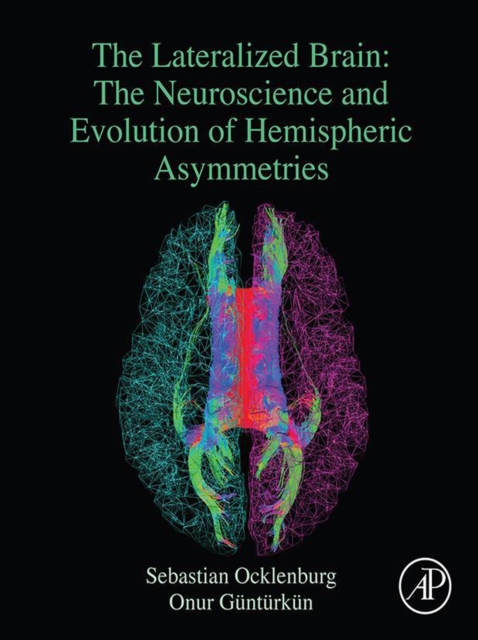
The Lateralized Brain
The Lateralized Brain: The Neuroscience and Evolution of Hemispheric Asymmetries is an up-to-date teaching resource for neuroscience faculty members that teach courses concerning hemispheric asymmetries.
eBook

The lopsided ape : evolution of the generative mind
This fascinating book addresses the question of what makes humans unique, of how sharply we differ from other animals. It begins with evidence on the split of the hominids from the apes, and on the main steps in hominid evolution since then. Its main theme is that the distinctive versatility of human thought and mental representation depends on special properties of the left side of the brain. One manifestation of this lop-sidedness is the predominance of right-handedness in human populations, a tract that does not seem to exist in animals. Another is the special properties of human language, which is represented in the left cerebral hemisphere. At a deeper level, Corballis argues that the human left hemisphere has evolved a specialization for an open-ended, generative form of mental representation. This underlies language and also the way in which we construct, represent, and understand objects. It probably colours many other specifically human activities, such as complementary mode of thought that has more holistic, analogue properties, and that goes back much further in evolution.
eBook

An integrated duality theory framework (IDTF): marking pathways for consumer decision-making researchers in the hospitality and tourism industry
Purpose
This paper aims to critically review the underlying assumptions and theoretical conceptualizations of duality theories in general. In particular, the paper seeks to augment McCabe et al.’s (2016) reconceptualization of consumer decision-making in tourism. Additionally, the paper offers an integrated duality theory model.
Design/methodology/approach
A critical discussion of the basic assumptions, recent advances and constructive criticism of duality theories found in the extant literature prefaces a detailed account of McCabe et al.’s (2016) new general tourist choice model. The author enriches and expands the conceptualization of this model and offers an advanced dual-process theoretical framework for decision-making with a broader range of variables, greater versatility, and suggestions for future research.
Findings
The findings indicate mental processes with broader external inputs (stimuli) with possible outputs (decisions/behaviors) warrant inclusion and expansion in a fulsome dual-systems model of tourist decision-making.
Research limitations/implications
This research study adds to the literature of duality theories in consumer decision-making. While factors, contexts, personal preferences and other dimensions in the tourism industry are and will continue to be fluid over time, this study offers an integrated decision-making framework that provides clear linkages that mark pathways for new developments, future research and practitioner applications.
Originality/value
The integrated duality theory framework enables researchers and destination management organizations managers to acquire enhanced explanatory and predictive value of tourism decision-making, which can lead to offering improved products/services. The model’s emphasis on simultaneous engagement of both heuristic and analytic dual processes reflects fundamental human nature; decision-making can be “both/and” as well as “either/or” with heuristic and analytic processes.
Journal Article

Intra- and extra-axonal axial diffusivities in the white matter: Which one is faster?
A two-compartment model of diffusion in white matter, which accounts for intra- and extra-axonal spaces, is associated with two plausible mathematical scenarios: either the intra-axonal axial diffusivity Da,‖ is higher than the extra-axonal De,‖ (Branch 1), or the opposite, i.e. Da,‖ < De,‖ (Branch 2). This duality calls for an independent validation of compartment axial diffusivities, to determine which of the two cases holds. The aim of the present study was to use an intracerebroventricular injection of a gadolinium-based contrast agent to selectively reduce the extracellular water signal in the rat brain, and compare diffusion metrics in the genu of the corpus callosum before and after gadolinium infusion. The diffusion metrics considered were diffusion and kurtosis tensor metrics, as well as compartment-specific estimates of the WMTI-Watson two-compartment model. A strong decrease in genu T1 and T2 relaxation times post-Gd was observed (p < 0.001), as well as an increase of 48% in radial kurtosis (p < 0.05), which implies that the relative fraction of extracellular water signal was selectively decreased. This was further supported by a significant increase in intra-axonal water fraction as estimated from the two-compartment model, for both branches (p < 0.01 for Branch 1, p < 0.05 for Branch 2). However, pre-Gd estimates of axon dispersion in Branch 1 agreed better with literature than those of Branch 2. Furthermore, comparison of post-Gd changes in diffusivity and dispersion between data and simulations further supported Branch 1 as the biologically plausible solution, i.e. Da,‖ > De,‖. This result is fully consistent with other recent measurements of compartment axial diffusivities that used entirely different approaches, such as diffusion tensor encoding.
•Gadolinium infusion reduced the weight of extra-cellular water to diffusion signal.•A two-compartment model of diffusion captured this change in relative fractions.•The two-compartment model has two plausible solutions, but only one is correct.•Changes in parameter estimates with Gd helped define which solution is valid.•A scenario of intra-axonal diffusivity higher than the extra-axonal was retained.
Journal Article

Putative duality of presynaptic events
The main structure in the brain responsible not only for nerve signal transmission but also for its simultaneous regulation is chemical synapse, where presynaptic nerve terminals are of considerable importance providing release of neurotransmitters. Analyzing transport of glutamate, the major excitatory neurotransmitter in the mammalian CNS, the authors suggest that there are two main relatively independent mechanisms at the presynaptic level that can influence the extracellular glutamate concentration, and so signaling, and its regulation. The first one is well-known precisely regulated compound exocytosis of synaptic vesicles containing neurotransmitters stimulated by membrane depolarization, which increases significantly glutamate concentration in the synaptic cleft and initiates glutamate signaling through postsynaptic glutamate receptors. The second one is permanent glutamate turnover across the plasma membrane that occurs without stimulation and is determined by simultaneous non-pathological transporter-mediated release of glutamate thermodynamically synchronized with uptake. Permanent glutamate turnover is responsible for maintenance of dynamic glutamate
/glutamate
gradient resulting in the establishment of a flexible extracellular level of glutamate, which can be unique for each synapse because of dependence on individual presynaptic parameters. These two mechanisms, i.e. exocytosis and transporter-mediated glutamate turnover, are both precisely regulated but do not directly interfere with each other, because they have different intracellular sources of glutamate in nerve terminals for release purposes, i.e. glutamate pool of synaptic vesicles and the cytoplasm, respectively. This duality can set up a presynaptic base for memory consolidation and storage, maintenance of neural circuits, long-term potentiation, and plasticity. Arguments against this suggestion are also considered.
Journal Article

Category theory in consciousness science: going beyond the correlational project
We discuss the potential of applying category theory to the study of consciousness. We first review a recent proposal from the neurosciences of consciousness to illustrate the “correlational project”, using the integrated information theory of consciousness as an example. We then discuss some technical preliminaries related to categories and in particular to the notion of a functor, which carries the bulk of conceptual weight in many current discussions. We then look at possible payoffs of this project—getting to grips with the hard problem, theory integration, and exploiting explanatory dualities—and discuss possible avenues for further research, stressing the need to better develop the categorical representation of consciousness, in particular its phenomenological structure. A better understanding of consciousness cannot be achieved by merely studying the physical brain. By contrast, the categorical treatment even suggests application beyond the domain of neuroscience, for example in computer science and artificial intelligence research, while also emphasizing the primacy of (phenomenal) experience.
Journal Article

From Quantum Photosynthesis to the Sentient Brain
Energy harvesting by photosynthesis in \"brainless\" plants and green algae is identified as the root non-trivially quantum process powering neural correlates of consciousness in humans and other \"brainy\" animals. Thermofield attributes of solar energy flow through the biosphere's food chain are suggested as a \"bottom up\" mediator between quantum-coherent aspects of photosynthesis and emergent dynamical architectonics of transmembrane electrical potentials in neurons. This quantum-ecological approach to energetics of brain function as part of an open dissipative world system offers a segue, experimentally grounded by empirical evidence for photosynthetic coherence, into qualitatively gauged links between quantum tunneling and the Hard Problem of consciousness.
Journal Article

The Near-Death Experience: A Reality Check?
This paper critically reviews assertions that near-death and out-of-body experiences (ND/OBE) offer proof of extra-corporeal existence when the brain is supposedly “dead”. While this field has almost moved away from mere anecdotal recording, the current trend is focussed on demonstrating existence without functional brains. These endeavours have fallen far short of anticipated results—that cardiac patients would report on strategically-placed markers around acute resuscitation units. Two problems arise: a failure to produce corroborative empirical evidence for extra-corporeal cognition (a) when the brain is “dead”, (or “clinically dead”, so-called) and (b) how the memory required for recall could paradoxically be set down at that critical time-point. The view advanced here is that ND/OBE occur as subjects’ states are returning to complete resumption of conscious-awareness and which, from several published accounts, is particularly abrupt but which nevertheless accounts perfectly for memory—and recall. Similar transcendental adventures accompanying returns to conscious-awareness occur with other preceding states of reduced consciousness. Most recollections are intensely geo-physical, anthropomorphic, banal and illogical: their dream-like fantasy provides nothing revelatory about life without a brain, or importantly, about other supposed cosmic contexts. Additionally, it is proposed that since prevalence rates are so extremely low (<1% globally), the few subjects undergoing ND/OBE may have predisposed brains, genetically, structurally or resulting from previous psychological stress. In a somewhat similar vein to post-traumatic stress disorder, subjects with predisposed brains exhibit markedly changed post-experiential phenotypes, so that the ND/OBE itself could be viewed as a transient, accompanying epiphenomenon.
Journal Article