
Catalogue Search | MBRL


Are you sure you want to remove the book from the shelf?

{{itemTitle}}
1,095
result(s) for
"Brain trust"
Sort by:

When Computers Were Human
Before Palm Pilots and iPods, PCs and laptops, the term \"computer\" referred to the people who did scientific calculations by hand. These workers were neither calculating geniuses nor idiot savants but knowledgeable people who, in other circumstances, might have become scientists in their own right. When Computers Were Human represents the first in-depth account of this little-known, 200-year epoch in the history of science and technology. Beginning with the story of his own grandmother, who was trained as a human computer, David Alan Grier provides a poignant introduction to the wider world of women and men who did the hard computational labor of science. His grandmother's casual remark, \"I wish I'd used my calculus,\" hinted at a career deferred and an education forgotten, a secret life unappreciated; like many highly educated women of her generation, she studied to become a human computer because nothing else would offer her a place in the scientific world. The book begins with the return of Halley's comet in 1758 and the effort of three French astronomers to compute its orbit. It ends four cycles later, with a UNIVAC electronic computer projecting the 1986 orbit. In between, Grier tells us about the surveyors of the French Revolution, describes the calculating machines of Charles Babbage, and guides the reader through the Great Depression to marvel at the giant computing room of the Works Progress Administration. When Computers Were Human is the sad but lyrical story of workers who gladly did the hard labor of research calculation in the hope that they might be part of the scientific community. In the end, they were rewarded by a new electronic machine that took the place and the name of those who were, once, the computers.
eBook

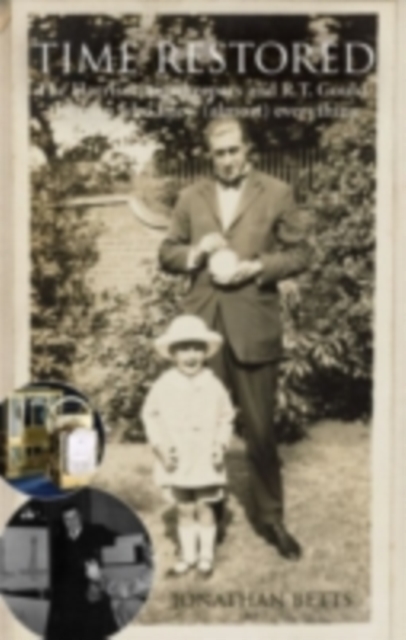
Time Restored
This is the story of Rupert T. Gould (1890-1948), the polymath and horologist. A remarkable man, Lt Cmdr Gould made important contributions in an extraordinary range of subject areas throughout his relatively short and dramatically troubled life. From antique clocks to scientific mysteries, from typewriters to the first systematic study of the Loch Ness Monster, Gould studied and published on them all. With the title ‘The Stargazer’, Gould was an early broadcaster on the BBC's Children's Hour when, with his encyclopaedic knowledge, he became known as The Man Who Knew Everything. Not surprisingly, he was also part of that elite group on BBC radio who formed The Brains Trust, giving on-the-spot answers to all manner of wide ranging and difficult questions. With his wide learning and photographic memory, Gould awed a national audience, becoming one of the era's radio celebrities. During the 1920s Gould restored the complex and highly significant marine timekeepers constructed by John Harrison (1693-1776), and wrote the unsurpassed classic, The Marine Chronometer, its History and Development. Today he is virtually unknown, his horological contributions scarcely mentioned in Dava Sobel's bestseller Longitude. The TV version of Longitude, in which Jeremy Irons played Rupert Gould, did at least introduce Rupert's name to a wider public. Gould suffered terrible bouts of depression, resulting in a number of nervous breakdowns. These, coupled with his obsessive and pedantic nature, led to a scandalously-reported separation from his wife and cost him his family, his home, his job, and his closest friends.
eBook

Introduction to the Family Office
This chapter contains sections titled:
A Macro View of Global Wealth
How Much Do I Really Need to Fund a Family Office?
Purpose and Definition of the Family Office
Historical Background of the Family Office
Three Key Roles of the Family Office
Types of Family Office Services
Conclusion and Final Thoughts
Book Chapter
How to deal with questions
This chapter contains sections titled:
Questions following a presentation
On being interviewed
The brains trust or panel
Summary
Further reading
Book Chapter

Loneliness and the Social Brain: How Perceived Social Isolation Impairs Human Interactions
Loneliness is a painful condition associated with increased risk for premature mortality. The formation of new, positive social relationships can alleviate feelings of loneliness, but requires rapid trustworthiness decisions during initial encounters and it is still unclear how loneliness hinders interpersonal trust. Here, a multimodal approach including behavioral, psychophysiological, hormonal, and neuroimaging measurements is used to probe a trust‐based mechanism underlying impaired social interactions in loneliness. Pre‐stratified healthy individuals with high loneliness scores (n = 42 out of a screened sample of 3678 adults) show reduced oxytocinergic and affective responsiveness to a positive conversation, report less interpersonal trust, and prefer larger social distances compared to controls (n = 40). Moreover, lonely individuals are rated as less trustworthy compared to controls and identified by the blinded confederate better than chance. During initial trust decisions, lonely individuals exhibit attenuated limbic and striatal activation and blunted functional connectivity between the anterior insula and occipitoparietal regions, which correlates with the diminished affective responsiveness to the positive social interaction. This neural response pattern is not mediated by loneliness‐associated psychological symptoms. Thus, the results indicate compromised integration of trust‐related information as a shared neurobiological component in loneliness, yielding a reciprocally reinforced trust bias in social dyads. Pre‐stratified healthy lonely participants exhibit reduced interpersonal trust and functional magnetic resonance imaging confirms a compromised neural integration of trust‐related information, which correlates with an attenuated affective responsiveness to a positive conversation. As lonely individuals are concomitantly rated as less trustworthy by others, the present results indicate a reciprocally‐reinforced trust bias underlying dysfunctional social interactions in loneliness.
Journal Article

Effects of a dopamine agonist on trusting behaviors in females
Trust is central to bonding and cooperation. In many social interactions, individuals need to trust another person exclusively on the basis of their subjective impressions of the other’s trustworthiness. Such impressions can be formed from social information from faces (e.g., facial trustworthiness and attractiveness) and guide trusting behaviors via activations of dopaminergic brain regions. However, the specific dopaminergic effects on impression-based trust are to date elusive. Here, in a double-blind, placebo-controlled, within-subject design, we administrated a D2/D3 dopamine agonist (pramipexole) to 28 healthy females who subsequently played a one-shot trust game with partners of varying facial trustworthiness. Our results show that by minimizing facial attractiveness information, we could isolate the specific effects of facial trustworthiness on trust in unknown partners. Despite no modulation of trustworthiness impressions, pramipexole intake significantly impacted trusting behaviors. Notably, these effects of pramipexole on trusting behaviors interacted with participants’ hormonal contraceptive use. In particular, after pramipexole intake, trust significantly decreased in hormonal contraceptive non-users. This study fills an important gap in the experimental literature on trust and its neural dynamics, unearthing the cognitive and neural modulations of trusting behaviors based on trustworthiness impressions of others.
Journal Article

Brain tumor detection and segmentation: Interactive framework with a visual interface and feedback facility for dynamically improved accuracy and trust
Brain cancers caused by malignant brain tumors are one of the most fatal cancer types with a low survival rate mostly due to the difficulties in early detection. Medical professionals therefore use various invasive and non-invasive methods for detecting and treating brain tumors at the earlier stages thus enabling early treatment. The main non-invasive methods for brain tumor diagnosis and assessment are brain imaging like computed tomography (CT), positron emission tomography (PET) and magnetic resonance imaging (MRI) scans. In this paper, the focus is on detection and segmentation of brain tumors from 2D and 3D brain MRIs. For this purpose, a complete automated system with a web application user interface is described which detects and segments brain tumors with more than 90% accuracy and Dice scores. The user can upload brain MRIs or can access brain images from hospital databases to check presence or absence of brain tumor, to check the existence of brain tumor from brain MRI features and to extract the tumor region precisely from the brain MRI using deep neural networks like CNN, U-Net and U-Net++. The web application also provides an option for entering feedbacks on the results of the detection and segmentation to allow healthcare professionals to add more precise information on the results that can be used to train the model for better future predictions and segmentations.
Journal Article