
Catalogue Search | MBRL


Are you sure you want to remove the book from the shelf?

{{itemTitle}}
62
result(s) for
"Briefsammlung."
Sort by:

The selected letters of Laura Ingalls Wilder
The Selected Letters of Laura Ingalls Wilder is a portrait of this American author, illuminating her thoughts, travels, philosophies, writing career, and dealings with family, friends, and fans. This is a fresh look at the author in her own words. Gathered from museums, archives, and personal collections, the letters span over sixty years, from 1894 to 1956, and shed new light on Wilder's day-to-day living. Here we see her as a businesswoman and an author -- through reflections on her Little House books; her editor, Ursula Nordstrom; and her readers -- and as a wife and a friend. In her letters, Wilder shares political opinions and reminiscences of frontier childhood. Also included are letters to her daughter, writer Rose Wilder Lane, who filled a silent role as editor and collaborator while the famous Little House books were being written. Wilder biographer William Anderson collected and researched references throughout these letters, and the result is a historical collection, tracing Wilder's life through the final days of covered wagon travel and her years of fame as the writer of the Little House books. Here we see her as a farm woman, a country journalist, and a Depression-era author.
BOOK
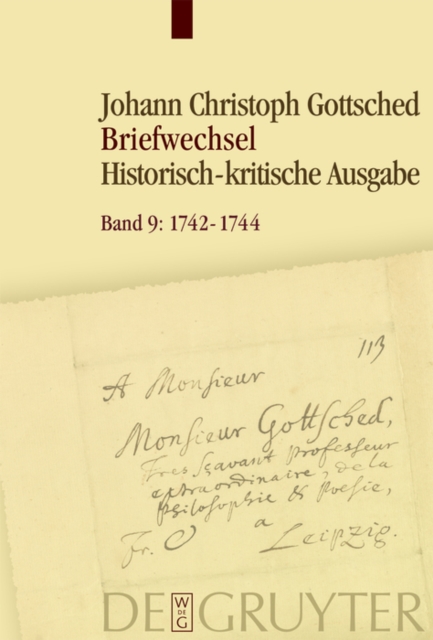
November 1742 - Februar 1744
The highlights of this volume include the celebration of the 200th anniversary of Copernicus's death. Political developments in Europe remain an important concern for Gottsched. He devotes close attention to the situation of German theater in his correspondence with actors and playwrights. The \"literary dispute\" with Bodmer and Breitinger becomes ever more heated. Gottsched uses every means available to seek allies in this prolonged controversy.
eBook
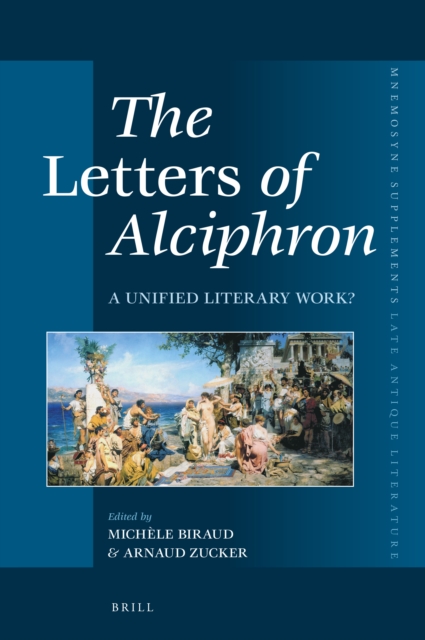
The Letters of Alciphron
'The Letters of Alciphron: A Unified Literary Work?' (Michèle Biraud and Arnaud Zucker editors) offer a dozen papers on an misknown author of the Second Sophistic, Alciphron, aiming to show the unity of his literary project.
eBook

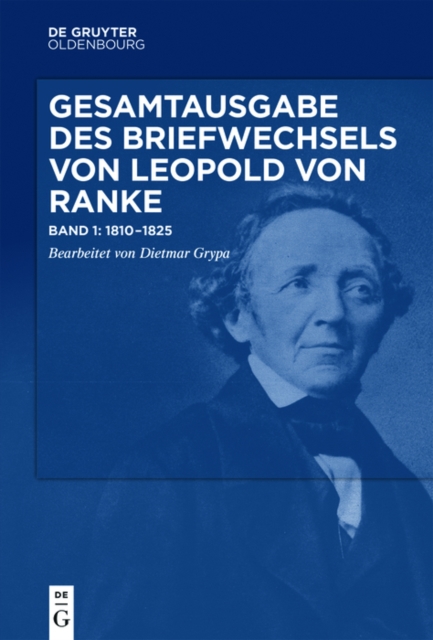
1810–1825
Leopold von Ranke, der prominenteste deutschsprachige Historiker des 19. Jahrhunderts, führte einen nach ganz Europa und Nordamerika ausgreifenden Gelehrtenbriefwechsel. Dessen Gesamtausgabe wird alle erhaltenen Briefe von ihm und an ihnim Wortlaut wiedergeben. Der hier vorliegende Band bietet die Korrespondenz aus Rankes Schul- und Studienzeit sowie aus seinen Jahren als Lehrer in Frankfurt/Oder, die mit dem Erscheinen seiner Erstlingswerke \"Geschichten der romanischen und germanischen Völker 1494 bis 1535\" und \"Zur Kritik neuerer Geschichtschreiber\" (1824) sowie seiner Berufung auf eine außerordentliche Geschichtsprofessur nach Berlin endeten. Dabei macht die von Dietmar Grypa neu erarbeitete Kommentierung erstmals das weitgespannte gelehrt-politische Netzwerk sichtbar, das Rankes raschen Aufstieg ermöglichte. Entgegen seinen späteren Selbststilisierungen reichte es von radikalen Anhängern der Turnerbewegung bis in hohe Berliner Regierungskreise.
eBook


August 1705 – April 1706
Leibniz' Briefwechsel wird 1705/06 vor allem von den politischen und militärischen Großereignissen bestimmt, über deren Verlauf sich Leibniz informieren lässt und zu denen er eigene Einschätzungen an seine Korrespondenten weitergibt: Zum Spanischen Erbfolgekrieg, zum Nordischen Krieg und zu der Aussicht des Hauses Hannover auf die Thronfolge in England. Um letztere zu forcieren und eine Einladung der Kurfürstin Sophie nach England zu erzwingen, entwirft und publiziert er im Namen von Rowland Gwynne ein Pamphlet, das in London jedoch das genaue Gegenteil bewirkt und im dortigen Parlament zum Skandal wird. Im Bereich der Philosophie greift Leibniz in die zwischen J. Le Clerc und P. Bayle geführte Diskussion um das Werk von R. Cudworth, The true intellectual system of the Universe, 1678, mit seiner Considération sur les principes de vie, et sur les natures plastiques, ein. Im August 1705 erreicht Leibniz' Korrespondenz mit den China-Missionaren (J. Bouvet, J. de Fontaney, Ch. Le Gobien, A. Verjus, C. Visdelou) einen letzten Höhepunkt. Der Austausch mit dem Pariser Oratorianer J. Lelong widmet sich weiterhin nebeneinander Bibel-Bibliographie und dem Streit um die Anwendbarkeit des Differentialkalküls.
eBook
Spectator-Briefe und Berliner Briefe (1919-1922)
In a series of 56 \"letters\" written between February 1919 and November 1922, Ernst Troeltsch commented extensively on the events of the day. He critically observed revolution, civil war, and the new order in Germany emerging from the terms of world politics and the Versailles peace treaty. Troeltsch was committed to offering the middle class a worldly perspective that would breathe life into the democracy of the Weimar Republic.
eBook