
Catalogue Search | MBRL


Are you sure you want to remove the book from the shelf?

{{itemTitle}}
574
result(s) for
"Brighton"
Sort by:

A shot in the dark
In 1957 Brighton, a famed theater critic is shot dead just as he was about to reveal the criminal mastermind behind a 1945 mystery, leaving Constable Twitten and Sergeant Jim Brunswick to solve both the decade-old crime and the more recent murder.
Book

Ordinary in Brighton?
Ordinary in Brighton? offers the first large scale examination of the impact of the UK equalities legislation on lesbian, gay, bi- and trans (LGBT) lives, and the effects of these changes on LGBT political activism. Using the participatory research project, Count Me In Too, this book investigates the material issues of social/spatial injustice that were pertinent for some - but not all- LGBT people, and explores activisms working in partnership that operated with/within the state. Ordinary in Brighton? explores the unevenly felt consequences of assimilation and inclusion in a city that was compelled to provide a place (literally and figuratively) for LGBT people. Brighton itself is understood to be exceptional, and exploring this specific location provides insights into how place operates as constitutive of lives and activisms. Despite its placing as 'the gay capital' and its long history as a favoured location of LGBT people, there is very little academic or popular literature published about this city. This book offers insights into the first decade of the 21st century when sexual and gender dissidents supposedly became ordinary here, rather than exceptional and transgressive. It argues that geographical imaginings of this city as the 'gay capital' formed activisms that sought positive social change for LGBT people. The possibilities of legislative change and urban inclusivities enabled some LGBT people to live ordinary lives, but this potential existed in tension with normalisations and exclusions. Alongside the necessary critiques, Ordinary in Brighton? asks for conceptualisations of the creative and co-operative possibilities of ordinariness. The book concludes by differentiating the exclusionary ideals of normalisation from the possibilities of ordinariness, which has the potential to render a range of people not only in-place, but commonplace. All royalties from this book will be donated to Allsorts Youth Project, Brighton & Hove LGBT Switchboa
eBook


Serious adverse events of special interest following mRNA COVID-19 vaccination in randomized trials in adults
In 2020, prior to COVID-19 vaccine rollout, the Brighton Collaboration created a priority list, endorsed by the World Health Organization, of potential adverse events relevant to COVID-19 vaccines. We adapted the Brighton Collaboration list to evaluate serious adverse events of special interest observed in mRNA COVID-19 vaccine trials.
Secondary analysis of serious adverse events reported in the placebo-controlled, phase III randomized clinical trials of Pfizer and Moderna mRNA COVID-19 vaccines in adults (NCT04368728 and NCT04470427), focusing analysis on Brighton Collaboration adverse events of special interest.
Pfizer and Moderna mRNA COVID-19 vaccines were associated with an excess risk of serious adverse events of special interest of 10.1 and 15.1 per 10,000 vaccinated over placebo baselines of 17.6 and 42.2 (95 % CI −0.4 to 20.6 and −3.6 to 33.8), respectively. Combined, the mRNA vaccines were associated with an excess risk of serious adverse events of special interest of 12.5 per 10,000 vaccinated (95 % CI 2.1 to 22.9); risk ratio 1.43 (95 % CI 1.07 to 1.92). The Pfizer trial exhibited a 36 % higher risk of serious adverse events in the vaccine group; risk difference 18.0 per 10,000 vaccinated (95 % CI 1.2 to 34.9); risk ratio 1.36 (95 % CI 1.02 to 1.83). The Moderna trial exhibited a 6 % higher risk of serious adverse events in the vaccine group: risk difference 7.1 per 10,000 (95 % CI –23.2 to 37.4); risk ratio 1.06 (95 % CI 0.84 to 1.33). Combined, there was a 16 % higher risk of serious adverse events in mRNA vaccine recipients: risk difference 13.2 (95 % CI −3.2 to 29.6); risk ratio 1.16 (95 % CI 0.97 to 1.39).
The excess risk of serious adverse events found in our study points to the need for formal harm-benefit analyses, particularly those that are stratified according to risk of serious COVID-19 outcomes. These analyses will require public release of participant level datasets.
Journal Article


England expects
When sportswriter Joey Gillingham stops off at a Brighton barbershop for a shave and a trim, he gets more than he bargained for--a slashed throat. The journalist's next headline story in the paper is his obituary. With the ghastly murder the talk of the seaside town, Mirabelle and her close friend and coworker Vesta Churchill find themselves irresistibly drawn to the case. Rumors of the newspaperman being a member of the freemasons lead the ladies to the group's local lodge, where they happen upon a cleaning lady in the throes of poisoning. Are the two deaths related? The common thread seems to connect to the secret society. Despite being warned off by Superintendent McGregor, the fearless friends continue to investigate, breaking into an abandoned royal residence in Brighton and following a trail of clues to a Cambridge college and bizarre masonic rituals. To beard the lion in his own den, Mirabelle and Vesta will need to walk the razor's edge--but with desperate characters and more bodies turning up, it's going to be a close shave ...
Book

Myocarditis and pericarditis: Case definition and guidelines for data collection, analysis, and presentation of immunization safety data
Myocarditis and/or pericarditis (also known as myopericarditis) are inflammatory diseases involving the myocardium (with non-ischemic myocyte necrosis) and/or the pericardial sac. Myocarditis/pericarditis (MPC) may present with variable clinical signs, symptoms, etiologies and outcomes, including acute heart failure, sudden death, and chronic dilated cardiomyopathy. Possible undiagnosed and/or subclinical acute myocarditis, with undefined potential for delayed manifestations, presents further challenges for diagnosing an acute disease and may go undetected in the setting of infection as well as adverse drug/vaccine reactions.
The most common causes of MPC are viral, with non-infectious, drug/vaccine associated hypersensitivity and/or autoimmune causes being less well defined and with potentially different inflammatory mechanisms and treatment responses. Potential cardiac adverse events following immunization (AEFIs) encompass a larger scope of diagnoses such as triggering or exacerbating ischemic cardiac events, cardiomyopathy with potential heart failure, arrhythmias and sudden death. The current published experience does not support a potential causal association with vaccines based on epidemiologic evidence of relative risk increases compared with background unvaccinated incidence. The only evidence supporting a possible causal association of MPC with a vaccine comes from case reports.
Hypersensitivity MPC as a drug/vaccine induced cardiac adverse event has long been a concern for post-licensure safety surveillance, as well as safety data submission for licensure. Other cardiac adverse events, such as dilated cardiomyopathy, were also defined in the CDC definitions for adverse events after smallpox vaccination in 2006. In addition, several groups have attempted to develop and improve the definition and adjudication of post-vaccination cardiovascular events. We developed the current case definitions for myocarditis and pericarditis as an AEFI building on experience and lessons learnt, as well as a comprehensive literature review. Considerations of other etiologies and causal relationships are outside the scope of this document.
Journal Article
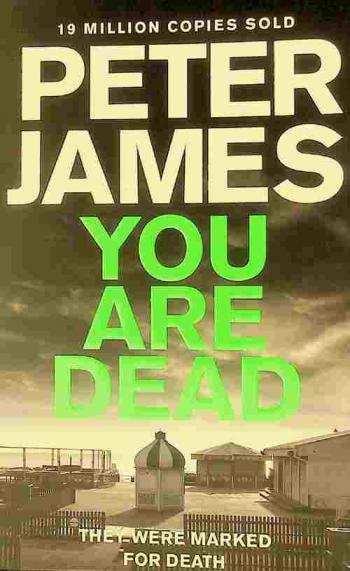
You are dead
The last words Nick Walton hears from his fiancee, Logan Somervile, are in a terrified mobile phone call from her. She has just driven into the underground car park beneath the block of flats where they live in Brighton. Then she screams and the phone goes dead. The police are on the scene within minutes, but Logan has vanished, leaving behind her neatly parked car and telephone. That same afternoon, workmen digging up an old asphalt pat in a park in another part of the city, unearth the remains of a young woman in her early twenties, who has been dead for 30 years. At first, to Roy Grace and his team, these two events seem totally unconnected. But then another young woman in Brighton goes missing and another body from the past surfaces. Meanwhile, an eminent London psychiatrist meets with a man who claims to know a piece of information about Logan. Later Roy Grace makes the chilling realization that this one thing is the key to both the past and the present ... Brighton has its first serial killer in over eighty years.

Future Young Patient Demand for Primary and Revision Joint Replacement: National Projections from 2010 to 2030
Previous projections of total joint replacement (TJR) volume have not quantified demand for TJR surgery in young patients (< 65 years old). We developed projections for demand of TJR for the young patient population in the United States. The Nationwide Inpatient Sample was used to identify primary and revision TJRs between 1993 and 2006, as a function of age, gender, race, and census region. Surgery prevalence was modeled using Poisson regression, allowing for different rates for each population subgroup over time. If the historical growth trajectory of joint replacement surgeries continues, demand for primary THA and TKA among patients less than 65 years old was projected to exceed 50% of THA and TKA patients of all ages by 2011 and 2016, respectively. Patients less than 65 years old were projected to exceed 50% of the revision TKA patient population by 2011. This study underscores the major contribution that young patients may play in the future demand for primary and revision TJR surgery.
Level of Evidence:
Level II, prognostic study. See Guidelines for Authors for a complete description of levels of evidence.
Journal Article