
Catalogue Search | MBRL


Are you sure you want to remove the book from the shelf?

{{itemTitle}}
905
result(s) for
"Britanniques."
Sort by:

Finding Franklin : the untold story of a 165-year search
\"In 2014 media around the world buzzed with news that an archaeological team from Parks Canada had located and identified the wreck of the HMS Erebus, the flagship of Sir John Franklin's lost expedition to find the Northwest Passage. Finding Franklin outlines the larger story and the cast of detectives from every walk of life that led to the discovery, solving of one of the Arctic's greatest mysteries. In compelling and accessible prose, Russell Potter details his decades of work alongside key figures in the era of modern searches for the expedition and elucidates how shared research and ideas have led to a fuller understanding of the Franklin crew's final months. Illustrated with numerous images and maps from the last two centuries, Finding Franklin recounts the more than fifty modern searches for traces of his ships and crew, and the dedicated, often obsessive, men and women who embarked on them. Potter discusses the crucial role that Inuit oral accounts, often cited but rarely understood, played in all of these searches, and continues to play to this day, and offers historical and cultural context to the contemporary debates over the significance of Franklin's achievement. While examination of the HMS Erebus will undoubtedly reveal further details of this mystery, Finding Franklin assembles the stories behind the myth and illuminates what is ultimately a remarkable decades-long discovery.\"-- Provided by publisher.
Book

Tracing the Connected Narrative
By the 1850s, journalists and readers alike perceived Britain's search for the Northwest Passage as an ongoing story in the literary sense. Because this 'story' appeared, like so many nineteenth-century novels, in a series of installments in periodicals and reviews, it gained an appeal similar to that of fiction.Tracing the Connected Narrativeexamines written representations of nineteenth-century British expeditions to the Canadian Arctic. It places Arctic narratives in the broader context of the print culture of their time, especially periodical literature, which played an important role in shaping the public's understanding of Arctic exploration.
Janice Cavell uncovers similarities between the presentation of exploration reports in periodicals and the serialized fiction that, she argues, predisposed readers to take an interest in the prolonged quest for the Northwest Passage. Cavell examines the same parallel in relation to the famous disappearance and subsequent search for the Franklin expedition. After the fate of Sir John Franklin had finally been revealed, theIllustrated London Newsprinted a list of earlier articles on the missing expedition, suggesting that the public might wish to re-read them in order to 'trace the connected narrative' of this chapter in the Arctic story. Through extensive research and reference to new archival material, Cavell undertakes this task and, in the process, recaptures and examines the experience of nineteenth-century readers.
eBook

In the service of the shogun : the real story of William Adams
\"In 1600, English helmsman William Adams washed ashore in Japan, and was interrogated by Tokugawa Ieyasu, Japan's most powerful warlord and soon-to-be shogun. Far from executing Adams as a pirate, Ieyasu made him one of his most trusted advisers. This biography traces Adams's rise from humble pilot to a position of immense influence in Japan's foreign relations. It unravels the subsequent diplomatic manoeuvres of the Western powers in the shogun's empire, and Adams's eventual downfall. This is the first full biography of Adams based on original Dutch, English, Spanish, Portuguese and Japanese sources, and includes much previously unknown information. Frederik Cryns tells the authentic story of Adams's chequered life in its historical context, taking us on a compelling journey into Adams's complex inner feelings and cosmopolitan heart\" -- Amazon.com.
Book
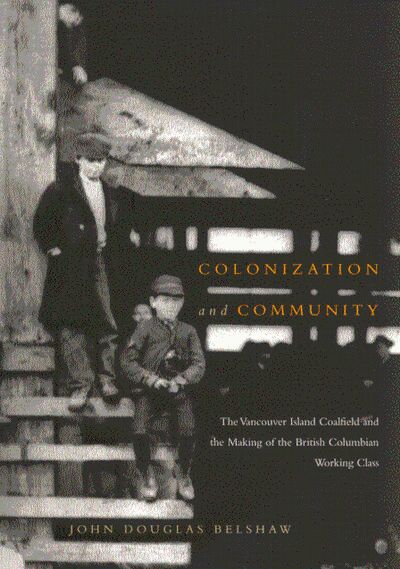
Colonization and Community
In Colonization and Community John Belshaw takes a new look at British Columbia's first working class, the men, women, and children beneath and beyond the pit-head. Beginning with an exploration of emigrant expectations and ambitions, he investigates working conditions, household wages, racism, industrial organization, gender, schooling, leisure, community building, and the fluid identity of the British mining colony, the archetypal west coast proletariat. By connecting the story of Vancouver Island to the larger story of Victorian industrialization, he delineates what was distinctive and what was common about the lot of the settler society. Belshaw breaks new ground, challenging the easy assumptions of transferred British political traditions, analyzing the colonial at the household level, and revealing the emergent communities of Vancouver Island as the cradle of British Columbian working-class culture.
eBook


The Invention of Tradition
Many of the traditions which we think of as very ancient in their origins were not in fact sanctioned by long usage over the centuries, but were invented comparatively recently. This book explores examples of this process of invention – the creation of Welsh and Scottish 'national culture'; the elaboration of British royal rituals in the nineteenth and twentieth centuries; the origins of imperial rituals in British India and Africa; and the attempts by radical movements to develop counter-traditions of their own. It addresses the complex interaction of past and present, bringing together historians and anthropologists in a fascinating study of ritual and symbolism which poses new questions for the understanding of our history.
eBook

The battle for Hong Kong, 1941-1945 : hostage to fortune
\"It has been over sixty years since Hong Kong was liberated from the Japanese. In The Battle for Hong Kong, 1941-1945 Oliver Lindsay reveals the intrigue, betrayal, and heroism behind the surrender of Hong Kong to the Japanese by its British, Canadian, Indian, and Chinese defenders on Christmas Day 1941 after eighteen days of intense fighting. Lindsay's work is based on interviews with over 100 veterans and civilian interness as well as other previously unpublished sources, including material from the Canadian military archives in Ottawa\"--Jacket.
Book

Contesting white supremacy : school segregation, anti-racism, and the making of Chinese Canadians
By drawing on Chinese sources and perspectives, this book offers an anti-racist history of the 1922-23 Chinese students' strike in Victoria and Asian exclusion and racism in British Columbia.
eBook

Empireland : how imperialism has shaped modern Britain
\"In this brilliantly illuminating work exploring the realities and legacies of empire, Sathnam Sanghera demonstrates how so much of what we consider to be modern Britain is actually rooted in its imperial past. In prose that is at once both clear-eyed and full of acerbic wit, Sanghera shows how the past is everywhere in the United Kingdom, also drawing critical links to similarities in the United States and around the world. Empire--British or otherwise--informs nearly everything, from common thought processes to the routines that shape everyday life, from the foundation of the National Health Service (NHS), to the nature of racism in the UK, from the British distrust of intellectuals in public life to the exceptionalism that imbued the campaign for Brexit, and the government's early response to the COVID crisis--all while empire is a subject shockingly obscured from view. Revelatory and lucid, Sanghera suggests that cultivating a new, more honest relationship to the past is essential in moving forward\"-- Provided by publisher.
Book

Brother's keeper : the United States, race, and empire in the British Caribbean, 1937-1962
This book is an international history of the relations between the United States, Britain, and the West Indies during the long decolonization of the latter. It draws on archives in seven countries to recover the story of that process, which resulted in the first new nations in the hemisphere—Jamaica and Trinidad and Tobago—since the turn of the century. The process had begun amid depression, riot, and World War II, and it concluded at the moment of highest tension in the Cold War Caribbean. Moreover, the islands were a historical fount of black radicalism, which coursed intermittently through the hemisphere as the civil rights movement made the issue of American race relations particularly acute. In addition, the structure built to bring the islands to independence—the West Indies Federation—unexpectedly collapsed at perhaps the worst possible moment. Yet despite these ominous circumstances, the West Indian transition to independence was ultimately among the smoothest seen anywhere in the “Third World.” It avoided the bloodshed that accompanied the end of empire in many areas, and avoided the U.S. military intervention so historically promiscuous around the Caribbean littoral. This book argues that a unique “protean partnership” between the U.S. and the West Indies, one which complemented the Anglo-American relationship, explains the smooth transition. That partnership encompassed the U.S. pursuit of national-security assets such as military bases and strategic materials, the give-and-take of formal Anglo-American diplomacy, and the informal “diaspora diplomacy” of transnational race-activism that nurtured West Indian nationalism and the African American freedom struggle alike. This study contributes to the literatures on inter-American relations, race and foreign affairs, the Cold War, and decolonization.
eBook