
Catalogue Search | MBRL


Are you sure you want to remove the book from the shelf?

{{itemTitle}}
18
result(s) for
"British Barbados History."
Sort by:


Empire and nation-building in the Caribbean
This original and exciting book examines the processes of nation building in the British West Indies. It argues that nation building was a more complex and messy affair, involving women and men in a range of social and cultural activities, in a variety of migratory settings, within a unique geo-political context. Taking as a case study Barbados which, in the 1930s, was the most economically impoverished, racially divided, socially disadvantaged and politically conservative of the British West Indian colonies, *Empire and nation-building* tells the messy, multiple stories of how a colony progressed to a nation. It is the first book to tell all sides of the independence story and will be of interest to specialists and non-specialists interested in the history of Empire, the Caribbean, of de-colonisation and nation building.
eBook

Seasons of Misery
The stories we tell of American beginnings typically emphasize colonial triumph in the face of adversity. But the early years of English settlement in America were characterized by catastrophe: starvation, disease, extreme violence, ruinous ignorance, and serial abandonment.Seasons of Miseryoffers a provocative reexamination of the British colonies' chaotic and profoundly unstable early days, placing crisis-both experiential and existential-at the center of the story. At the outposts of a fledgling empire and disconnected from the social order of their home society, English settlers were both physically and psychologically estranged from their European identities. They could not control, or often even survive, the world they had intended to possess. According to Kathleen Donegan, it was in this cauldron of uncertainty that colonial identity was formed. Studying the English settlements at Roanoke, Jamestown, Plymouth, and Barbados, Donegan argues that catastrophe marked the threshold between an old European identity and a new colonial identity, a state of instability in which only fragments of Englishness could survive amid the upheavals of the New World. This constant state of crisis also produced the first distinctively colonial literature as settlers attempted to process events that they could neither fully absorb nor understand. Bringing a critical eye to settlers' first-person accounts, Donegan applies a unique combination of narrative history and literary analysis to trace how settlers used a language of catastrophe to describe unprecedented circumstances, witness unrecognizable selves, and report unaccountable events.Seasons of Miseryaddresses both the stories that colonists told about themselves and the stories that we have constructed in hindsight about them. In doing so, it offers a new account of the meaning of settlement history and the creation of colonial identity.
eBook
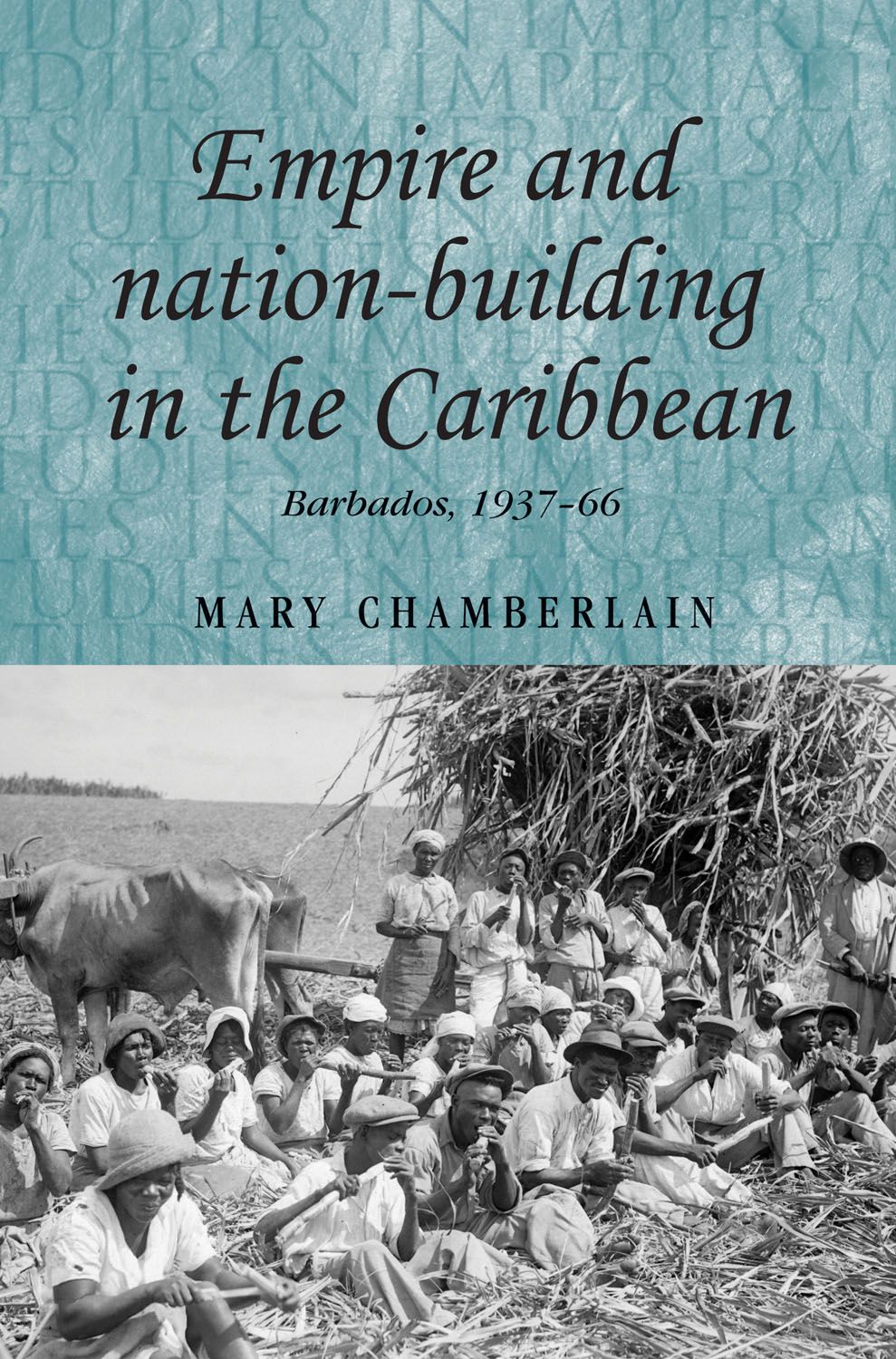
Empire and nation-building in the Caribbean
This original and exciting book examines the processes of nation building in the British West Indies. It argues that nation building was a more complex and messy affair, involving women and men in a range of social and cultural activities, in a variety of migratory settings, within a unique geo-political context. Taking as a case study Barbados which, in the 1930s, was the most economically impoverished, racially divided, socially disadvantaged and politically conservative of the British West Indian colonies, Empire and nation-building tells the messy, multiple stories of how a colony progressed to a nation.It is the first book to tell all sides of the independence story and will be of interest to specialists and non-specialists interested in the history of Empire, the Caribbean, of de-colonisation and nation building.
eBook

\The True Temper of It\
This article uses Richard Ligon's opening figure of clay pots found by colonizers on Barbados to develop a theory of the emblematic combustibility figured in the natural history he writes of the island. Clay pots need to be tempered to withstand firing, but, as Ligon states, colonizers don't have this knowledge of tempering, and the bricks they try to make to establish plantations keep exploding. I use the idea of this combustibility to trace various forms of multispecies violence inherent in the monocultural practices Ligon records. From racial slavery to ecocide to land dispossession, this violence registers in emblems that demonstrate an epistemological commitment to that violence, as well as the work of erasure and forgetting necessary for upholding the accumulation of wealth, power, and the fantasy of white innocence inherent in the history of the plantation complex.
Journal Article

The Sugar Revolution in New England: Barbados, Massachusetts Bay, and the Atlantic Sugar Economy, 1600–1700
This article traces the patterns of sugar consumption in seventeenth-century New England, from port to countryside, and the way in which economic exchange between New England and Barbados shaped the development of both regions. It deepens understanding of the rise of slavery-based tropical commodity production and consumption in the Atlantic world and examines the ways in which the emergence of capitalism and global imperialism was connected to the primacy of sugar as one of the most widely distributed early modern commodities.
Journal Article

The efficacy/inefficacy of accounting in controlling labour during the transition from slavery in the United States and British West Indies
Purpose
– The aim of this paper is to focus on the transition from slavery to wage workers in the American South and British West Indies, and the corresponding nature of the reporting and control procedures that were established in both venues, in order to create a disciplined workforce, and establish regular relations between employees and employers. It seeks to explain the differences in labour control practices between the two regions and to discuss the impact on these practices of accounting and other quantitative techniques c.1760-1870. In particular, it aims to consider the central role played by government in the process.
Design/methodology/approach
– The study forms part of an archival research project, in which the authors have consulted archives in four Southern States (Alabama, Louisiana, Mississippi, and North Carolina), three Caribbean island nations, formerly British colonies (Antigua, Barbados, and Jamaica), and record repositories the length and breadth of Great Britain. The records of the Freedmen
'
s Bureau (FB), located in the National Archives, Washington, DC, have been likewise visited. These primary sources have been supported by the extensive secondary literature on slavery and its aftermath.
Findings
– In the USA, accounting for labour in the transition from slavery was typically ad hoc and inconsistent, whereas in the BWI it was more organised, detailed, and displayed greater uniformity – both within and across colonies. The role of the British Colonial Office (BCO) was crucial here. A range of economic and political factors are advanced to explain the differences between the two locations. The paper highlights the limitations of accounting controls and economic incentives in disciplining labour without the presence of physical coercion in situations where there is a refusal on the part of the workers to cooperate.
Originality/value
– There is a relatively small volume of secondary literature comparing US and BWI slavery and its legacy. Likewise, the accounting implications of labour-control practices, during the transition from slavery to freedom, are largely understudied. The research also points to a need to assess the decision-influencing capabilities of management accounting systems in other transitional labour settings.
Journal Article
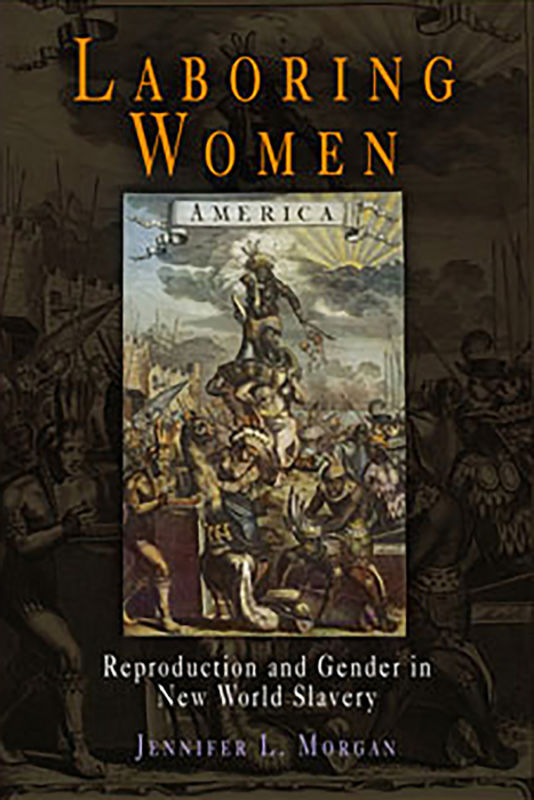
Laboring Women
When black women were brought from Africa to the New World as slave laborers, their value was determined by their ability to work as well as their potential to bear children, who by law would become the enslaved property of the mother's master. InLaboring Women: Reproduction and Gender in New World Slavery, Jennifer L. Morgan examines for the first time how African women's labor in both senses became intertwined in the English colonies. Beginning with the ideological foundations of racial slavery in early modern Europe,Laboring Womentraverses the Atlantic, exploring the social and cultural lives of women in West Africa, slaveowners' expectations for reproductive labor, and women's lives as workers and mothers under colonial slavery. Challenging conventional wisdom, Morgan reveals how expectations regarding gender and reproduction were central to racial ideologies, the organization of slave labor, and the nature of slave community and resistance. Taking into consideration the heritage of Africans prior to enslavement and the cultural logic of values and practices recreated under the duress of slavery, she examines how women's gender identity was defined by their shared experiences as agricultural laborers and mothers, and shows how, given these distinctions, their situation differed considerably from that of enslaved men. Telling her story through the arc of African women's actual lives-from West Africa, to the experience of the Middle Passage, to life on the plantations-she offers a thoughtful look at the ways women's reproductive experience shaped their roles in communities and helped them resist some of the more egregious effects of slave life. Presenting a highly original, theoretically grounded view of reproduction and labor as the twin pillars of female exploitation in slavery,Laboring Womenis a distinctive contribution to the literature of slavery and the history of women.
eBook
Cold War in a Hot Zone
Beginning just before the start of World War II and ending during the Cold War, Gerald Horne's masterful examination of British Guiana and the British West Indies details the collapse of British colonial structures and the corresponding rise of U.S. regional influence. Horne reveals the realities of race and color in the Caribbean under colonial rule, while the colonizers-Britain, France, Germany, Japan, and the United States-battled each other for hegemony on the world stage.
Horne seamlessly weaves a variety of untapped archival sources-including personal correspondence and newspaper stories from three continents-with a wide range of scholarly publications, journals and memoirs to illustrate an important, yet underexamined, regional history in a global context.
Highlighting the centrality of the \"labor question\" in relation to colonial rule, Cold War in a Hot Zone is a compelling exposé of the racial dimensions of U.S. foreign policy and anti-communist initiatives during WWII and the Cold War that followed.
eBook

National Council of Negro Women’s Postwar Leadership Abroad
Chapter 5 looks at NCNW’s post-World War II activism as they strengthen coalitions with women around the world to address issues that were plaguing their communities. NCNW worked closely with Howard University scholars including Margaret Wormly, Dorothy Porter Wesley, and Merze Tate with the creation of the International Relations committee, to gain insight on issues that would become a part of the organization's global agenda. Located in the heart of the segregated city of Washington, DC, the NCNW headquarters became a safe haven for international travelers of color, where they could have open discussions and cultural exchange. As the organization expanded its presence on the international front, members traveled to Trinidad to join women from Jamaica, Barbados, and British Guiana to gain greater insight on the issues faced by women in these respective areas, while taking part in workshops and conversations. In the years following the war, Bethune continued to work to solidify her position as an international leader as she traveled to Haiti in 1949 and became a recipient of the Haitian Medal of Honor and Merit. For years to come she would continue to reflect on the moment of recognition and her time spent in Haiti.
Book Chapter