
Catalogue Search | MBRL


Are you sure you want to remove the book from the shelf?

{{itemTitle}}
42,712
result(s) for
"British English"
Sort by:

Compound stress in educated Igbo and Yoruba accents of Nigerian English
This study examines compound stress in Igbo and Yoruba accents of Nigerian English and juxtaposes their patterns with Standard British English (SBE). Speech recorded from 60 educated Igbo and Yoruba speakers of Nigerian English and three Britons served as data and control respectively. These recordings were analysed perceptually and acoustically. Using simple percentage and chi-square, occurrence of tokens and levels of significance were checked between the compound stress patterns of educated Igbo and Yoruba speakers of English and SBE at 0.05 (p ≤ .05). Optimality theory serves as the theoretical framework. The findings indicate that educated Igbo and Yoruba speakers of Nigerian English, though share certain patterns with SBE, have significant patterns of variations in compound stress assignment. There was a systematic attempt by the Nigerian participants to align left, while SBE aligns right. This showed the propensity of the participants to analogically accentuate the constituent of the compounds that carry significant information. This pattern was supported by the higher pitch and durational values recorded by speakers of educated Igbo and Yoruba accents of Nigerian English. Even in cases where there were similarities in the patterns, the acoustic features vary. This is common to both accents of Nigerian English.
Journal Article

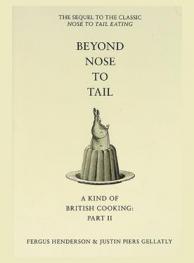
The British table : a new look at the traditional cooking of England, Scotland, and Wales
The British Table: A New Look at the Traditional Cooking of England, Scotland, and Wales celebrates the best of British cuisine old and new. Drawing on a vast number of sources, both historical and modern, the book includes more than 150 recipes, from traditional regional specialties to modern gastropub reinventions of rustic fare. Dishes like fish pie, braised brisket with pickled walnuts, and a pastry shop full of simple, irresistible desserts have found their way onto modern British menus-delicious reminders of the depth and breadth of Britain's culinary heritage. The book blends these tradition-based reinventions by some of the finest chefs in England, Scotland, and Wales with forgotten dishes of the past worthy of rediscovery. -- Amazon.com.
Book

Arabic-Speaking EFL Learners’ Pronunciation of British English Vowels: A Production-Based Study
The present study investigated the production of British English (BrE) vowels by Yemeni-Arabic learners of English. Specifically, the most problematic BrE vowels for those learners were explored in relation to Lados’ (1957) contrastive analysis hypothesis (CAH) and Flege’s (1995) Speech Learning Model (SLM). Sixty-seven Yemeni EFL learners at different proficiency levels completed a questionnaire, which mainly explored how difficult the BrE vowels are for them, and a vowel production test, which measured the learners’ production accuracy of the BrE vowels. Overall, the results revealed that Yemeni EFL learners encountered some difficulties when pronouncing BrE vowels, but their production accuracy rates increased as their levels grow. It was found that the same vowels, /e/, /ɒ/, /eə/, /ɔ:/, /ʊ/ & /u:/, were found to be the most inaccurately produced sounds by learners at all levels. The subtle differences between vowels might have caused the learners’ production problems. Findings also showed that learners’ L1 vowels that are different from the BrE vowels were easier to produce, and this is congruent with the SLM.
Journal Article


Recent change in modality in informal spoken British English: 1990s–2010s
Studies in modality comprise a complex canon of functional, formal, sociological and diachronic analyses of language. The current understanding of how English language speakers use modality is unclear; while some research argues that core modal auxiliaries are in decline, they are reported as increasing elsewhere. A lack of contemporary and representative spoken language data has rendered it difficult to reconcile such differing perspectives. To address this issue, this article presents a diachronic study of modality using the Spoken BNC2014 and the spoken component of the BNC1994. We investigate the frequency of core modal auxiliaries, semi-modals, and lexical modality-indicating devices (MIDs), as well as the modal functions of the core modal auxiliaries, in informal spoken British English, between the 1990s and 2010s. The results of the analysis are manifold. We find that core modal auxiliaries appear to be in decline, while semi-modals and lexical MIDs appear relatively stable. However, on a form-by-form basis, there is significant evidence of both increases and decreases in the use of individual expressions within each modal set. As a result, this study problematises form-based studies of change, and illustrates the value and coherence that functional analyses of modality can afford future work.
Journal Article

A pragmatic study of congratulation strategies of Pakistani ESL learners and British English speakers
People usually express their feelings and emotions positively to others when they have happy occasions. However, the ways of expressing congratulation may vary because the expressive speech act “congratulations” is not the only way to express happiness and share others their happy news. The present study investigates the congratulation strategies of Pakistani English as second language (ESL) learners and British English speakers under the influence of social distance variable. A quantitative approach is applied in the analysis with the frequency of strategies (semantic formulas) being numerically analyzed. The current study recruited 120 participants, and who were further divided into four different groups: 30 British English speakers, 30 Pakistani ESL learners in the elite class, 30 Pakistani ESL learners of the middle class, and 30 Pakistani ESL learners in the lower class. For data collection, a discourse completion test (DCT) was used as a tool. The findings reveal that the most frequently used types of congratulation strategy are
illocutionary force indicating device
(IFID) followed by overlapped strategies (a combination of two),
an offer of a good wish, expression of happiness, request for information, encouragement, expression of surprise, and suggestion of celebration
, while other types of strategies are not used by the participants. The study reveals the existence of crosscultural differences in the use of congratulations by Pakistani ESL learners. The findings further show how the middle and lower class of Pakistani ESL learners use a more elaborated form of compliment responses (CRs) as compared to Pakistani ESL learners of elite and British English speakers. The findings may help in understanding the pragmalinguistic and sociopragmatic aspects of Pakistani ESL learners as compared to British English speakers.
Journal Article


Stress in French loanwords in British and American English
This paper presents a dictionary-based study of French loanwords in contemporary English in order to investigate the location of primary stress in these loanwords. Four factors are found to be significant predictors of the position of primary stress: endings, word complexity, the segmental structure of the final syllable, and syllable count. Moreover, this study confirms previous observations on the tendency for American English to have more final stress in French loanwords than British English. Finally, the implications of our findings are discussed in light of a model that assumes that English phonology consists of distinct interacting subsystems.
Journal Article