
Catalogue Search | MBRL


Are you sure you want to remove the book from the shelf?

{{itemTitle}}
106
result(s) for
"British United States Fiction."
Sort by:

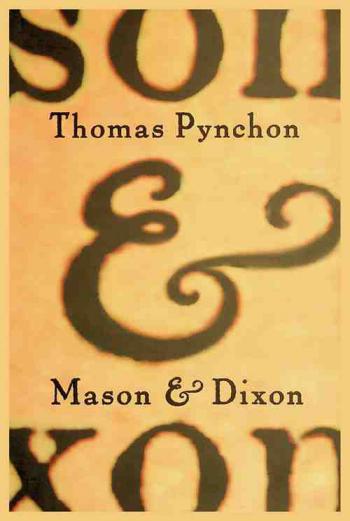
Mason & Dixon
Charles Mason (1728-1786) and Jeremiah Dixon (1733-1779) were the British surveyors best remembered for running the boundary between Pennsylvania and Maryland known as the Mason-Dixon Line. This book provides a fictional account of their story.

Women poets of the English Civil War
This anthology brings together extensive selections of poetry by the five most prolific and prominent women poets of the English Civil War period: Anne Bradstreet, Hester Pulter, Margaret Cavendish, Katherine Philips and Lucy Hutchinson. It presents these poems in modern-spelling, clear-text versions for classroom use, and for ready comparison to mainstream editions of male poets’ work. The anthology reveals the diversity of women’s poetry in the mid-seventeenth century, across political affiliations and forms of publication. Notes on the poems and an introduction explain the contexts of Civil War, religious conflict, and scientific and literary development. The anthology enables a more comprehensive understanding of seventeenth-century women’s poetic culture, both in its own right and in relation to prominent male poets such as Marvell, Milton and Dryden.
eBook

The dressmaker : a novel
A spirited young maid on board the Titanic captures the attentions of two men including a kindhearted sailor and an enigmatic Chicago millionaire and barely escapes with her life before witnessing media scorn targeting her famous designer mistress.
Book

Writing Displacement
Uses the Palestinian exilic displacements as a tool and compass to find intersecting points of reference with the Caribbean, Indian, African, Chinese, and Pakistani dispersions
Studies the metamorphosis of the politics of home and identity amongst different migrant nationals from the end of WWII into the new millennium
Celebrates the freedom to be 'out of place' which opens doors for and promotes rediscovery of materials that have been repressed or pushed aside in cultural translation
eBook

She, myself, and I
After an experimental brain transplant gives quadriplegic Rosa a new life, she begins to obsess over Sylvia, her donor, prompting a road trip of self-discovery and a surprising new romance.
Book

Novels in the Time of Democratic Writing
During the thirty years following ratification of the U.S.
Constitution, the first American novelists carried on an argument
with their British counterparts that pitted direct democracy
against representative liberalism. Such writers as Hannah Foster,
Isaac Mitchell, Royall Tyler, Leonore Sansay, and Charles Brockden
Brown developed a set of formal tropes that countered, move for
move, those gestures and conventions by which Samuel Richardson,
Jane Austen, and others created their closed worlds of self,
private property, and respectable society. The result was a
distinctively American novel that generated a system of social
relations resembling today's distributed network. Such a network
operated counter to the formal protocols that later distinguished
the great tradition of the American novel.
In Novels in the Time of Democratic Writing , Nancy
Armstrong and Leonard Tennenhouse show how these first U.S. novels
developed multiple paths to connect an extremely diverse field of
characters, redefining private property as fundamentally antisocial
and setting their protagonists to the task of dispersing that
property-its goods and people-throughout the field of characters.
The populations so reorganized proved suddenly capable of thinking
and acting as one. Despite the diverse local character of their
subject matter and community of readers, the first U.S. novels
delivered this argument in a vernacular style open and available to
all. Although it differed markedly from the style we attribute to
literary authors, Armstrong and Tennenhouse argue, such democratic
writing lives on in the novels of Cooper, Hawthorne, Melville, and
James.
eBook

The girl with the make-believe husband
\"While you were sleeping ... With her brother Thomas injured on the battlefront in the Colonies, orphaned Cecilia Harcourt has two unbearable choices: move in with a maiden aunt or marry a scheming cousin. Instead, she chooses option three and travels across the Atlantic, determined to nurse her brother back to health. But after a week of searching, she finds not her brother but his best friend, the handsome officer Edward Rokesby. He's unconscious and in desperate need of her care, and Cecilia vows that she will save this soldier's life, even if staying by his side means telling one little lie ... I told everyone I was your wife When Edward comes to, he's more than a little confused. The blow to his head knocked out three months of his memory, but surely he would recall getting married. He knows who Cecilia Harcourt is--even if he does not recall her face--and with everyone calling her his wife, he decides it must be true, even though he'd always assumed he'd marry his neighbor back in England. If only it were true ... Cecilia risks her entire future by giving herself--completely--to the man she loves. But when the truth comes out, Edward may have a few surprises of his own for the new Mrs. Rokesby.\"--Provided by publisher.
Book

The importance of feeling english
American literature is typically seen as something that inspired its own conception and that sprang into being as a cultural offshoot of America's desire for national identity. But what of the vast precedent established by English literature, which was a major American import between 1750 and 1850?
InThe Importance of Feeling English, Leonard Tennenhouse revisits the landscape of early American literature and radically revises its features. Using the concept of transatlantic circulation, he shows how some of the first American authors--from poets such as Timothy Dwight and Philip Freneau to novelists like William Hill Brown and Charles Brockden Brown--applied their newfound perspective to pre-existing British literary models. These American \"re-writings\" would in turn inspire native British authors such as Jane Austen and Horace Walpole to reconsider their own ideas of subject, household, and nation.
The enduring nature of these literary exchanges dramatically recasts early American literature as a literature of diaspora, Tennenhouse argues--and what made the settlers' writings distinctly and indelibly American was precisely their insistence on reproducing Englishness, on making English identity portable and adaptable. Written in an incisive and illuminating style,The Importance of Feeling Englishreveals the complex roots of American literature, and shows how its transatlantic movement aided and abetted the modernization of Anglophone culture at large.
eBook