
Catalogue Search | MBRL


Are you sure you want to remove the book from the shelf?

{{itemTitle}}
235
result(s) for
"Bronze age Egypt."
Sort by:


Technology and urbanism in Late Bronze Age Egypt
This study examines the distribution of high-status materials in addition to archaeological evidence of their production in the settlements known as royal cities during the New Kingdom in ancient Egypt (c.1550-1069 BC). The research focuses on the site sites of Amarna, Gurob, and Malqata, but incorporates Qantir/Pi-Ramesse for comparison.
eBook

Peripheral concerns : urban development in the Bronze Age southern Levant
\"Peripheral Concerns examines the influence of one 'core' region of the ancient Near Eastern world--Egypt--on urban development in the southern Levant in the Early and Middle Bronze Ages, with emphasis on the relative stability and sustainability of this development in each era. The study utilizes a very broad scale 'macro' approach to examine urban development using core-periphery theories, specifically in regard to southern Levantine-Egyptian interactions. While many studies examine urban development in both the Early Bronze Age and the Middle Bronze Age, few compare this phenomenon in the two periods. Likewise, there are few studies of urban development in the southern Levant that compare contemporary Egyptian policies in that region to those in Nubia, despite the fact that Egyptian activities linked the eastern Mediterranean, the Nile Valley, and Nubia into one interactive system. The broad chronological and geographic framework utilized in this study therefore allows for a new approach to urban development in the southern Levant\"--Provided by publisher.
Book

Ägyptens wirtschaftliche Grundlagen in der mittleren Bronzezeit
Economic issues are seemingly neglected topics within Egyptology. This study attempts to highlight selected economic aspects of the first half of the second millennium BC. Economy is embedded in society, but the societal community itself is embedded in its environments: on the one hand the physical-organic locality, including those ecologic restrictions enforced on it, and the relative cultural system on the other. In this work the so-called ‘Heqanakht Papyri’ are presented as case-studies to combine a more general economic picture with concrete information concerning Heqanakht’s household, in an attempt to develop an overall picture of his activities, even if it must remain fragmentary. By doing so, one or more missing tesserae may perhaps be suggested for the fragmentary mosaic that is Egypt in the Middle Bonze Age.
eBook

Second Intermediate Period date for the Thera (Santorini) eruption and historical implications
The historical relevance of the Thera (Santorini) volcanic eruption is unclear because of major dating uncertainty. Long placed ~1500 BCE and during the Egyptian New Kingdom (starts ~1565–1540 BCE) by archaeologists, 14 C pointed to dates ≥50–100 years earlier during the preceding Second Intermediate Period. Several decades of debate have followed with no clear resolution of the problem—despite wide recognition that this uncertainty undermines an ability to synchronize the civilizations of the eastern Mediterranean in the mid-second millennium BCE and write wider history. Recent work permits substantial progress. Volcanic CO 2 was often blamed for the discrepancy. However, comparison of 14 C dates directly associated with the eruption from contemporary Aegean contexts—both on and remote from Thera—can now remove this caveat. In turn, using Bayesian analysis, a revised and substantially refined date range for the Thera eruption can be determined, both through the integration of the large 14 C dataset relevant to the Thera eruption with the local stratigraphic sequence on Thera immediately prior to the eruption, and in conjunction with the wider stratigraphically-defined Aegean archaeological sequence from before to after the eruption. This enables a robust high-resolution dating for the eruption ~1606–1589 BCE (68.3% probability), ~1609–1560 BCE (95.4% probability). This dating clarifies long-disputed synchronizations between Aegean and East Mediterranean cultures, placing the eruption during the earlier and very different Second Intermediate Period with its Canaanite-Levantine dominated world-system. This gives an importantly altered cultural and historical context for the New Palace Period on Crete and the contemporary Shaft Grave era in southern Greece. In addition, the revised dating, and a current absence of southern Aegean chronological data placed soon afterwards, highlights a period of likely devastating regional eruption impact in the earlier-mid 16 th century BCE southern Aegean.
Journal Article
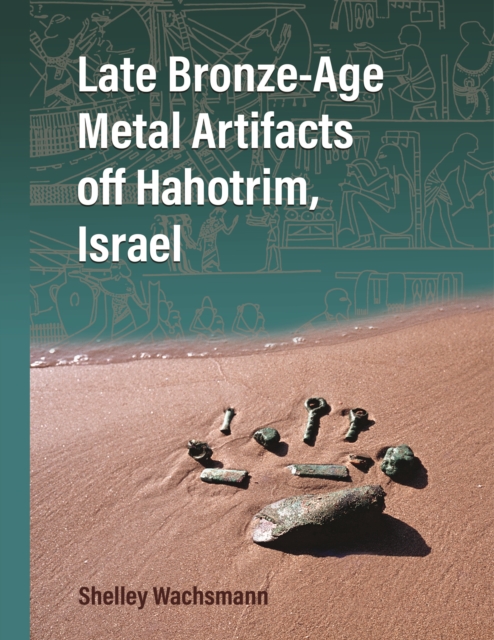
Late Bronze-Age Metal Artifacts off Hahotrim, Israel
During an inspection dive in 1980 along Israel's Mediterranean coast off of Kibbutz Hahotrim, Shelley Wachsmann, then Inspector of Antiquities for the Israel Department of Antiquities and Museums (now the Israel Antiquities Authority), discovered artifacts on a section of seabed swept clear of sand by a storm. Scattered around two large stone anchors, the finds consisted primarily of small, broken, or damaged pieces of metal artifacts and ingots. Late Bronze-Age Metal Artifacts off Hahotrim, Israel comprises the careful analysis of the materials by Wachsmann and ten collaborators. Examination of the artifacts, along with the context in which they were found, suggests that—rather than being all that remains of an undiscovered ancient wreck—the artifacts may have found their way to the seabed as jetsam dumped overboard by a crew hoping to extricate their vessel from a sand bar or other obstruction. As Wachsmann notes, the discovery and study of this humble group of artifacts provides evidence of a vibrant culture of maritime commerce that existed in the Late Bronze-Age Mediterranean world prior to its collapse. Positing the existence of a “dynamic international period when a system of land and sea trade routes stretched from Sardinia in the west to Iran in the east, spanning roughly a tenth of the earth's circumference,” this careful analysis adds important context to our evolving understanding of the interconnectedness of the Mediterranean world at a pivotal moment in history.
eBook

Irrigation of World Agricultural Lands: Evolution through the Millennia
Many agricultural production areas worldwide are characterized by high variability of water supply conditions, or simply lack of water, creating a dependence on irrigation since Neolithic times. The aim of this paper is to provide an overview of the evolution of irrigation of agricultural lands worldwide, based on bibliographical research focusing on ancient water management techniques and ingenious irrigation practices and their associated land management practices. In ancient Egypt, regular flooding by the Nile River meant that early agriculture probably consisted of planting seeds in soils that had been recently covered and fertilized with floodwater and silt deposits. On the other hand, in arid and semi-arid regions farmers made use of perennial springs and seasonal runoff under circumstances altogether different from the river civilizations of Mesopotamia, Egypt, India, and early dynasties in China. We review irrigation practices in all major irrigation regions through the centuries. Emphasis is given to the Bronze Age civilizations (Minoans, Egyptians, and Indus valley), pre-Columbian, civilizations from the historic times (e.g., Chinese, Hellenic, and Roman), late-Columbians (e.g., Aztecs and Incas) and Byzantines, as well as to Ottomans and Arabs. The implications and impacts of irrigation techniques on modern management of water resources, as well as on irrigated agriculture, are also considered and discussed. Finally, some current major agricultural water management challenges are outlined, concluding that ancient practices could be adapted to cope with present challenges in irrigated agriculture for increasing productivity and sustainability.
Journal Article
Bronze Age make-up recipes from Sudanese Lower Nubia point to a greater diversity across cultural borders in ancient Northeast Africa
Previous scientific explorations of kohl and other make-up substances from ancient Egypt have revealed a considerable diversity of materials and recipes used in different regions and time periods. However, samples from Sudanese Nubia have never been included in scientific investigations of make-up substances used along the Nile valley. For the first time, 24 samples of kohl and other cosmetics from Bronze Age Sudanese Lower Nubia (c. 2055–1070 BCE) were analysed using optical microscopy, GC-MS, SEM-EDS, ATR-FTIR and XRD. Beyond expanding our knowledge of make-up usage in the ancient Nile valley by including samples from Sudan, this study adds further depth to our understanding of make-up substances in ancient Northeast Africa by exploring samples from well-defined archaeological contexts. The multi-analytical approach presented here sheds light on the diversity of recipes used by various communities in the Middle Nile valley during the Bronze Age. Most samples are dominated by lead sulphides, but these occur in various mixtures with quartz, clay, calcite, gypsum and zinc compounds, in addition to plant gums and animal fats. We also report for the first time the use of synthetic calcium antimonate in ancient cosmetic mixtures. Besides expanding our knowledge of make-up mixtures in ancient Northeast Africa, our study suggests that the considerable variation detected across the cultural borders of Bronze Age Egypt and Nubia reflects distinctive bodily ideals.
Journal Article

The Iron Age npš and the Utility of Egyptian Comparative Evidence
This purpose of this article is twofold. Firstly, I present an overview of the Egyptian concepts of the ba and ka, as well as the attestations of npš extant in the Iron Age Levant. This brief investigation is meant to illustrate the second point, which is the utility of Egyptian evidence for the study of Levantine culture and religion. In addition, this article may stand as a starting point for further investigation of the npš through Egyptian comparative evidence, going beyond iconographic, archaeological, and textual comparison to include comparison of concepts and ideologies.
Journal Article

Bronze age supply chains between ancient Egypt and Nubia revealed by lead isotope analysis of kohl samples
While there is a considerable body of data regarding the sources of minerals employed in Bronze Age Egypt, the supply chains to Sudanese Lower Nubia are virtually unknown. This paper presents results of lead isotope analysis of 11 samples of kohl from C-group, Pan-grave and New Kingdom funerary contexts across the Debeira and Ashkeit areas in Sudanese Lower Nubia during the Bronze Age. The samples could be divided in two groups based on their lead isotope ratios. A comparison between the kohl samples from Sudanese Lower Nubia and galena ores from various mining sites on the Red Sea coast of Egypt indicated that some of the galena used in kohl mixtures in Sudanese Lower Nubia came from the Pharaonic mining site of Gebel el-Zeit. The second group of Nubian samples seems to have originated from an alternative galena source yet to be determined. This is the first time that kohl samples from Sudanese Lower Nubia are integrated into known northeast African networks of supply by using Lead isotope analysis.
Journal Article