
Catalogue Search | MBRL


Are you sure you want to remove the book from the shelf?

{{itemTitle}}
193
result(s) for
"Bürgerrechtsbewegung"
Sort by:

Human Rights Activism and the End of the Cold War
Two of the most pressing questions facing international historians today are how and why the Cold War ended. Human Rights Activism and the End of the Cold War explores how, in the aftermath of the signing of the Helsinki Final Act in 1975, a transnational network of activists committed to human rights in the Soviet Union and Eastern Europe made the topic a central element in East-West diplomacy. As a result, human rights eventually became an important element of Cold War diplomacy and a central component of détente. Sarah B. Snyder demonstrates how this network influenced both Western and Eastern governments to pursue policies that fostered the rise of organized dissent in Eastern Europe, freedom of movement for East Germans and improved human rights practices in the Soviet Union - all factors in the end of the Cold War.
eBook

Women of color and the reproductive rights movement
While most people believe that the movement to secure voluntary reproductive control for women centered solely on abortion rights, for many women abortion was not the only, or even primary, focus.
Jennifer Nelson tells the story of the feminist struggle for legal abortion and reproductive rights in the 1960s, 1970s, and early 1980s through the particular contributions of women of color. She explores the relationship between second-wave feminists, who were concerned with a woman's right to choose, Black and Puerto Rican Nationalists, who were concerned that Black and Puerto Rican women have as many children as possible “for the revolution,” and women of color themselves, who negotiated between them. Contrary to popular belief, Nelson shows that women of color were able to successfully remake the mainstream women's liberation and abortion rights movements by appropriating select aspects of Black Nationalist politics—including addressing sterilization abuse, access to affordable childcare and healthcare, and ways to raise children out of poverty—for feminist discourse.
eBook

Graphic Memories of the Civil Rights Movement
The history of America’s civil rights movement is marked by narratives that we hear retold again and again. This has relegated many key figures and turning points to the margins, but graphic novels and graphic memoirs present an opportunity to push against the consensus and create a more complete history. Graphic Memories of the Civil Rights Movement showcases five vivid examples of this: Ho Che Anderson's King (2005), which complicates the standard biography of Martin Luther King Jr.; Congressman John Lewis's three-volume memoir, March (2013–2016); Darkroom (2012), by Lila Quintero Weaver, in which the author recalls her Argentinian father’s participation in the movement and her childhood as an immigrant in the South; the bestseller The Silence of Our Friends, by Mark Long, Jim Demonakos, and Nate Powell (2012), set in Houston's Third Ward in 1967; and Howard Cruse's Stuck Rubber Baby (1995), whose protagonist is a closeted gay man involved in the movement. In choosing these five works, Jorge Santos also explores how this medium allows readers to participate in collective memory making, and what the books reveal about the process by which history is (re)told, (re)produced, and (re)narrativized. Concluding the work is Santos’s interview with Ho Che Anderson.
eBook

Canada's Rights Revolution
In the first major study of postwar social movement organizations in Canada, Dominique Clément provides a history of the human rights movement as seen through the eyes of two generations of activists.
eBook
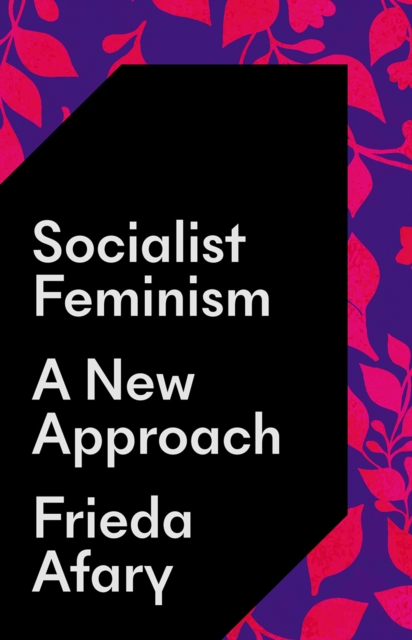
Socialist Feminism
What is socialist feminism and why is it needed to fight the global rise of authoritarianism and fascism? Frieda Afary brings the insights gained through her study of feminist philosophy, her international activism and her work in community education as a public librarian in Los Angeles, offering a bold new vision of an alternative to capitalism, racism, sexism, heterosexism and alienation.Socialist Feminism: A New Approach reclaims theories of women’s oppression through a return to humanism, enriched by social reproduction theories, Black feminist intersectionality, abolitionism, queer theories, Marxist-Humanism and the author’s own experiences as an Iranian American feminist, scholar and activist.She looks at global developments in gender relations since the 1980s, the impact of the Covid-19 pandemic, the distinct features of twenty-first century authoritarianism and current struggles against it, drawing out lessons for revolutionary theorising, organising and international solidarity including the #MeToo and Black Lives Matter movements.This book also contains a study guide which transforms it into a useful pedagogical tool for teachers and activists.
eBook
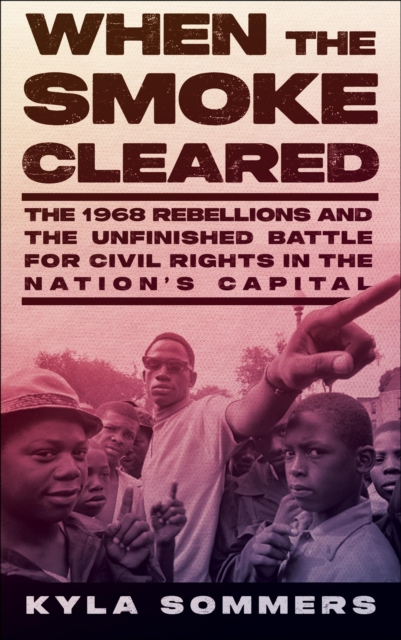
When the Smoke Cleared
Echoing James Forman Jr.’s
Locking Up Our Own , a riveting story of race, civil
rights, and rebellion in Washington, DC In April 1968,
following the murder of Martin Luther King Jr., a wave of
uprisings swept across America. None was more visible—or
resulted in more property damage, arrests, or federal troop
involvement—than in Washington, DC, where thousands took
to the streets in protest against racial inequality, looting
and burning businesses in the process. The nation’s
capital was shaken to its foundations.
When the Smoke Cleared tells the story of the
Washingtonians who seized the moment to rebuild a more just
society, one that would protect and foster Black political and
economic power. A riveting account of activism, urban
reimagination, and political transformation, Kyla
Sommers’s revealing and deeply researched narrative is
ultimately a tale of blowback, as the Nixon administration and
its allies in Congress thwarted the ambitions of DC’s
reformers, opposing civil rights reforms and self-governance.
And nationwide, conservative politicians used the specter of
crime in the capital to roll back the civil rights movement and
create the modern carceral state.
A vital chapter in the struggle for racial equality,
When the Smoke Cleared is an account of open wounds,
paths not taken, and their unforeseen
consequences—revealed here in all of their contemporary
significance.
eBook

Engineers for Change
An account of conflicts within engineering in the 1960s that helped shape our dominant contemporary understanding of technological change as the driver of history.
In the late 1960s an eclectic group of engineers joined the antiwar and civil rights activists of the time in agitating for change. The engineers were fighting to remake their profession, challenging their fellow engineers to embrace a more humane vision of technology. In Engineers for Change, Matthew Wisnioski offers an account of this conflict within engineering, linking it to deep-seated assumptions about technology and American life.
The postwar period in America saw a near-utopian belief in technology's beneficence. Beginning in the mid-1960s, however, society—influenced by the antitechnology writings of such thinkers as Jacques Ellul and Lewis Mumford—began to view technology in a more negative light. Engineers themselves were seen as conformist organization men propping up the military-industrial complex. A dissident minority of engineers offered critiques of their profession that appropriated concepts from technology's critics. These dissidents were criticized in turn by conservatives who regarded them as countercultural Luddites. And yet, as Wisnioski shows, the radical minority spurred the professional elite to promote a new understanding of technology as a rapidly accelerating force that our institutions are ill-equipped to handle. The negative consequences of technology spring from its very nature—and not from engineering's failures. “Sociotechnologists” were recruited to help society adjust to its technology. Wisnioski argues that in responding to the challenges posed by critics within their profession, engineers in the 1960s helped shape our dominant contemporary understanding of technological change as the driver of history.
eBook

War! What Is It Good For?
African Americans' long campaign for \"the right to fight\" forced Harry Truman to issue his 1948 executive order calling for equality of treatment and opportunity in the armed forces. InWar! What Is It Good For?, Kimberley Phillips examines how blacks' participation in the nation's wars after Truman's order and their protracted struggles for equal citizenship galvanized a vibrant antiwar activism that reshaped their struggles for freedom.Using an array of sources--from newspapers and government documents to literature, music, and film--and tracing the period from World War II to the Iraq and Afghanistan wars, Phillips considers how federal policies that desegregated the military also maintained racial, gender, and economic inequalities. Since 1945, the nation's need for military labor, blacks' unequal access to employment, and discriminatory draft policies have forced black men into the military at disproportionate rates. While mainstream civil rights leaders considered the integration of the military to be a civil rights success, many black soldiers, veterans, and antiwar activists perceived war as inimical to their struggles for economic and racial justice and sought to reshape the civil rights movement into an antiwar black freedom movement. Since the Vietnam War, Phillips argues, many African Americans have questioned linking militarism and war to their concepts of citizenship, equality, and freedom.
eBook

Learning from Birmingham
A steel town daughter’s search for truth and beauty in
Birmingham, Alabama “As Birmingham goes, so goes the
nation,” Fred Shuttlesworth observed when he invited Martin
Luther King Jr. to the city for the transformative protests of
1963. From the height of the Civil Rights Movement through its
long aftermath, images of police dogs, fire hoses and four girls
murdered when Ku Klux Klan members bombed the Sixteenth Street
Baptist Church have served as an uncomfortable racial mirror for
the nation. Like many white people who came of age in the Civil
Rights Movement’s wake, Julie Buckner Armstrong knew little
about this history. Only after moving away and discovering
writers like Toni Morrison and Alice Walker did she realize how
her hometown and family were part of a larger, ongoing story of
struggle and injustice. When Armstrong returned to Birmingham
decades later to care for her aging mother, Shuttlesworth’s
admonition rang in her mind. By then an accomplished scholar and
civil rights educator, Armstrong found herself pondering the
lessons Birmingham holds for a twenty-first century America.
Those lessons extended far beyond what a 2014 Teaching Tolerance
report describes as the common distillation of the Civil Rights
Movement into “two names and four words: Martin Luther King
Jr, Rosa Parks, and ‘I have a dream.’” Seeking
to better understand a more complex local history, its connection
to broader stories of oppression and resistance, and her own
place in relation to it, Armstrong embarked on a journey to
unravel the standard Birmingham narrative to see what she would
find. Beginning at the center, with her family’s 1947
arrival to a housing project near the color line, within earshot
of what would become known as Dynamite Hill, Armstrong works her
way over time and across the map. Weaving in stories of her white
working-class family, classmates, and others not traditionally
associated with Birmingham’s civil rights history,
including members of the city’s LGBTQ community, she forges
connections between the familiar and lesser-known. The result is
a nuanced portrait of Birmingham--as seen in public housing, at
old plantations, in segregated neighborhoods, across contested
boundary lines, over mountains, along increasingly polluted
waterways, beneath airport runways, on highways cutting through
town, and under the gaze of the iconic statue of Vulcan. In her
search for truth and beauty in Birmingham, Armstrong draws on the
powers of place and storytelling to dig into the cracks,
complicating easy narratives of civil rights progress. Among the
discoveries she finds in America’s racial mirror is a
nation that has failed to recognize itself in the horrific images
from Birmingham’s past and to acknowledge the continuing
inequalities that make up the Civil Right’s
Movement’s unfinished business. Learning from Birmingham
reminds us that stories of civil rights, structural oppression,
privilege, abuse, race and gender bias, and inequity are
difficult and complicated, but their telling, especially from
multiple stakeholder perspectives, is absolutely
necessary.
eBook

To March for Others
In 1966, members of the Student Nonviolent Coordinating Committee, an African American civil rights group with Southern roots, joined Cesar Chavez and the United Farm Workers union on its 250-mile march from Delano to Sacramento, California, to protest the exploitation of agricultural workers. SNCC was not the only black organization to support the UFW: later on, the NAACP, the National Urban League, the Southern Christian Leadership Conference, and the Black Panther Party backed UFW strikes and boycotts against California agribusiness throughout the late 1960s and early 1970s.
To March for Othersexplores the reasons why black activists, who were committed to their own fight for equality during this period, crossed racial, socioeconomic, geographic, and ideological divides to align themselves with a union of predominantly Mexican American farm workers in rural California. Lauren Araiza considers the history, ideology, and political engagement of these five civil rights organizations, representing a broad spectrum of African American activism, and compares their attitudes and approaches to multiracial coalitions. Through their various relationships with the UFW, Araiza examines the dynamics of race, class, labor, and politics in twentieth-century freedom movements. The lessons in this eloquent and provocative study apply to a broader understanding of political and ethnic coalition building in the contemporary United States.
eBook