
Catalogue Search | MBRL


Are you sure you want to remove the book from the shelf?

{{itemTitle}}
46
result(s) for
"Buchenwald"
Sort by:

The order of terror
During the twelve years from 1933 until 1945, the concentration camp operated as a terror society. In this pioneering book, the renowned German sociologist Wolfgang Sofsky looks at the concentration camp from the inside as a laboratory of cruelty and a system of absolute power built on extreme violence, starvation, \"terror labor,\" and the business-like extermination of human beings.
Based on historical documents and the reports of survivors, the book details how the resistance of prisoners was broken down. Arbitrary terror and routine violence destroyed personal identity and social solidarity, disrupted the very ideas of time and space, perverted human work into torture, and unleashed innumerable atrocities. As a result, daily life was reduced to a permanent struggle for survival, even as the meaning of self-preservation was extinguished. Sofsky takes us from the searing, unforgettable image of the Muselmann--Auschwitz jargon for the \"walking dead\"--to chronicles of epidemics, terror punishments, selections, and torture.
The society of the camp was dominated by the S.S. and a system of graduated and forced collaboration which turned selected victims into accomplices of terror. Sofsky shows that the S.S. was not a rigid bureaucracy, but a system with ample room for autonomy. The S.S. demanded individual initiative of its members. Consequently, although they were not required to torment or murder prisoners, officers and guards often exploited their freedom to do so--in passing or on a whim, with cause, or without.
The order of terror described by Sofsky culminated in the organized murder of millions of European Jews and Gypsies in the death-factories of Auschwitz and Treblinka. By the end of this book, Sofsky shows that the German concentration camp system cannot be seen as a temporary lapse into barbarism. Instead, it must be conceived as a product of modern civilization, where institutionalized, state-run human cruelty became possible with or without the mobilizing feelings of hatred.
eBook

Spieldose: perceiving Buchenwald history through camp music and children's camp
This article discusses the historical perception of Buchenwald through artistic research focusing on the themes of camp music and children's camps. The research is structured into three sections. The first section explores the types of music in the concentration camp and their roles, while the second investigates the development of children's camps within Buchenwald. The third section discusses the sounding sculpture Spieldose, which the author created based on this research. The article suggests that an artistic approach to historical perception involves an interactive dialogue that shapes both personal understanding and the historical narrative itself. As for the artwork Spieldose, the author attempts to sound an alarm to the world through it, for history is not and has never been far removed from us, rather, it is unfolding right before our eyes.
Journal Article

Cautiverios contemporáneos de Primo Levi a su sombra en España: Montserrat Roig y Jorge Semprún
Tanto los relatos de Levi a partir de Si esto es un hombre, relativos a su estancia en el campo de concentración nazi de Auschwitz como las crónicas de los presos y presas de Ravensbrück tratados por Montserrat Roig en Noche y niebla: Los catalanes en los campos nazis, y las escenas relatadas por Jorge Semprún en La escritura o la vida (1995) y Viviré con su nombre, morirá con el mío (2001), acerca de sus vivencias en el campo de concentración de Buchenwald, nacen siempre de una fecha y un lugar en la historia vivida que no se borrará nunca de la mente de los protagonistas. De manera enigmática, los tres relatos, aparentemente independientes y separados uno de los otros, se van a entrelazar.
Journal Article
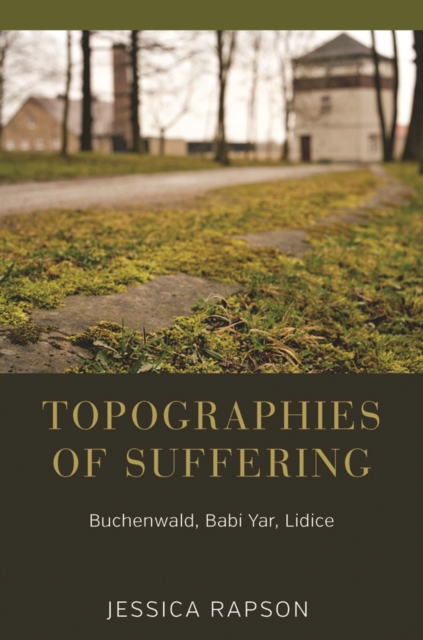
Topographies of suffering
At the forefront of transcultural innovations in memory studies. Provides a new interdisciplinary approach to the study of Holocaust commemoration, combining approaches from literary ecocriticism, cultural geography and cultural studies. Sheds new light on transnational networks of Holocaust memory.
eBook
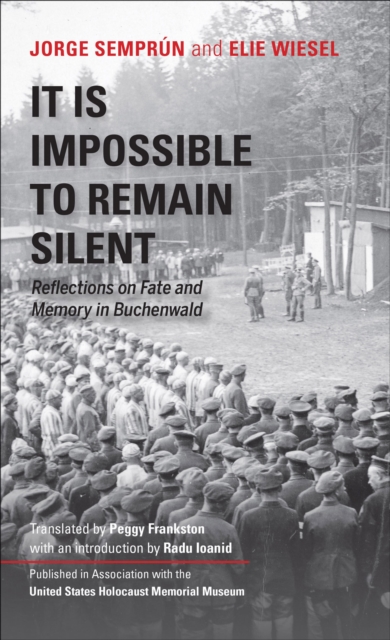
It Is Impossible to Remain Silent
On March 1, 1995, at the time of the fiftieth anniversary of the liberation of the Nazi concentration camps, ARTE (a French-German state-funded television network) proposed an encounter between two highly-regarded figures of our time: Elie Wiesel and Jorge Semprún. These two men, whose destinies were unparalleled, had probably crossed paths-without ever meeting-in the Nazi concentration camp Buchenwald in 1945. This short book is the entire transcription of their recorded conversation. During World War II, Buchenwald was the center of a major network of sub-camps and an important source of forced labor. Most of the internees were German political prisoners, but the camp also held a total of 10,000 Jews, Roma, Sinti, Jehovah's Witnesses, and German military deserters.
In these pages, Wiesel and Semprún poignantly discuss the human condition under catastrophic circumstances. They review the categories of inmate at Buchenwald and agree on the tragic reason for the fate of the victims of Nazism-as well as why this fate was largely ignored for so long after the end of the war. Both men offer riveting testimony and pay vibrant homage to the Jewish victims of the Holocaust. Today, seventy-five years after the liberation of the Nazi camps, this book could not be more timely for its confrontation with ultra-nationalism and antisemitism.
eBook

Through Soviet Jewish Eyes
Most view the relationship of Jews to the Soviet Union through the lens of repression and silence. Focusing on an elite group of two dozen Soviet-Jewish photographers, including Arkady Shaykhet, Alexander Grinberg, Mark Markov-Grinberg, Evgenii Khaldei, Dmitrii Baltermants, and Max Alpert,Through Soviet Jewish Eyespresents a different picture. These artists participated in a social project they believed in and with which they were emotionally and intellectually invested-they were charged by the Stalinist state to tell the visual story of the unprecedented horror we now call the Holocaust.These wartime photographers were the first liberators to bear witness with cameras to Nazi atrocities, three years before Americans arrived at Buchenwald and Dachau. In this passionate work, David Shneer tells their stories and highlights their work through their very own images-he has amassed never-before-published photographs from families, collectors, and private archives.Through Soviet Jewish Eyeshelps us understand why so many Jews flocked to Soviet photography; what their lives and work looked like during the rise of Stalinism, during and then after the war; and why Jews were the ones charged with documenting the Soviet experiment and then its near destruction at the hands of the Nazis.
eBook
A Jewish Communist in Weimar Germany
This biography of Werner Scholem (1895-1940), former Zionist activist and later chief organiser of the German Communist Party, sheds new light on German-Jewish relations in the Weimar Republic, focussing on a revolutionary's lifelong struggle against Anti-Semitism.
eBook

On the Defensive
On the Defensive considers how our ethical responses to the Nazi camps have unintentionally repressed and denied the experiences of their victims. Through detailed readings of survivor narratives, particularly the works of political deportees Jorge Semprun and Charlotte Delbo, Sharon Marquart examines how well-intentioned people – including victims, their family members, and readers of witness literature – respond to such testimony in ways that are understood as ethical by their communities but serve instead to ignore victims’ experiences.
As Marquart shows, collective disasters such as the Holocaust expose the limitations of our ethical theories. To cope with this instability we withdraw and defend ourselves through inattentive and formulaic responses that turn a blind eye to the plight of victims. Challenging contemporary theorizations of community, ethics, testimony, and trauma, On the Defensive is a far-reaching reflection on the ways in which communal understandings of our duties and responsibilities to others can facilitate the denial of an atrocity’s horrors.
eBook

NAZISMO Y ANTIFASCISMO EN LOS DEBATES HISTORIOGRÁFICOS DE LA REPÚBLICA DEMOCRÁTICA ALEMANA, 1945-1990
Entre 1945-1990, la RDA controló los debates historiográficos del pasado: Nazismo, antifascismo y conmemoración de un pasado cargado de significado negativo. En este marco, los académicos se vieron restringidos a un marco teórico y metodológico basado en las necesidades ideológicas y políticas del régimen. La doctrina oficial introdujo las directrices del trabajo académico, en base a la ideología. El antifascismo, tal como se mostraba en memoriales y conmemoraciones, usaba todos los medios para afianzar su legitimidad nacional. Con la reunificación el contexto político ha cambiado de forma que también los debates historiográficos han tenido que adaptarse. Nuestro objetivo es reconsiderar los debates historiográficos sobre cuestiones relevantes para la historia contemporánea.
Between 1945-1990, the RDA controlled historiographical debates of the past: Nazism, fascism and commemoration of a past loaded with negative meaning. In this context, scholars were restricted to a theoretical and methodological framework based on the ideological and political needs of the regime. The official doctrine introduced the guidelines of academic work, based on ideology. Anti-fascism, as was shown in memorials and commemorations, used all means to strengthen their national legitimacy. With the reunification the political context has changed historiographical debates. Our goal is to reconsider the historiographical debates on relevant issues for contemporary history.
Journal Article

Shylock in Buchenwald
Abstract Can The Merchant of Venice be performed in Germany after the Holocaust, and if so, how? Is the claim that the play is a touchstone for German-Jewish relations, with a philosemitic tradition – and therefore eligible to be performed today – verifiable? The article begins by briefly surveying this tradition from the Jewish emancipation in the mideighteenth century, which, with a few relapses, continued – especially in productions directed by Jews and/or with Jewish actors in the role of Shylock – until the rise of the Nazi regime, to be resumed after the Second World War. The main part analyses a test case, staged by the Israeli director Hanan Snir at the Weimar National Theatre (1995), and intended rhetorically to avenge the Holocaust on the German audience: Merchant as a viciously antisemitic play with in a play, directed by SS personnel in the nearby Buchenwald concentration camp with eventually murdered Jewish inmates compelled to play the Jewish parts.
Journal Article