
Catalogue Search | MBRL


Are you sure you want to remove the book from the shelf?

{{itemTitle}}
15
result(s) for
"Buddhism and politics United States History 20th century."
Sort by:

American sutra : a story of faith and freedom in the Second World War
The mass incarceration of Japanese Americans during World War II is not only a tale of injustice; it is a moving story of faith. In this pathbreaking account, Duncan Ryūken Williams reveals how, even as they were stripped of their homes and imprisoned in camps, Japanese-American Buddhists launched one of the most inspiring defenses of religious freedom in our nation's history, insisting that they could be both Buddhist and American.-- Provided by publisher
Book

The American South and the Vietnam War
To fully comprehend the Vietnam War, it is essential to understand the central role that southerners played in the nation's commitment to the war, in the conflict's duration, and in the fighting itself.President Lyndon B.Johnson of Texas and Secretary of State Dean Rusk of Georgia oversaw the dramatic escalation of U.S.
eBook

The pro-war movement : domestic support for the Vietnam War and the making of modern American conservatism
In the vast literature on the Vietnam War, much has been written about the antiwar movement and its influence on U.S. policy and politics. In this book, Sandra Scanlon shifts attention to those Americans who supported the war and explores the war’s impact on the burgeoning conservative political movement of the 1960s and early 1970s.
Believing the Vietnam War to be a just and necessary cause, the pro-war movement pushed for more direct American military intervention in Southeast Asia throughout the Kennedy administration, lobbied for intensified bombing during the Johnson years, and offered coherent, if divided, endorsements of Nixon’s policies of phased withdrawal. Although its political wing was dominated by individuals and organizations associated with Barry Goldwater’s presidential bids, the movement incorporated a broad range of interests and groups united by a shared antipathy to the New Deal order and liberal Cold War ideology.
Appealing to patriotism, conservative leaders initially rallied popular support in favor of total victory and later endorsed Nixon’s call for “peace with honor.” Yet as the war dragged on with no clear end in sight, internal divisions eroded the confidence of pro-war conservatives in achieving their aims and forced them to reevaluate the political viability of their hardline Cold War rhetoric. Conservatives still managed to make use of grassroots patriotic campaigns to marshal support for the war, particularly among white ethnic workers opposed to the antiwar movement. Yet in so doing, Scanlon concludes, they altered the nature and direction of the conservative agenda in both foreign and domestic policy for years to come.
eBook

Truman, Congress, and Korea
Three days after North Korean premier Kim Il Sung launched a
massive military invasion of South Korea on June 24, 1950,
President Harry S. Truman responded, dispatching air and naval
support to South Korea. Initially, Congress cheered his swift
action; but, when China entered the war to aid North Korea, the
president and many legislators became concerned that the conflict
would escalate into another world war, and the United States agreed
to a truce in 1953. The lack of a decisive victory caused the
Korean War to quickly recede from public attention. However, its
impact on subsequent American foreign policy was profound.
In Truman, Congress, and Korea: The Politics of America's
First Undeclared War , Larry Blomstedt provides the first
in-depth domestic political history of the conflict, from the
initial military mobilization, to Congress's failed attempts to
broker a cease-fire, to the political fallout in the 1952 election.
During the war, President Truman faced challenges from both
Democratic and Republican legislators, whose initial support
quickly collapsed into bitter and often public infighting. For his
part, Truman dedicated inadequate attention to relationships on
Capitol Hill early in his term and also declined to require a
formal declaration of war from Congress, advancing the shift toward
greater executive power in foreign policy.
The Korean conflict ended the brief period of bipartisanship in
foreign policy that began during World War II. It also introduced
Americans to the concept of limited war, which contrasted sharply
with the practice of requiring unconditional surrenders in previous
conflicts. Blomstedt's study explores the changes wrought during
this critical period and the ways in which the war influenced US
international relations and military interventions during the Cold
War and beyond.
eBook

Cambodian evangelicalism : cosmological hope and diasporic resilience
No detailed description available for \"Cambodian Evangelicalism\".
eBook

Political Bubbles
Behind every financial crisis lurks a \"political bubble\"--policy biases that foster market behaviors leading to financial instability. Rather than tilting against risky behavior, political bubbles--arising from a potent combination of beliefs, institutions, and interests--aid, abet, and amplify risk. Demonstrating how political bubbles helped create the real estate-generated financial bubble and the 2008 financial crisis, this book argues that similar government oversights in the aftermath of the crisis undermined Washington's response to the \"popped\" financial bubble, and shows how such patterns have occurred repeatedly throughout US history.
The authors show that just as financial bubbles are an unfortunate mix of mistaken beliefs, market imperfections, and greed, political bubbles are the product of rigid ideologies, unresponsive and ineffective government institutions, and special interests. Financial market innovations--including adjustable-rate mortgages, mortgage-backed securities, and credit default swaps--become subject to legislated leniency and regulatory failure, increasing hazardous practices. The authors shed important light on the politics that blinds regulators to the economic weaknesses that create the conditions for economic bubbles and recommend simple, focused rules that should help avoid such crises in the future.
The first full accounting of how politics produces financial ruptures,Political Bubblesoffers timely lessons that all sectors would do well to heed.
eBook

Why South Vietnam fell
Between 1954 and 1963, President Ngo Dinh Diem, against great odds but with U.S. assistance, built a functioning South Vietnamese state. But gravely misled by American journalists in Saigon, the U.S. embassy, in league with second-tier members of the State Department, urged certain South Vietnamese generals to stage a coup against Diem, resulting in his brutal murder. Despite the instability after Diem's murder, the South Vietnamese Army performed well during the 1968 Tet Offensive and the 1972 Easter Offensive. In proportion to population, South Vietnamese Army losses were much greater than American losses. Nevertheless, the American media ignored South Vietnamese sacrifices, and completely misrepresented the consequences of the Tet Offensive. The disastrous \"peace agreement\" the U.S. forced on the South Vietnamese in 1973 made continuing American support vital. But Congress began to slash aid to South Vietnam, so that its soldiers had to fight on with dwindling supplies of fuel, ammunition, and medicine. Under these circumstances, the South Vietnamese attempted to regroup their army into the provinces around Saigon, an effort that ended in disaster. The final chapter reflects on the meaning of the conflict and the tragedy that abandonment by Washington and conquest by Hanoi brought upon the South Vietnamese people. An Appendix presents a strategy for preserving a South Vietnamese state with the commitment of a relatively small number of U.S. forces.
eBook
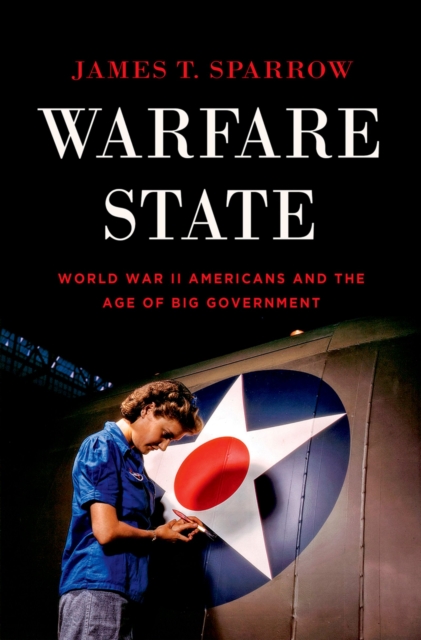
Warfare state : World War II Americans and the age of big government
Warfare State shows how the federal government, in the course of World War II, vastly expanded its influence over American society. Equally important, it looks at how and why Americans adapted to this expansion of authority. Through mass participation in military service, war work, rationing, income taxation and ownership of the national debt in the form of war bonds, ordinary Americans learned to live with the warfare state. They accepted these new obligations because the government encouraged all citizens to think of themselves as personally connected to the battle front.
eBook
The Road to 9/11
This is an ambitious, meticulous examination of how U.S. foreign policy since the 1960s has led to partial or total cover-ups of past domestic criminal acts, including, perhaps, the catastrophe of 9/11. Peter Dale Scott, whose previous books have investigated CIA involvement in southeast Asia, the drug wars, and the Kennedy assassination, here probes how the policies of presidents since Nixon have augmented the tangled bases for the 2001 terrorist attack. Scott shows how America's expansion into the world since World War II has led to momentous secret decision making at high levels. He demonstrates how these decisions by small cliques are responsive to the agendas of private wealth at the expense of the public, of the democratic state, and of civil society. He shows how, in implementing these agendas, U.S. intelligence agencies have become involved with terrorist groups they once backed and helped create, including al Qaeda.
eBook

Global Rebellion
Why has the turn of the twenty-first century been rocked by a new religious rebellion? From al Qaeda to Christian militias to insurgents in Iraq, a strident new religious activism has seized the imaginations of political rebels around the world. Building on his groundbreaking book, The New Cold War?: Religious Nationalism Confronts the Secular State, Mark Juergensmeyer here provides an up-to-date road map through this complex new religious terrain. Basing his discussion on interviews with militant activists and case studies of rebellious movements, Juergensmeyer puts a human face on conflicts that have become increasingly abstract. He revises our notions of religious revolution and offers positive proposals for responding to religious activism in ways that will diminish the violence and lead to an accommodation between radical religion and the secular world.
eBook