
Catalogue Search | MBRL


Are you sure you want to remove the book from the shelf?

{{itemTitle}}
2,679
result(s) for
"Buddhism and state"
Sort by:

Buddhism, politics and political thought in Myanmar
\"This is the first book to provide a broad overview of the ways in which Buddhist ideas have influenced political thinking and politics in Myanmar. Matthew Walton draws extensively on Burmese language sources from the last 150 years to describe the 'moral universe' of contemporary Theravada Buddhism that has anchored most political thought in Myanmar. In explaining multiple Burmese understandings of notions such as 'democracy' and 'political participation', the book provides readers with a conceptual framework for understanding some of the key dynamics of Myanmar's ongoing political transition. Some of these ideas help to shed light on restrictive or exclusionary political impulses, such as anti-Muslim Buddhist nationalism or scepticism towards the ability of the masses to participate in politics. Walton provides an analytical framework for understanding Buddhist influences on politics that will be accessible to a wide range of readers and will generate future research and debate\"-- Provided by publisher.
Book

Early Theravadin Cambodia
One of the outstanding questions of Southeast Asian history is the nature and timing of major cultural and political shifts in the territory that was to become Cambodia, starting in the 13th century. What explains the shift in religious doctrine, different language uses (Pāli over Sanskrit, Khmer as a literary language), the radical transformation in architecture and sculptural production? How was the spread of Theravāda Buddhism related to regional political reconfigurations? What exactly was it we rather blindly label ‘Theravāda Buddhism’? Do the esoteric Buddhist traditions the region still harbours relate to this transitional period? What of the exoteric at this time? And how is 'Theravāda Buddhism' entangled with the identity shifts that over the next four hundred years gave rise to the Buddhist state now called Cambodia? Editor Ashley Thompson has brought together the foremost scholars of premodern Cambodian art and archaeology to reflect on the relevant material evidence to probe these questions - and to push them further in exploring larger issues of Buddhist history, regional exchange networks and ethno-political identities across mainland Southeast Asia. The book will be a crucial reference for historians of Southeast Asia, and its insights into religious change will make it important reading for scholars of broader Buddhist Studies. Fully illustrated in colour, the book will appeal to those with a serious interest in the Buddhism and Buddhist art of mainland Southeast Asia.
eBook

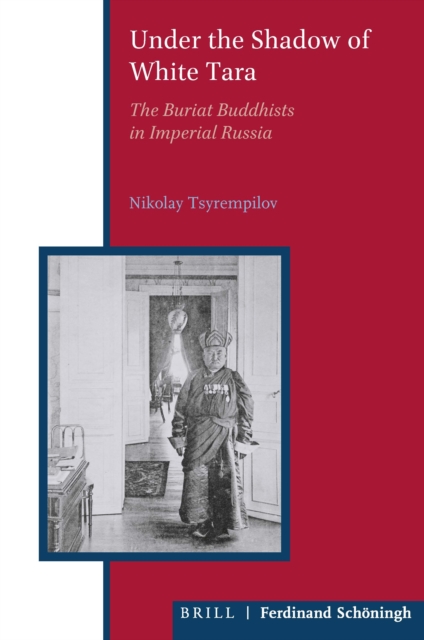
Under the Shadow of White Tara
The book systematically explores the history of the Buddhist community in the Russian Empire.It offers an advanced overview of the relations that existed between the Buriat Buddhists and the Russian imperial authorities.
eBook

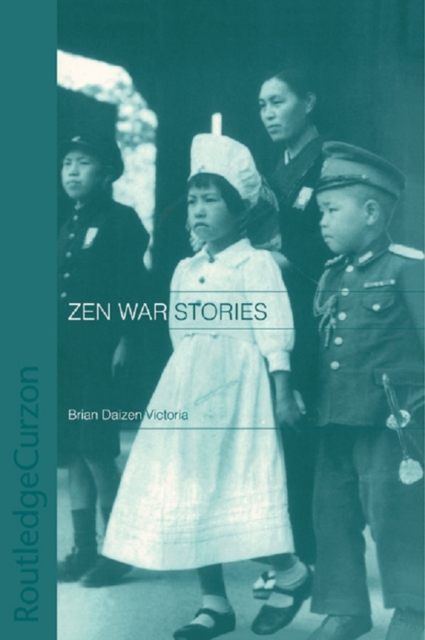
Zen War Stories
Following the critically acclaimed Zen at War (1997), Brian Victoria explores the intimate relationship between Japanese institutional Buddhism and militarism during the Second World War. Victoria reveals for the first time, through examination of the wartime writings of the Japanese military itself, that the Zen school's view of life and death was deliberately incorporated into the military's programme of 'spiritual education' in order to develop a fanatical military spirit in both soldiers and civilians. Furthermore, that D. T. Suzuki, the most famous exponent of Zen in the West, is shown to have been a wartime proponent of this Zen-inspired viewpoint which enabled Japanese soldiers to leave for the battlefield already resigned to death. Victoria takes us onto the naval battlefield in the company of warrior-monk and Rinzai Zen Master Nakajima Genjô. We view the war in China through the eyes of a Buddhist military chaplain. The book also examines the relationship to Buddhism of Japan's seven Class-A war criminals who were hung by the Tokyo War Crimes Tribunal in 1948. A highly controversial study, this book will be of interest, first and foremost, to students of Zen as well as all those studying the history of this period, not to mention anyone concerned with the perennial question of the 'proper' relationship between religion and the state.
'Victoria presents us with a carefully documented study.' - Japanese Journal of Religious Studies
'This case material comes with an accompanying critical commentary. This provocative book will interest those concerned with the ideology and psychology of late imperial Japan and the possible uses of Buddhism in justifying holy war.' - Journal of Military Ethics, 2003
Part I. The Zen Master Wept. Monks and Soldiers Move on their Stomachs. The Zen of Assassination. Oomori Sôgen - The Dr Jekyll and Mr Hyde of Zen. Zen Master Dôgen Goes to War - The Militarist and Anti-Semitic Writings of Yasutani Haku'un. Carrying Zen to China Zen Selflessness' in Japanese Militarism. Part II. Buddhist War Bereavement. Confessions of a Buddhist Chaplain. Buddhism - The Last Refuge of War Criminals. Buddhism - A Top Secret Religion in Wartime Japan. Epilogue. Works Cited. Index
Brian Daizen Victoria holds a M.A. in Buddhist Studies from Soto Zen sect-affiliated Komazawa University in Tokyo, and a Ph.D. from the Department of Religious Studies at Temple University. Brian entered the Soto Zen priesthood in 1964 and. following training at Daihonzan Eiheiji, pursued graduate studies in Buddhism at Soto Zen sect-affiliated Komazawa University in Tokyo. At present, Brian is a Senior Lecturer in the Centre for Asian Studies at the University of Adelaide in South Australia
eBook


Interreligious Conflict and the Politics of Interfaith Dialogue in Myanmar
Amidst successive episodes of interreligious violence in Myanmar between 2012 and 2014, interfaith dialogue emerged as a crucial conflict resolution and prevention mechanism. The 2011-16 Union Solidarity and Development Party administration often indirectly promoted the use of interfaith dialogue to defuse interreligious tensions and conflicts, though its political will was questionable. Various governmental, intergovernmental, and non-governmental actors have engaged in interfaith dialogue, peace, and harmony initiatives in the past seven years.
eBook

American sutra : a story of faith and freedom in the Second World War
The mass incarceration of Japanese Americans during World War II is not only a tale of injustice; it is a moving story of faith. In this pathbreaking account, Duncan Ryūken Williams reveals how, even as they were stripped of their homes and imprisoned in camps, Japanese-American Buddhists launched one of the most inspiring defenses of religious freedom in our nation's history, insisting that they could be both Buddhist and American.-- Provided by publisher
Book
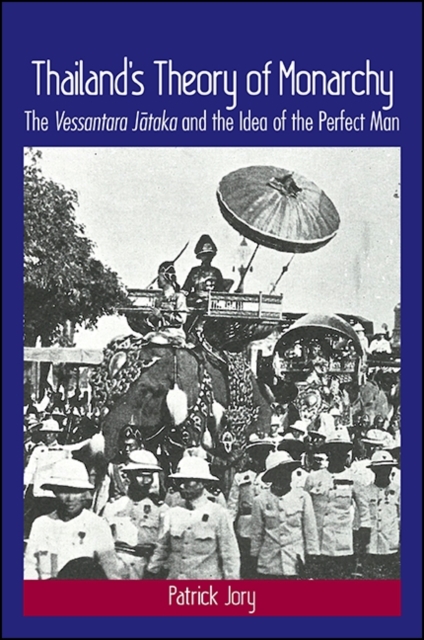
Thailand's theory of monarchy : the Vessantara Jataka and the idea of the perfect man
2016 CHOICE Outstanding Academic TitleSince the 2006 coup d'état, Thailand has been riven by two opposing political visions: one which aspires to a modern democracy and the rule of law, and another which holds to the traditional conception of a kingdom ruled by an exemplary Buddhist monarch. Thailand has one of the world's largest populations of observant Buddhists and one of its last politically active monarchies. This book examines the Theravada Buddhist foundations of Thailand's longstanding institution of monarchy. Patrick Jory states that the storehouse of monarchical ideology is to be found in the popular literary genre known as the Jatakas, tales of the Buddha's past lives. The best-known of these, the Vessantara Jataka, disseminated an ideal of an infinitely generous prince as a bodhisatta or future Buddha-an ideal which remains influential in Thailand today. Using primary and secondary source materials largely unknown in Western scholarship, Jory traces the history of the Vessantara Jataka and its political-cultural importance from the ancient to the modern period. Although pressures from European colonial powers and Buddhist reformers led eventually to a revised political conception of the monarchy, the older Buddhist ideal of kingship has yet endured.
eBook