
Catalogue Search | MBRL


Are you sure you want to remove the book from the shelf?

{{itemTitle}}
4,158
result(s) for
"Buddhist Monks"
Sort by:
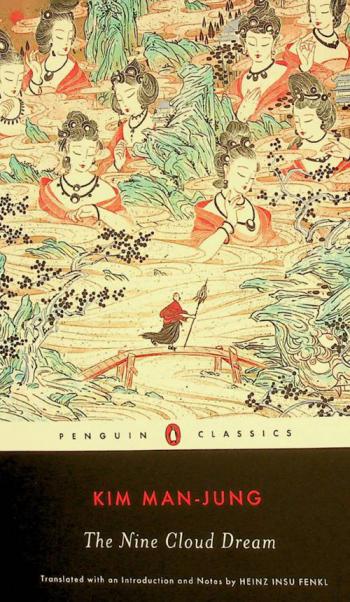
The nine cloud dream
\"A new translation of Korea's literary masterpiece about a young monk's punishment of reincarnation and his journey through a new life\"-- Provided by publisher.
Book
A group of monks is walking 2,300 miles for peace
A group of about two dozen Buddhist monks is participating in a journey they're calling a \"Walk for Peace,\" trekking from Fort Worth, Texas, to Washington, D.C. as a way to promote a message of peace.
Streaming Video


Representation of Buddhist Monks in the Underworld from Early Medieval to Song Times
This essay explores themes in monk–underworld stories from the early medieval to Song periods, shedding light on evolving monastic–lay relations. These tales typically follow an individual who visits the afterlife and returns to share their experience. Monks frequently appear in these narratives, revealing shifting perceptions of the clergy. In earlier stories, monks often serve as underworld guardians or bodhisattvas, but by the Song period they are more commonly depicted as recipients of punishment, often for neglecting their obligations to lay patrons. This shift suggests that Song society increasingly viewed monks through a commercial lens, expecting them to provide specific services. However, these underworld tales do not indicate a decline in respect for the clergy. A broader look at Song literature confirms that monks remained highly regarded, despite changing expectations of their role within society.
Journal Article

Not Seeing Snow
Not Seeing Snow examines the life, thought, poetry, and garden design of influential Zen monk Musō Soseki.
eBook

Bones of the earth
Bones of the Earth is Edgar Award-winning author Eliot Pattison's much anticipated tenth and final installment in the internationally acclaimed Inspector Shan series. After Shan Tao Yun is forced to witness the execution of a Tibetan for corruption, he can't shake the suspicion that he has instead witnessed a murder arranged by conspiring officials. When he learns that a Tibetan monk has been accused by the same officials of using Buddhist magic to murder soldiers then is abruptly given a badge as special deputy to the county governor, Inspector Shan realizes he is being thrust into a ruthless power struggle. Knowing he has made too many enemies in the government, Shan desperately wants to avoid such a battle, but then discovers that among its casualties are a murdered American archaeology student and devout Tibetans who were only trying to protect an ancient shrine. Soon grasping that the underlying mysteries are rooted in both the Chinese and Tibetan worlds, Shan senses that he alone may be able to find the truth. The path he must take, with the enigmatic, vengeful father of the dead American at his side, is the most treacherous he has ever navigated. More will die before he is able to fully pierce the secrets of this clash between the angry gods of Tibet and Beijing. The costs to Shan and those close to him will be profoundly painful, and his world will be shaken to its core before he crafts his own uniquely Tibetan form of justice.
Book

Defect or defend : military responses to popular protests in authoritarian Asia
Why do certain militaries brutally suppress popular demonstrations, while others support the path to political liberalization by backing mass social movements?
Although social movements and media can help destabilize authoritarian governments, not all social protest is effective or culminates in the toppling of dictatorships. Frequently, the military's response determines the outcome.
In Defect or Defend, Terence Lee uses four case studies from Asia to provide insight into the military's role during the transitional phase of regime change. Lee compares popular uprisings in the Philippines and Indonesia—both of which successfully engaged military support to bring down authoritarian rule—with protest movements in China and Burma which were violently suppressed by military forces.
Lee's theory of \"high personalism\" and power-sharing among the armed forces leadership provides a framework for understanding the critical transitory phases of democratization. He uses this theory to review and assess Eastern Europe's democratization events in 1989, the Colored Revolutions of the early 2000s, and the protests and revolutions unfolding in the Middle East. This book will appeal to students and scholars of comparative politics, Asian studies, security studies, and international relations, as well as defense policymakers.
eBook

Gyuto : monastic life
The Tibetan monks of the Gyuto Monastery in Dharamsala, northwestern India, are well-known for their strict discipline and their maintenance and practice of the tantric tradition as transmitted within the Gelugpa order. The monastery itself was founded in 1474 by a disciple of the founder of the Gelugpa order, and is thus representative of a special lineage. Over the centuries, its systems of tantric ritual have spread to thousands of monasteries within Tibet, Mongolia, Ladhak and elsewhere. In this beautiful clothbound volume, Australian photographer Tobi Wilkinson portrays the life of this monastery. Wilkinson's color and black-and-white photographs focus on monastic rituals, the movements and the objects of those movements: the draping of a monk's robe; the preparation of food; prayer, meditation, offerings and chanting; votive objects and their care. Gyuto includes a foreword from the Dalai Lama that underscores the importance of this monastery.
Book

Not seeing snow : Musō Soseki and medieval Japanese Zen
Not Seeing Snow: Muso Soseki and Medieval Japanese Zen offers a detailed look at a crucial yet sorely neglected figure in medieval Japan. It clarifies Muso's far-reaching significance as a Buddhist leader, waka poet, landscape designer, and political figure. In doing so, it sheds light on how elite Zen culture was formed through a complex interplay of politics, religious pedagogy and praxis, poetry, landscape design, and the concerns of institution building. The appendix contains the first complete English translation of Muso's personal waka anthology, Shogaku Kokushishu.
eBook