
Catalogue Search | MBRL


Are you sure you want to remove the book from the shelf?

{{itemTitle}}
1,132
result(s) for
"Buddhist meditations."
Sort by:

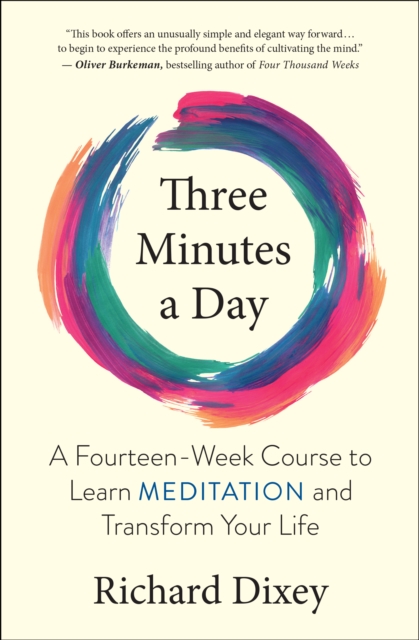
Three Minutes a Day
Three Minutes a Day makes a bold claim: in just three minutes a day, for fourteen weeks -- less than five hours total -- you can generate real insight into personal experience that no amount of reading or learning can replicate.
eBook

Buddhist Meditation and the Skillful Integration of Self: Buddhist Pedagogy and Scientific Models of Mind
This article aims to show how scientific interpretations of the mind can be integrated with traditional Buddhist models of the mind that maintain no-self in light of modern Buddhist meditation practices. Building on David McMahan’s work, it compares two models of mind, the Theater-of-the-Mind and the Ten Ox Herding Pictures (C. Shíniútú; K. Sibudo 十牛圖). The former places the self at the center of experience, while the latter, although it makes use of a conventional self, ultimately maintains the impermanence of the self. While this article primarily contributes to a theoretical understanding, a practical claim is made regarding the pedagogic reconciliation between these two approaches. This is done through the analysis of the two models of mind, an explanation of how Buddhist pedagogy integrates a model that reifies the self through provisional acceptance, and finally by providing an example of this integration with a recently developed Buddhist-based meditation program. One implication of this work is that the tensions between the secular and religious approaches to meditation that afflict so much of the discussion surrounding practices such as mindfulness can be quelled, at least to some extent, by a careful philosophical interrogation of the models of mind implied by those practices.
Journal Article
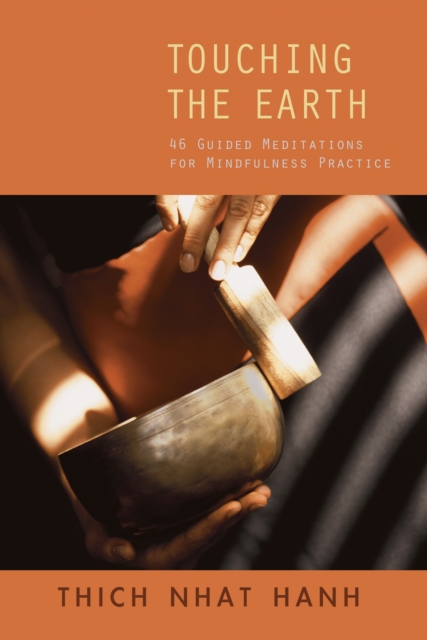
Touching the Earth: Guided Meditations for Beginning Anew
Written as a poetic conversation with the Buddha, this step-by-step guide to the transformative practice of Beginning Anew helps readers renew faith, rediscover joy, and remove obstacles caused by past wrongdoings. Based on the loving kindness and compassion meditation of the Lotus Sutra, it contains over 40 guided meditations that can be practiced alone or with others. In its original edition, Touching the Earthhas beenone of the authors most popular titles. This new edition makes the exercises more accessible to those new to mindfulness practice.
eBook

Touching the Earth
Written as a poetic conversation with the Buddha, this step-by-step guide to the transformative practice of \"Beginning Anew\" helps readers renew faith, rediscover joy, and remove obstacles caused by past wrongdoings. Based on the loving kindness and compassion meditation of the Lotus Sutra, it contains over 40 guided meditations that can be practiced alone or with others. In its original edition, Touching the Earth has been one of the author's most popular titles. This new edition makes the exercises more accessible to those new to mindfulness practice.
eBook

Pattern Theory of Selflessness: How Meditation May Transform the Self-Pattern
For many centuries, scholars and philosophers from wisdom traditions in different cultures have reported and discussed non-self states of consciousness. These states can be both short-term (state, transitory) and long-term (trait, lasting) conditions. However, in psychology, the importance of a healthy self is usually emphasized, and some theorists have dismissed the idea of “selfless” modes of functioning. This disagreement hinders further empirical progress in the study of self and the way it might be affected by meditation. This paper addresses this issue by providing an interdisciplinary conceptual discussion, grounded in the pattern theory of self (PTS). According to PTS, what we call “self” is a complex pattern of dynamically related constituent processes, which include embodied, experiential (prereflective), affective, psychological/cognitive, reflective, narrative, intersubjective, ecological, and normative processes. We propose that Buddhist and secular meditative practices induce a reorganization of the self-pattern, allowing individuals to experience a “selfless” state, both temporarily and persistently. We then put forward a heuristic model, the pattern theory of selflessness (PTSL), possibly experienced through meditation practices. The proposed PTSL model consists of six transformations that contribute to self-pattern reorganization in a nonlinear and iterative manner: consolidating and integrating the self-pattern; cultivating concentration and present-moment awareness; cultivating mindful awareness; self-deconstruction (non-self) states; self-flexibility; and self-liberation as a trait. This conceptual analysis and integrative view contributes to the growing field of consciousness and contemplative research by advancing the contemporary understanding of non-self experience and its relation to Buddhist and secular meditation. The proposed model serves as a basis for interdisciplinary efforts to guide empirical research in this area.
Journal Article
Ethics, Mindfulness, and Consciousness: A Study of Their Relation in Early Buddhism
Scholarly discussions of mindfulness normally treat the term as reflecting a specific, independent, psychological function. Here, mindfulness is placed within a broader understanding of the Buddhist cultivation of consciousness, with special attention to the ethical aspects of mindfulness. Focusing on sources from early Buddhism, the article demonstrates how ethics was thought to have a positive, indeed a necessary, effect on a successful practice of mindfulness. The article moves beyond the
Sati-paṭṭhāna-sutta
(“The Foundations of Mindfulness”), which has been emphasized in scholarship, to related texts in the Middle Length Discourses (
Majjhima-Nikāya
) and beyond them to other Pāli sources. Here, we learn that “You should cultivate the four applications of mindfulness based on ethics, established in ethics.” While the emphasis on ethics in these sources reminds us of the conceptual dimensions of mindfulness, it also allows scholars to see both ethics and mindfulness as partaking in the broader attempt to enrich consciousness and make it healthier, softer, and more lucid. Buddhist practice works to change the structures of subjectivity and make them more conducive to liberation, in whatever way it may be defined. Thus, the Buddhist contemplative tradition can be seen to participate in an effort to change the quality of consciousness, rather than being a mere attempt to reach an annihilation of “suffering.” These considerations allow us to see mindfulness as a form of ethical activity in itself.
Journal Article

Semiosis and nāmarūpa: Exploring the Early Buddhist Theory of Signs Through Cognitive Semiotics
This article aims to offer a comparative analysis between Buddhist thought and Peircean semiotics, situating the discussion within the framework of a Buddhist theory of signs that addresses aspects related to perceptual processes and cognitive experience. The influence of signs on cognition is what led Buddhism, from its earliest formulations, to adopt contemplative practice as a means of liberation from the effects of semiosis—an aspect that this paper hypothesizes to be represented by the nāmarūpa dyad. Following an examination of the perceptual and sensory processes underlying the functioning of nāmarūpa, the paper will analyze occurrences of this technical term and propose its semiosic functions, subsequently exploring how contemplative practice aspires to disengage from the power of signs.
Journal Article
Wisdom-Based Buddhist-Derived Meditation Practices for Prosocial Behaviour: A Systematic Review
Objectives
The objective of this evaluative systematic review was to analyse the impact of mindfulness-based interventions (MBIs) that incorporate Buddhist wisdom practices on prosocial behaviour, and provide insights into their underlying mechanism, potential benefits, and applications.
Method
A systematic literature search was conducted using three electronic databases up until 1 December 2023. Data on the participants in the MBIs, the structure, and how Buddhist teachings were integrated were collected. The impact on prosocial behaviour was analysed, along with evaluating overall study quality and the validity of the measures used for assessing changes in prosocial behaviour.
Results
Collectively, the 12 eligible studies (
n
= 2185) suggest that incorporating the Buddhist wisdom practices of contemplating interdependence, emptiness, and perspective-taking on self and others may enhance prosocial behaviour through various mechanisms, such as (i) developing a sense of interdependence and common humanity, (ii) fostering the altruistic desire to help others, and (iii) experiencing a state of oneness. However, concerns were raised about the overuse and reliability of self-report measures for accurately assessing prosocial behaviour, as well as in respect of discerning the effectiveness of different meditation practices that are integrated into MBIs.
Conclusions
Overall, the findings of this systematic literature review reinforce the perspective that wisdom-based meditation practices contribute to prosocial behaviour. However, to enhance the understanding of the underlying causes of prosocial behaviour, future studies should isolate the effects of different meditation practices incorporated within MBIs. Furthermore, it is strongly recommended that future studies assessing the impact of MBIs on prosocial behaviour employ a range of diverse measures, such as self-reported psychometric scales in combination with real-world morally relevant scenarios.
Preregistration
PROSPERO: Registration No. CRD42023426411.
Journal Article
The Methodological Implications of the Buddhist Model of Study, Reflection, and Cultivation
This paper discusses aspects of the Buddhist concept of threefold wisdom and their implications on methodology for Buddhist studies, especially the academic study of Buddhist philosophy. The first part of the paper discusses aspects of threefold wisdom as presented in Indian and Tibetan Buddhist sources, arguing that threefold wisdom is not simply a presentation of mental cultivation and philosophical practice, but that it also proposes what can be called a practical hermeneutic, that is, a method to maximize a reader’s understanding of Buddhist scriptures and their full implication. Second, we consider how certain methods of studying Buddhist thought, especially those that deal with philosophical engagement with Buddhist thought, should be adapted to include the dimension of Buddhist philosophy that is exemplified by threefold wisdom. More particularly, Buddhist philosophy’s perspective on what a successful reading method consists of, which is exemplified by the practical hermeneutic described by threefold wisdom, should be included as part of what scholars pay attention to when studying Buddhist philosophy. Thus, only will the conditions for an open dialogue between Buddhism and other philosophical traditions be sufficiently present for such a dialogue to take place in a fruitful way.
Journal Article