
Catalogue Search | MBRL


Are you sure you want to remove the book from the shelf?

{{itemTitle}}
227
result(s) for
"Buddhist sects"
Sort by:

Rethinking the Taxonomic Category “Sect/School”
This paper explores the origin and role of the Buddhist taxonomic category “zong 宗” (“sect” or “school”) in the formation of modern Buddhism in China. It does so by examining a highly significant late-Qing Buddhist text titled Ba-zong-er-xing 八宗二行 (Eight Schools and Two Practices), which the author discovered recently in Japan. Authored by the 19th-century Manchu bannerman official Hešeri Rushan 赫舍裏如山, Eight Schools and Two Practices had a direct influence on the prominent Chinese lay Buddhist Yang Wenhui (1837–1911)’s Shi-zong-lue-shuo 十宗略说 (Brief Outline of the Ten Schools) (1913), which subsequently became the most important narrative model, known as the ten-school model, for describing Chinese Buddhist history in modern times. Historians have long recognized that Yang Wenhui’s Brief Outline of the Ten Schools (1913) was influenced by the medieval Japanese text hasshū kōyō 八宗綱要 (Essentials of the Eight Schools) composed by the 13th-century Japanese monk Gyōnen. Identifying, in detail, Hešeri Rushan’s influence on Yang Wenhui sheds light on how a narrative model for Buddhism in its national form grew out of trans-national intellectual sharing and interactions, and how Chinese Buddhism emerged from the interactive and mutually enabling Sino-Japanese discursive field of the 19th century. Gyōnen, Rushan, and Yang Wenhui all used the category zong, referring to both doctrine and school/sect, to organize narratives of Buddhist history. Their uses were, however, different. Gyōnen’s conception of zong (shū in Japanese) was fixed and exclusive, whereas zong for Rushan and Yang meant more of a mobile, nonexclusive identity. Without knowledge of Japanese Buddhism, Rushan made creative use of zong for describing the history and current condition of Chinese Buddhism, thereby superseding the traditional framework of lineage, doctrine, and precept, or zong 宗, jiao 教, lu 律. Rushan’s zong provided the necessary prerequisite knowledge for Yang Wenhui to understand Gyōnen’s theories, which he studied for constructing his own historical narrative and vision for modern Buddhism.
Journal Article
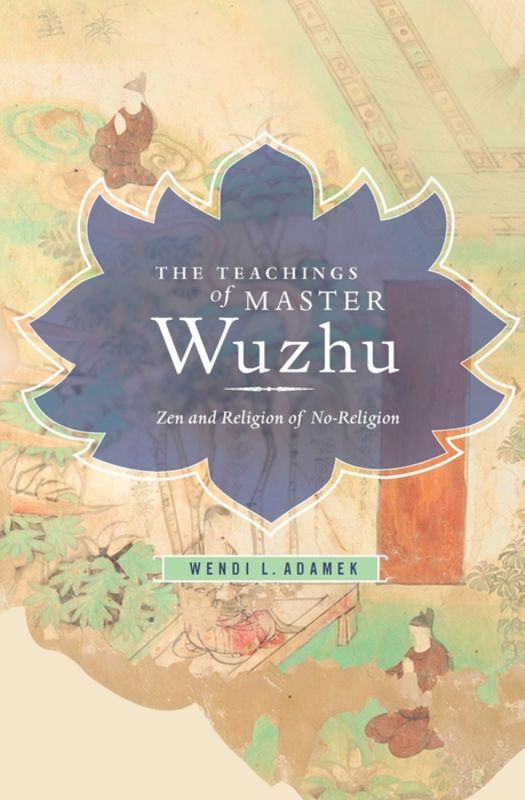
The teachings of Master Wuzhu
The Record of the Dharma-Jewel Through the Generations (Lidai fabao ji) is a little-known Chan/Zen Buddhist text of the eighth century, rediscovered in 1900 at the Silk Road oasis of Dunhuang. The only remaining artifact of the Bao Tang Chan school of Sichuan, the text provides a fascinating sectarian history of Chinese Buddhism intended to showcase the iconoclastic teachings of Bao Tang founder Chan Master Wuzhu (714–774). Wendi Adamek not only brings Master Wuzhu's experimental community to life but also situates his paradigm-shifting teachings within the history of Buddhist thought. Having published the first translation of the Lidai fabao ji in a Western language, she revises and presents it here for wide readership. Written by disciples of Master Wuzhu, the Lidai fabao ji is one of the earliest attempts to implement a \"religion of no-religion,\" doing away with ritual and devotionalism in favor of \"formless practice.\" Master Wuzhu also challenged the distinctions between lay and ordained worshippers and male and female practitioners. The Lidai fabao ji captures his radical teachings through his reinterpretation of the Chinese practices of merit, repentance, precepts, and Dharma transmission. These aspects of traditional Buddhism continue to be topics of debate in contemporary practice groups, making the Lidai fabao ji a vital document of the struggles, compromises, and insights of an earlier era. Adamek's volume opens with a vivid introduction animating Master Wuzhu's cultural environment and comparing his teachings to other Buddhist and historical sources.
eBook
The Reception and Transformation of Ippen and Shojoko-ji
This article explores the reception and transformation of Ippen 一遍 (1234–1289)’s religious tenets and practices by Enju Kato 加藤円住 (1919–2021) and his temple, Shōjōkō-ji 清浄光寺. While Enju Kato asserts that his life has been dedicated to adhering and enacting Ippen’s concept of “renunciation”, he has reinterpreted this concept based on his personal experiences and comprehension. Second, Enju Kato and Shōjōkō-ji have inherited some of Ippen’s religious practices yet adapted these to align with contemporary settings. This article presents a case study discussing the acceptance and transformation of doctrines and practices of Jishū 時宗 in the contemporary era, which has been overlooked by academia thus far.
Journal Article

Art and Devotion at a Buddhist Temple in the Indian Himalaya
Sixteenth-century wall paintings in a Buddhist temple in the Tibetan cultural zone of northwest India are the focus of this innovative and richly illustrated study. Initially shaped by one set of religious beliefs, the paintings have since been reinterpreted and retraced by a later Buddhist community, subsumed within its religious framework and communal memory. Melissa Kerin traces the devotional, political, and artistic histories that have influenced the paintings' production and reception over the centuries of their use. Her interdisciplinary approach combines art historical methods with inscriptional translation, ethnographic documentation, and theoretical inquiry to understand religious images in context.
eBook

The Buddhist Sects of Japan
The philosophy of Buddhism, originating in India, has undergone considerable changes in its adoption in the Far East. It has, in Japan, assumed a more practical aspect, and has come to play an important role in the everyday life of action. But in this process Japanese Buddhism has split itself into many sects with greatly differing doctrines, though all profess a method destined to elevate the soul and a method of action. The understanding of this spiritual movement is an important key to the understanding of the contemporary Japanese state of mind, and The Buddhist Sects of Japan gives the first complete account of it in the English language.
1. The Kusha Sect 2. The Jō-Jitsu Sect 3. The Sanron Sect 4. The Hosso Sect 5. The Kegon Sect 6. The Tendai Sect 7. The Shingon Sect 8. The Zen Sect 9. The Jôdo Sect 10. The Shinshu Sect 11. The Nichiren Sect 12. In the Margin of Canonical Books Conclusion – The Coming Buddhism. Texts. Bibliography.
eBook
Blessings on the Waves: Miraculous Encounters of Japanese Pilgrim Monks during Sea Voyages Transmitting Dharma from Southern Song China
The maritime route connecting the Chinese continent and the Japanese archipelago facilitated a significant exchange of commercial goods and sociocultural knowledge throughout the Southern Song dynasty. Within this context, Japanese pilgrim monks traveling along this route acted as key conduits for the transmission of Buddhist teachings. Their journeys profoundly influenced the establishment and development of new Buddhist monasteries in Japan. Focusing on biographical accounts that portray the experiences of these pilgrim monks during their twelfth- and thirteenth-century sea voyages, this paper aims to explore how these accounts drew on intertextual links with existing Buddhist records to fulfill the compilers’ intentions. Specifically, this paper examines the structure and sources of biographical accounts detailing miraculous encounters between pilgrim monks and Buddhist deities during perilous situations at sea. By interpreting the role of these deities in the corpus of Buddhist literature and within Japanese Buddhist monasteries founded by pilgrim monks, this paper argues that the increasing emphasis on pilgrim monks’ attainment of divine protection in their biographical records suggests a growing concern for reinforcing the authority of their dharma lineages. Moreover, the composition and reception of these miraculous accounts reflected the changing religious needs and reshaped strategies for promoting specific Buddhist sects in subsequent periods.
Journal Article
Contesting Religious Boundaries with Care: Engaged Buddhism and Eco-Activism in the UK
The word “Buddhism” conjures up a variety of images and connotations: monks meditating on hilltops, mindfulness, cheerful Buddha caricatures. It is unlikely that these depictions suggest engagement with societal issues. And yet, this is precisely what many Buddhist communities and traditions are involving themselves in around the world. Often referred to as “engaged Buddhism”, this development in the Buddhist tradition refers to the application of Buddhist principles and practices to situations of social and environmental suffering. Nevertheless, there are critics of this emerging trend who contend that Buddhists should refrain from engaging in societal issues, believing that such involvement contradicts the teachings of the Buddha and distracts from the ultimate goal of liberation. Built on two years of ethnographic research, this paper explores the ways in which a particular environmentally engaged Buddhist group known as “Extinction Rebellion Buddhists” adapt their religious beliefs and practices in response to the challenges posed by the Anthropocene, where concerns for our collective world have resulted in increasing interest in the ways in which humans actively care for the environment. In reformulating Buddhist principles and meditation as a “politics of care”, care becomes a tool for change, with the group not only confronting the pressing issues of the Anthropocene but also disrupting Buddhism’s traditionally inward-looking, other-worldly tendencies, carving out space for autonomy and transformation within the broader landscape of UK Buddhism.
Journal Article