
Catalogue Search | MBRL


Are you sure you want to remove the book from the shelf?

{{itemTitle}}
78
result(s) for
"Building Popular works."
Sort by:

Built : the hidden stories behind our structures
\"While our cities are full of incredible engineering feats, most of us live with little idea of what goes into creating the built environment, let alone how a new building goes up, what it is constructed upon, or how it remains standing. [In this book, the author] explains how construction has evolved from the mud huts of our ancestors to skyscrapers of steel that reach into the sky\"--Amazon.com.
Book

The Things We Make
Discover the secret method used to build the world...For millennia, humans have used one simple method to solve problems.Whether it's planting crops, building skyscrapers, developing photographs, or designing the first microchip, all creators follow the same steps to engineer progress.
eBook

The architecture book
An accessible guide to the most important ideas and developments in the history of architecture, and the people behind them.
BOOK

Novelty and cultural evolution in modern popular music
The ubiquity of digital music consumption has made it possible to extract information about modern music that allows us to perform large scale analysis of stylistic change over time. In order to uncover underlying patterns in cultural evolution, we examine the relationship between the established characteristics of different genres and styles, and the introduction of novel ideas that fuel this ongoing creative evolution. To understand how this dynamic plays out and shapes the cultural ecosystem, we compare musical artifacts to their contemporaries to identify novel artifacts, study the relationship between novelty and commercial success, and connect this to the changes in musical content that we can observe over time. Using Music Information Retrieval (MIR) data and lyrics from Billboard Hot 100 songs between 1974-2013, we calculate a novelty score for each song’s aural attributes and lyrics. Comparing both scores to the popularity of the song following its release, we uncover key patterns in the relationship between novelty and audience reception. Additionally, we look at the link between novelty and the likelihood that a song was influential given where its MIR and lyrical features fit within the larger trends we observed.
Journal Article

The Revaluation of Uninhabited Popular Patrimony under Environmental and Sustainability Parameters
Abandoning rural areas requires promoting their repopulation. In Europe, wealth and life in these enclaves are valued. However, the current state of these houses does not meet actual needs and requires interventions to actualize current standards. Therefore, decisions in the design and execution of the works will generate a volume of construction and demolition waste (CDW), which must be managed sustainably out of respect towards its origin, the architecture, and the surrounding environment. This paper examines the prevention and management of CDW, providing control strategies and actions to monitor and plan them from the rehabilitation project itself. Some of the interventions carried out in recent years on this type of housing have been analyzed and the existing management protocols within the European Union have been reviewed, specifying their application in Mediterranean popular housing. As a result, we herein show a representative case that observes the existing reality regarding the destination of generated CDW and delves into their possibilities for use. We present these findings in order to reduce the energy cost resulting from manufacturing new materials and meeting the established sustainability and energy efficiency parameters.
Journal Article

My house is killing me! : the home guide for families with allergies and asthma
It's a world we barely see, but it is teeming with life. In the dust of a typical house, carpet beetles, mites, silverfish, and other creatures live and die, producing new generations every few months. Mold, bacteria, and yeast lurk undetected in heating and cooling systems. Debris dispersed into the air from these organisms can cause runny noses, itchy eyes, coughing, headaches, and breathing difficulties. Some people, especially those made highly sensitive by allergies, suffer from devastating health problems and the worry that, as one such sufferer lamented, \"My house is killing me!\"Scrutinizing house dust and air samples with a microscope, indoor air quality expert Jeffrey C. May has spent his career helping people identify what's causing their chronic health problems. In My House Is Killing Me! he draws on the dramatic personal stories of his clients' suffering and relief to help readers understand the links between environmental factors and problems like allergies and asthma. Explaining how air conditioning, finished basements, and other home features affect air quality, he offers a step-by-step approach to identifying, controlling, and often eliminating the sources of indoor pollutants and allergens. If we could see this contamination, May observes, the air would look as murky as stagnant water, and we would know not to breathe it.Reading My House Is Killing Me! lets you see your house the way an expert would. Just as he looks at spaces and systems during an indoor air quality investigation, May focuses first on the areas of daily life (bedrooms, bathrooms, kitchen), then looks into attics and basements (including heating and air conditioning), and finally moves outside to the garage and the exterior of a home. Along with offering a wealth of practical advice and proven solutions for various problems, he includes a glossary of terms and a list of valuable resources.
eBook

Who Were You?
Abstract While Girlhood Studies is an emerging field of academic study, knowledge about how to work with girls in the community has long been evolving. As community social workers doing critical, gender-transformative work with girls, we trained adult women volunteers in gender-specific girls’ programs. Pedagogically rooted in popular education, our training approach, in drawing on volunteers’ own memories of girlhood, evoked a diversity of stories, lived experiences, and understandings of how their lives were affected by systemic forces. In this article, we illustrate how explicating the temporality of girlhood with women can facilitate the interrogation of their own internalized sexism and adultism, and how building intergenerational empathy serves as a tool for reshaping adult women's ability to work collaboratively with and build relationships with girls.
Journal Article

Community Interactive Research Workshop Series: Community Members Engaged as Team Teachers to Conduct Research
Vietnamese women are diagnosed with cervical cancer at twice the rate of non-Hispanic White women and the highest compared to Chinese, Filipino, Korean, and Japanese women. ἀ e Vietnamese Women's Health Project, a community-based participatory research partnership, was developed to address this concern. In earlier studies, community members received research training.
To describe how we developed an innovative curricular research training framework. Community members developed their own learning goals and activities, taught alongside a nurse scientist, and participated in a community interactive research workshop series.
Popular education principles were used to guide team teaching. Topics, learning goals, lesson plans, and an evaluation w ere de veloped t ogether. ἀ ree, 4 -5.5 h our workshops were hosted. Topics included qualitative research, art of hearing data, reflexivity, analysis, validity, and dissemination. Community members and a nurse scientist co-constructed knowledge through participatory methods. ἀe workshops ran concurrent to the study timeline to inform community members' research activities and vice versa. A range from 8 to 20 participants attended the workshops, of which six community members were team teachers and three facilitated at each workshop. In an evaluation, team teachers reported workshop strengths: an empathetic and trusting learn ing environment, a sense of ownership in learning, a greater under standing of roles in research partnerships, and a feel ing of safety to conduct research with academic investigators.
Academic investigators need to be aware that co-constructing knowledge is foundational to long-term sustainability of community-based participatory research partnership (CBPR) partnerships, but requires building team capacity to conduct research collaboratively.
Journal Article
The Development of a Community Engagement Workshop: A Community-Led Approach for Building Researcher Capacity
Although community-engaged research (CEnR) is increasingly promoted in the literature, academic programs often fail to prepare researchers for the critical, ethical, and power issues involved in CEnR. This article documents a community-created and led workshop for CEnR researchers.
The workshop's main objective is to increase researchers' knowledge and felt experience of the \"dos and don'ts\" of CEnR in three research domains: entering the community, accommodating the realities and constraints of community-based organizations, and dissemination.
The Dos and Don'ts of Community Engagement workshop was developed and implemented by the Arkansas Prevention Research Center's (PRC) Community Advisory Board (CAB) in partnership with faculty and staff from the Fay W. Boozman College of Public Health (COPH) at the University of Arkansas for Medical Sciences (UAMS). The CAB developed the workshop using a collaborative, iterative process grounded in popular education. Teaching approaches include video testimonials, reverse role-play scenarios, and group reflections and debriefings. Implementation included dry runs with CAB members, a pilot, and five workshops with UAMS faculty, dissemination to an out-of-state university, and post-assessment surveys of participants.
Participants' written evaluations suggest the workshop was engaging and successfully motivated researchers to adopt new perspectives, acknowledge power imbalances across the domains, self-reflect about their role as researchers, and consider solutions to these problems. Other reported outcomes included the development of relationships leading to new CEnR projects, unanticipated learning experienced by community member participants, requests for additional workshops through UAMS' Translational Research Institute, and development of a train-the-trainer manual and accompanying video guide.
Journal Article
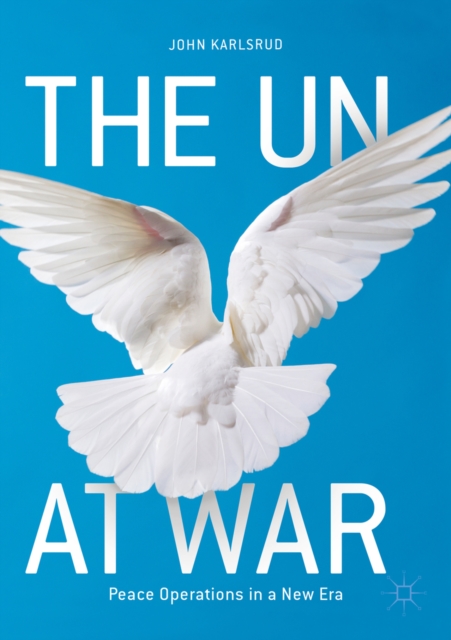
The UN at war : peace operations in a new era
This book is a critical political and institutional reflection on UN peace operations.It provides constructive suggestions as to how the UN and the international system can evolve to remain relevant and tackle the peace and security challenges of the 21 st century, without abandoning the principles that the UN was founded upon and on which the legitimacy of UN peace operations rests.The author analyses the evolving politicsonUN peace operations of the five veto powers of the UN Security Council, as well as major troop-contributing countries and western powers. He investigates the move towards peace enforcement and counter-terrorism, and what consequences this development may have for the UN. Karlsrud issues a challenge to practitioners and politicians to make sure that the calls for reform are anchored in a desire to improve the lives of people suffering in conflicts on the ground—and not spurred by intra-organizational turf battles or solely the narrow self-interests of member states. Finally, he asks how the UN can adapt its practices to become more field- and people-centered, in line with its core, primary commitments of protecting and serving people in need.
eBook